Who Is Hungary’s New Prime Minister Péter Magyar?
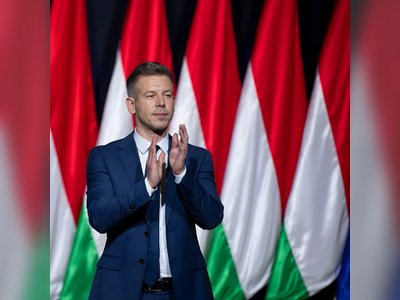
Standing before supporters along the Danube, facing the Parliament building, Magyar declared:
“Together we overthrew the Hungarian regime.”
That statement captures both the scale of his victory — and the ambition of his project.
1. Identity and Background
Full Name: Péter Magyar
Born: March 16, 1981 – Budapest, Hungary
Profession: Lawyer, diplomat, politician
Education: Law degree, Pázmány Péter Catholic University; studies in Berlin
Family: Comes from a well-connected conservative Hungarian family
Magyar’s background is not outsider-populist in the traditional sense. He is deeply embedded in Hungary’s elite networks — legally trained, internationally exposed, and politically connected.
This dual identity — elite insider turned reformist rebel — is central to his appeal.
2. Early Career and Professional Life
Before entering frontline politics, Magyar built a career in:
- Law and judiciary (early career at Budapest Metropolitan Court)
- Corporate and international legal advisory for multinational companies
- Public sector leadership, including:
- CEO of Hungary’s Student Loan Centre (2019–2022)
- Business and management roles in state-linked institutions
He spent most of his career operating within the Orbán-era system, benefiting from and contributing to its institutional framework.
3. Insider of the Orbán System (2002–2024)
For over two decades, Magyar was aligned with:
- Fidesz, Viktor Orbán’s ruling party
- Government-linked institutions and networks
- Political circles close to power
He was not a marginal figure — he was part of the ecosystem he would later dismantle.
This makes his later opposition particularly significant:
He was not guessing how the system worked — he knew it from the inside.
4. The Break: Scandal, Resignation, and Revolt (2024)
Magyar’s turning point came in early 2024:
- He resigned from all government-linked roles during the presidential pardon scandal involving child abuse cover-up allegations
- Publicly criticized the government’s functioning and moral direction
- Began exposing internal corruption narratives
He escalated rapidly:
- Organized mass protests in Budapest
- Accused the system of operating like a “feudal structure”
- Released recordings linked to corruption cases involving senior officials
This was not a quiet exit — it was a full-scale internal revolt.
5. Creation of the Tisza Movement
In March 2024, Magyar:
- Took over the previously marginal Tisza (Respect and Freedom) Party
- Repositioned it as a national reform movement
- Built a coalition of:
- Disillusioned conservatives
- Anti-Orbán liberals
- Young urban voters
- Rural protest voters
The party’s symbolic messaging (“The Tisza is flooding”) became a national rallying cry
6. Unprecedented Political Rise
Magyar’s ascent is one of the fastest in European political history:
- Early 2024 → Unknown national figure
- Mid 2024 → Viral political figure (millions of views online)
- 2024 EU Elections → Nearly 30% of the vote (historic opposition result)
- 2026 Elections → Supermajority victory
Analysts describe this rise as “meteoric” and without precedent in post-communist Hungary
7. The 2026 Election: Total Political Reset
Magyar’s victory:
- ~138 parliamentary seats (two-thirds majority)
- Ends Orbán’s 16-year rule
- Gives power to:
- Change laws
- Amend the constitution
- Restructure institutions
This is not a coalition government — it is full systemic control.
8. Political Ideology and Positioning
Magyar is difficult to classify in simple terms:
Core positioning:
- Conservative-liberal
- Pro-European (but not unconditional)
- Anti-corruption
- National-interest focused
He calls himself a “critical pro-European”
Key distinctions from Orbán:
- Less aligned with Russia
- More cooperative with the EU
- More focused on institutional reform
Continuities:
- Maintains stricter stance on immigration
- Retains elements of nationalist rhetoric
9. Major Achievements (So Far)
1. Dismantling a 16-Year Political Regime
He achieved what no opposition leader could:
- Defeated a deeply entrenched system
- Broke media dominance and electoral advantage
2. Building a New Political Force from Scratch
- Turned a minor party into a governing supermajority in ~2 years
3. Mobilizing a New Electorate
- Youth engagement via social media
- Cross-ideological coalition building
4. Reframing Hungarian Politics
- Shifted discourse from identity politics to governance and corruption
10. Key Policy Agenda
Magyar’s program is aggressive and structural:
Anti-Corruption
- Asset recovery programs
- Investigations into past government networks
Institutional Reform
- Judicial independence
- Media reform
- Term limits for future prime ministers
EU Reset
- Unlock frozen EU funds
- Re-align Hungary with European institutions
Governance Reset
- Rebuild public services
- Restore investor confidence
11. Controversies and Criticism
Magyar is not a universally trusted figure. Key concerns include:
1. His Fidesz Past
- Critics argue he is “part of the system he condemns”
- Raises questions about credibility and consistency
2. Limited Political Experience
- Rapid rise → limited governing track record
- Tisza party lacks deep institutional experience
3. Populist Strategy
- Strong messaging, emotional rallies, anti-elite framing
- Some analysts see similarities with Orbán’s early methods
4. Broad Coalition Risk
- Support base includes:
- Left-wing voters
- Conservatives
- Protest voters
Maintaining unity across this spectrum will be difficult
12. Leadership Style and Public Image
Magyar’s image is highly curated and modern:
- Casual dress (white shirt, sneakers) — symbolic of “new politics”
- Strong digital communication strategy
- Direct, confrontational rhetoric
- High-energy rallies
He represents a hybrid leader:
- Technocratic background
- Populist communication
- Reformist agenda
13. International Position
Magyar signals a strategic shift:
- Re-engagement with the EU
- Reduced alignment with Russia
- More pragmatic stance toward Ukraine
However:
- He remains pro-Hungarian first, not ideologically aligned with any bloc
14. Structural Challenges Ahead
Despite his dominance, Magyar faces major constraints:
Institutional Resistance
- Systems built over 16 years do not disappear overnight
Economic Pressures
- Inflation, public spending, EU funding dependencies
Political Expectations
- High expectations after revolutionary campaign
Risk of Power Concentration
- Two-thirds majority gives enormous control
- Raises concern about repeating past patterns
15. Strategic Significance
Péter Magyar represents something rare in politics:
- A system insider who led a system collapse
- A rapid, high-speed political disruptor
- A bridge figure between old and new Hungary
His leadership will test a critical question:
Can someone who helped build a system successfully dismantle it — and replace it with something better?
Final Assessment
Péter Magyar is not a traditional reformer, nor a classic outsider.
He is a hybrid political disruptor — shaped by the system, empowered by it, and ultimately turned against it.
His victory marks:
- The end of an era
- The beginning of a high-risk political transformation
Whether he becomes:
- A genuine institutional reformer
or - A new version of centralized power
…will define Hungary’s next decade.