London Daily

Focus on the big picture.
Saturday, Mar 28, 2026

What is an aftershock - and why are mass landslides now likely after the earthquake that hit Turkey and Syria?

What is an aftershock - and why are mass landslides now likely after the earthquake that hit Turkey and Syria?

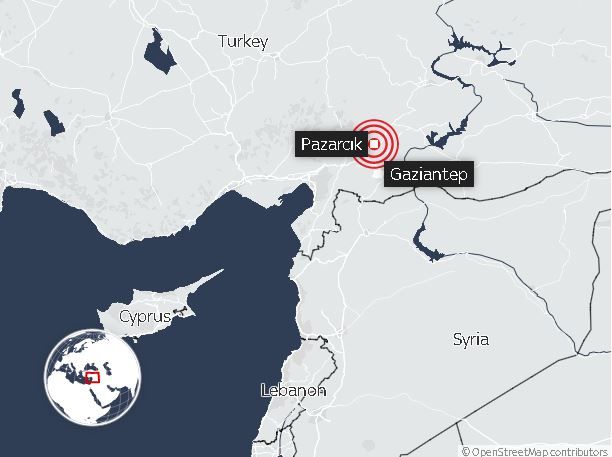
The earthquake that caused such huge devastation in Turkey and Syria occurred along the East Anatolian Fault zone and was followed by dozens of aftershocks.

Two powerful earthquakes and dozens of aftershocks have wrought incalculable destruction on parts of Turkey and Syria, with much of the devastation hitting communities already vulnerable following a decade of war.

It is feared the death toll could rise to more than 20,000.

The initial 7.8 magnitude quake was followed by a 6.7 magnitude aftershock just 11 minutes later.

Another quake - almost as strong as the first, at 7.5 magnitude - hit the area within hours on Monday.


What causes earthquakes?


An earthquake is caused by what's known as a "sudden slip" on a fault line.

The Earth's tectonic plates are always moving, but they can get stuck at their edges due to friction, the United States Geological Survey (USGS) says.

It's when this stress at the edge overcomes the friction that an earthquake occurs, releasing energy in waves that travel through the Earth's crust and cause the shakes that we feel on the surface.

Yesterday's quake struck along the East Anatolian Fault zone, which runs from eastern to south-central Turkey.

Alex Hatem, a USGS research geologist, said in this case, "one plate moved west while the other moved east".
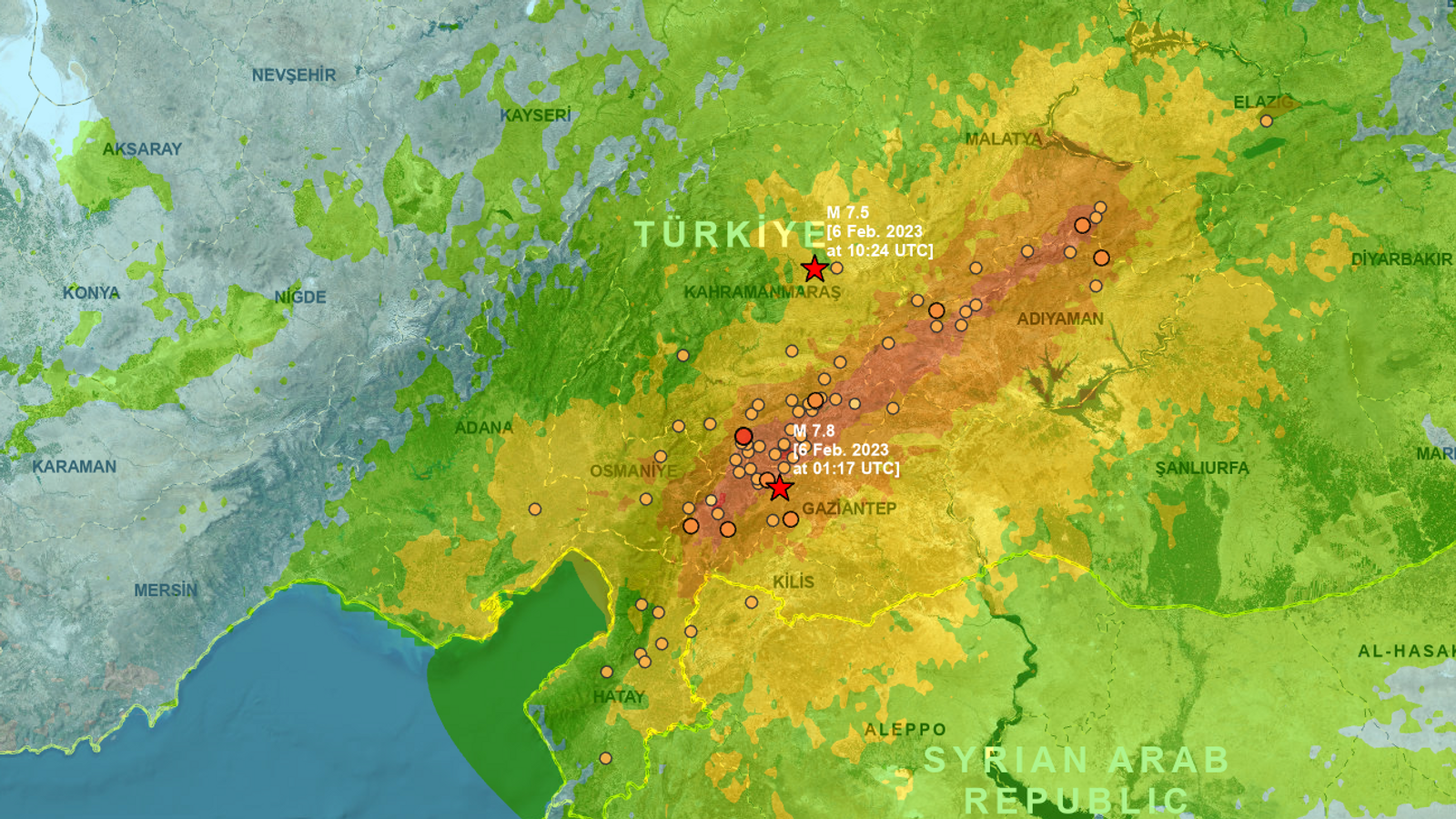
A satellite map of areas impacted by the Turkey-Syria earthquake. Pic: United Nations Satellite Centre


The Turkey-Syria disaster is thought to be a "strike-slip" quake, which occurs when two tectonic plates slide past each other horizontally.

What's the difference between an earthquake and an aftershock?


Aftershocks are a sequence of quakes that happen after the larger "mainshock" on a fault.

They tend to occur near the fault where the mainshock occurred and are part of the "readjustment process" after the main slip on the fault, the scientists at USGS say.

They become less frequent as time passes following the initial shock, but can continue for days, weeks, months, or even years.

When an earthquake hit the East Anatolian area in 1822, aftershocks continued throughout the following year.

The strongest aftershock after yesterday's quake was recorded as a 7.5 magnitude quake.

That's what made this such a rare and unusual disaster.

The last time there were any tremors of similar strength in the region was in 1872.
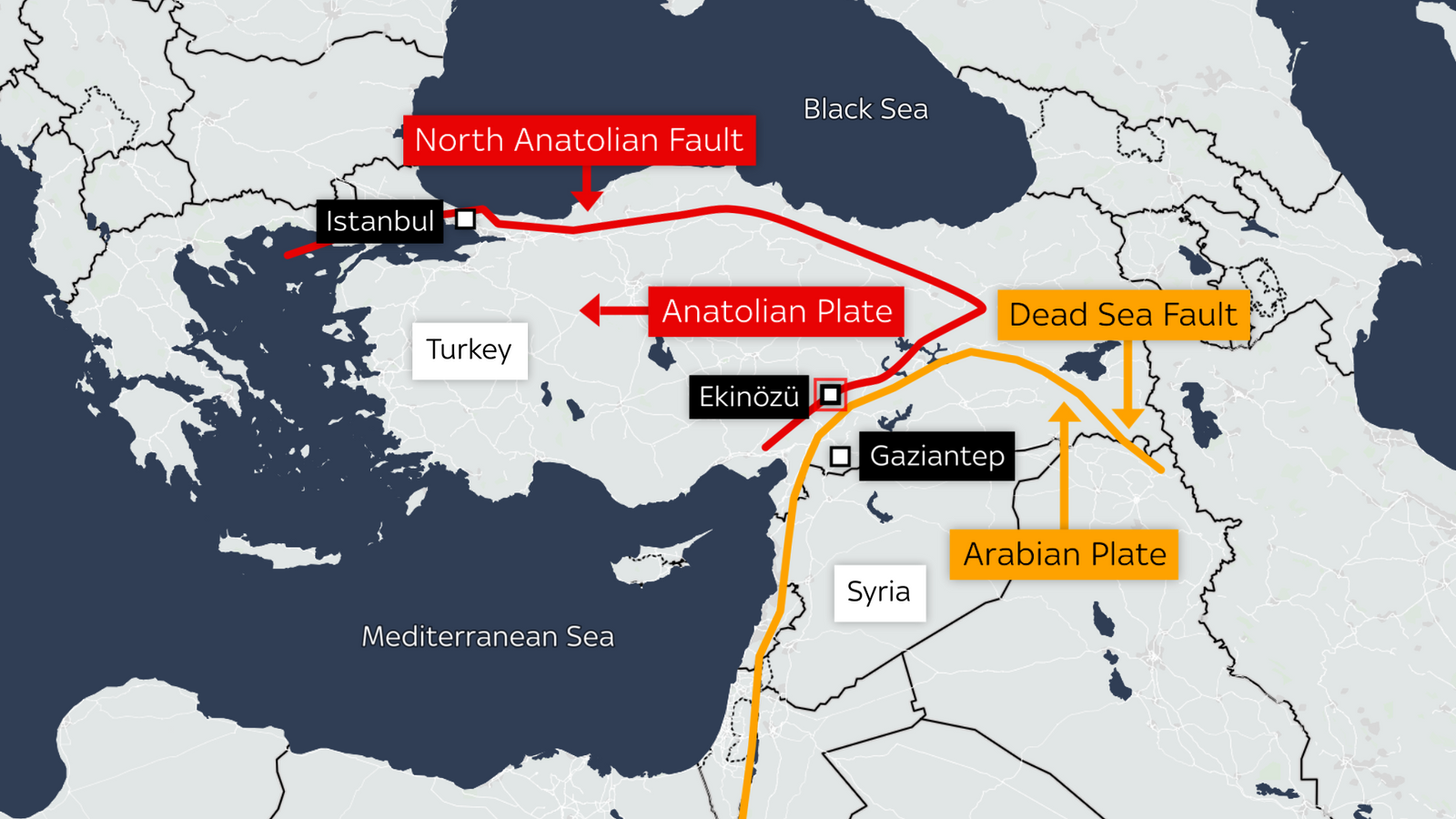
Several fault lines run through Turkey and Syria


The major aftershock was probably caused by the initial quake destabilising an adjacent fault that had also accumulated geological stresses over the years.

No wonder then that Stephen Hicks, a seismologist at University College London, told Sky News on Monday that what Turkey and Syria have experienced is "the worst kind of earthquake".

Why are mass landslides likely following the earthquake?


Professor Bruce Malamud, an expert in natural and environmental Hazards at King's College London, warns that "hundreds if not thousands" of landslides could now follow the devastating earthquake.

It means that thousands of people affected by the quake could face fresh danger.

Strong earthquake ground shaking increases the likelihood of landslides in certain areas.

If the ground is saturated with water, particularly following heavy rainfall, the shaking will result in more landslides than normal.

e said: "As a result of the Turkey earthquake, the hazard relief agencies and managers will also be conscious of other natural hazards and multi-hazard cascades.

"The seismic activity will likely trigger hundreds if not thousands of landslides in the hours to days after the earthquake and subsequent aftershocks."

Those organising the large-scale evacuations of people will need to be conscious that they are not transferred to an at-risk area.

Newsletter

Related Articles

0:00
0:00
Close
Thousands Rally in London to Oppose Rise of Far-Right Movements
Hong Kong Official Rejects Allegations of Surveillance Orders Targeting UK-Based Dissidents
PayPal Expands Cryptocurrency Services to Allow UK Users to Buy and Sell Bitcoin
UK Minister Challenges Reform Party’s ‘Pro-Family’ Agenda as Debate Intensifies
Concerns Grow Over Meningitis Risk Among UK Students Amid Warning Signs of New Outbreaks
Japanese Grand Prix 2026: Schedule, UK Start Times and Full Broadcast Details
Electric Vehicles Seen as Strategic Solution to UK Fuel Reserve Concerns
Rise of Lone-Actor Threats and Online Radicalisation Drives New Wave of Antisemitic Attacks in the UK
Canada Advances Plan to Ban Cryptocurrency Donations in Election Campaigns
UK Faces Looming Medicine Shortages as Iran Conflict Threatens Supply Chains
Deadly Meningitis Outbreak in the U.K. Highlights Urgent Need for Vaccination
Fresh Claims Emerge Over Harry and Meghan’s Australia Visit as Insider Speaks Out
NATO Assessment Indicates UK Defence Spending Has Fallen Below Alliance Average
FTSE 100 Slips as Middle East Tensions Weigh on Investor Sentiment
UK Economy Begins to Feel Early Impact of Iran Conflict as Policy Challenges Intensify
Russian National Jailed in UK After Assault Case Linked to Barron Trump’s Alert
Energy Price Surge Accelerates Shift Away from Fossil Fuels in UK Homes
UK Museums House More Than 260,000 Human Remains, New Report Reveals
Surging UK Gilt Yields Reflect Inflation Pressures and Fiscal Uncertainty
UK Issues Updated Guidance on Children’s Screen Time with Focus on Balance and Wellbeing
UK Migration Figures Show Shifting Trends Across Asylum, Visas and Channel Crossings
UK Watchdog Launches Probe into Five Firms Over Alleged Fake Reviews and Ratings
Jaguar Land Rover Halts Production at UK Plant Amid Supplier Disruption
UK Police Reverse Position, Confirm Arrests Will Resume for Palestine Action Protests
UK Small Businesses Face Europe’s Steepest Cost Pressures, New Survey Reveals
US Envoy Urges UK to Proceed with King’s Visit Amid Diplomatic Sensitivities
FTSE 100 Drops Over One Percent as Middle East Tensions Weigh on Markets
UK CO2 Plant Set to Reopen as Authorities Move to Safeguard Supplies Amid Middle East Tensions
Trump Urges Stronger Defence Investment as He Questions Allied Naval Capabilities
New COVID Variant Detected in UK Raises Concerns Over Vaccine Effectiveness
FTSE Russell Moves to Standardise Free-Float Rules for UK and International Listings
HBO Max Launches in UK and Ireland, Marking Major Step in Global Streaming Expansion
UK Signals Readiness to Seize Russian ‘Shadow Fleet’ Vessels in Escalation of Sanctions Enforcement
Escalating Middle East Conflict Seen as Major Threat to UK Economic Stability
Early Challenges Mark Prince Harry and Meghan’s Australia Visit
UK Government Rejects Cover-Up Claims After Theft of Former PM Aide’s Phone
Cyprus Opens Strategic Talks with UK Over Sovereign Base Areas
UK Faces Risk of Sharp Inflation Surge Despite Stable Pre-Crisis Figures
UK Police Arrest Two Over Suspected Antisemitic Arson as Iran Link Investigated
UK Inflation Holds at Three Percent Ahead of Oil Price Shock from Iran Conflict
UK Fuel Prices Face Upward Pressure as Global Oil Trends Raise Cost Outlook
Girlguiding UK Sets September Deadline for Membership Policy Change Affecting Trans Participants
Germany and UK Accelerate Wind Power Expansion to Strengthen Energy Security
UK Moves to Ban Cryptocurrency Donations to Political Parties Over Foreign Influence Concerns
UK and Turkey Finalise Major Air Defence Agreement Worth Billions
Apple Introduces Mandatory Age Verification for iPhone Users in the UK
Diverging Views Emerge Over Meghan Markle’s Planned Australia Appearance
Trump Signals Frustration with UK Leadership Amid Diverging Approaches to Iran Conflict
UK Government Takes Control of Hunterston B as Landmark Nuclear Decommissioning Begins
UK Public Inflation Expectations Jump Sharply in March, Raising Pressure on Bank of England
×