London Daily

Focus on the big picture.
Monday, Mar 02, 2026

US recession fears grow as economy slows sharply in first quarter

US recession fears grow as economy slows sharply in first quarter

Growth eases by far more than expected between January and March to the extent financial markets and many economists now believe recession is inevitable.

The world's largest economy slowed sharply in the first quarter of the year, according to the first official estimate which has raised fears of recession ahead.

Growth was measured at an annualised rate of 1.1% between January and March, the Commerce Department said.

Economists had been expecting a figure of 2%.

The slump followed growth of 2.6%, by the same measure, during the final three months of 2023.

The growth was mainly explained by consumer spending holding up, probably due to a low unemployment rate, as the aggressive pace of interest rate rises to tame inflation hit other areas, such as the housing market, harder.

The data also pointed to a big reduction in business inventories - behaviour that is typically seen in anticipation of an economic downturn.

Economists are split on the prospect of recession being declared.

The definition of a technical recession across most of the world is two consecutive quarters of negative growth.
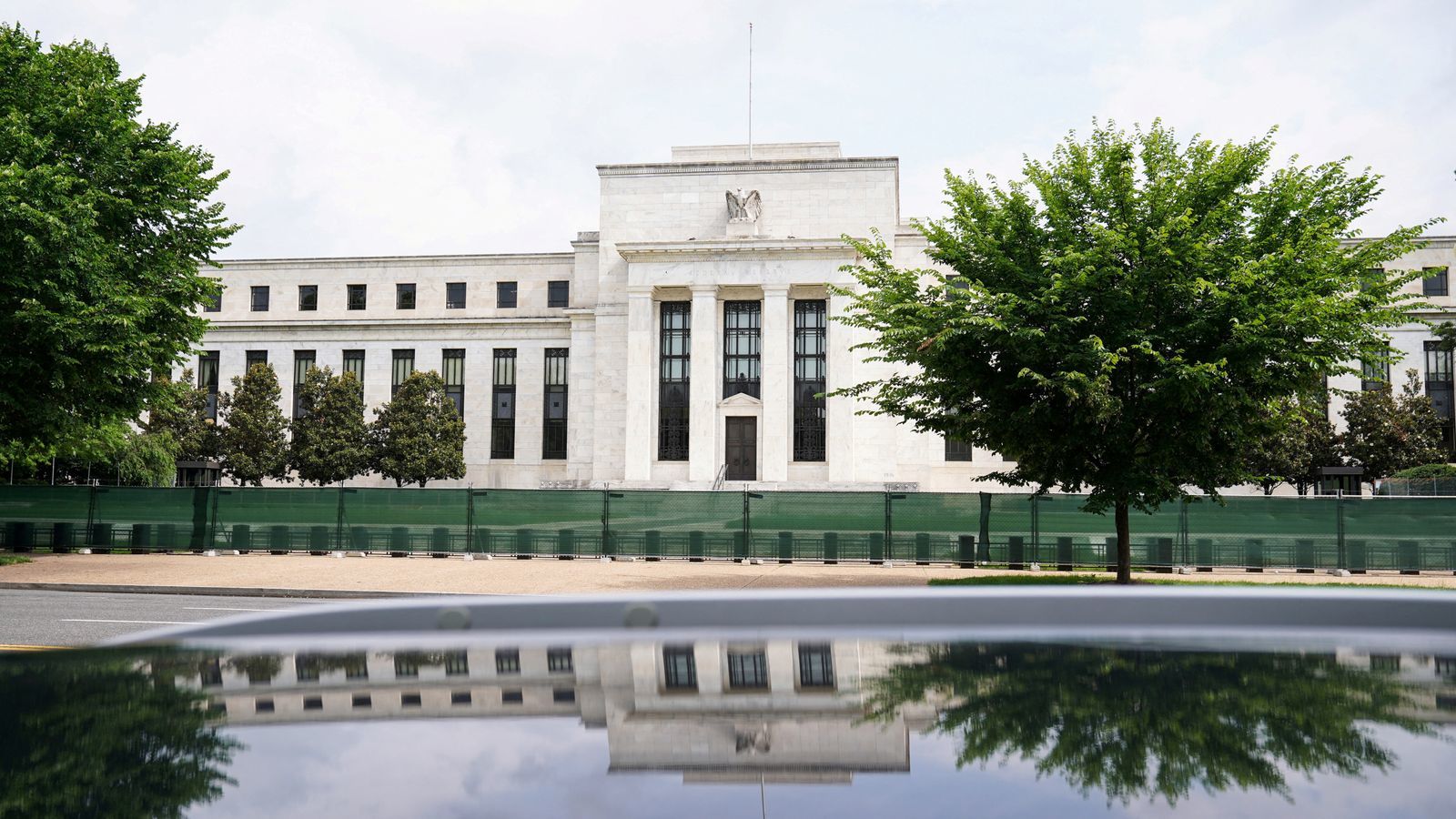
The Federal Reserve has raised its main interest rate to a range of 4.75%-5% and is expected to hike again next month


By that measure, the US economy would have been in recession during the first half of last year.

But the country defines such a contraction differently. It is determined by a committee of experts.

The US economy's low jobless rate largely prevented a recession being declared last year but conditions are darkening for 2023.

Many economists say the cumulative impact of the Fed Reserve's rate hikes has yet to be fully felt while the pace of hiring is slowing.

Many banks, which are charging higher interest rates as a result, have also muddied the waters due to a tightening of lending standards since the failure last month of two major banks - Silicon Valley Bank and Signature Bank.

There are signs the crisis of confidence is not over yet as First Republic, a major regional lender, has seen a fresh run on its share price this week taking it to fresh lows.

It was effectively rescued last month by a $30bn cash injection from 11 major peers and revealed on Tuesday that $100bn had been withdrawn by depositors during the frenzy to grip the sector.

It has been reported that the federal government is unwilling to engineer a rescue.

Another political challenge is also gaining traction.

The Republican-dominated House of Representatives has moved to pressure President Biden over a looming debt ceiling deadline by voting to raise the limit only in exchange for big spending cuts.

A default would plunge the US economy into chaos so it forces Mr Biden to negotiate with his political opponents.

Brian Klimke, investment director at Cetera Investment Management, said of the economic growth figures: "January was really the standout month and since then we've seen weakness in February and March, which has really been slowly dragging down the economy.

"If we're looking to the future, data does seem to be continuing to weaken.

"The good news is we do think a recession could be mild."

Newsletter

Related Articles

0:00
0:00
Close
Violent Pro-Iranian Protesters Storm U.S. Consulate in Karachi
Missile Debris Sparks Fires at Dubai’s Jebel Ali Port Near Palm Jumeirah
Iran Strikes U.S. Fifth Fleet Headquarters in Bahrain Amid Wider Gulf Retaliation
When the State Replaces the Parent: How Gender Policy Is Redefining Custody and Coercion
Bill Clinton Denies Knowing Woman in Hot Tub Photo During Closed-Door Epstein Deposition
Former U.S. President Bill Clinton Testifies on Ties to Jeffrey Epstein Before Congressional Oversight Committee
Dyson Reaches Settlement in Landmark UK Forced Labour Case
Barclays and Jefferies Shares Fall After UK Mortgage Lender Collapse Rekindles Credit Market Concerns
Play Exploring Donald Trump’s Rise to Power by ‘Lehman Trilogy’ Author to Premiere in the UK
Man Arrested After Churchill Statue Defaced in Central London
Keir Starmer Faces Political Setback as Labour Finishes Third in High-Profile By-Election
UK Assisted Dying Bill Set to Fall Short in Parliament as Regional Initiatives Gain Ground
UK Defence Ministry Clarifies Position After Reports of Imminent Helicopter Contract
Independent Left-Wing Plumber Secures Shock Victory as Greens Surge in UK By-Election
Reform UK Refers Alleged ‘Family Voting’ Incidents in By-Election to Police
United Kingdom Temporarily Withdraws Embassy Staff from Iran Amid Heightened Regional Tensions
UK Government Reaches Framework Agreement on Release of Mandelson Vetting Files
UK Police Contracts With Israeli Surveillance Firms Spark Debate Over Ethics and Oversight
United Airlines Passenger Hears Cockpit Conversations After Accessing In-Flight Audio Channel
Spain to Conduct Border Checks on Gibraltar Arrivals Under New Post-Brexit Framework
Engie Shares Jump After $14 Billion Agreement to Acquire UK Power Grid Assets
BNP Paribas Overtakes Goldman Sachs in UK Investment Banking League Tables
Geothermal Project to Power Ten Thousand Homes Marks UK Renewable Energy Milestone
UK Visa Grants Drop Nineteen Percent in 2025 as Migration Controls Tighten
Barclays and Jefferies Among Banks Exposed to Collapse of UK Mortgage Lender MFS
UK Asylum Applications Edge Down in 2025 Despite Rise in Small Boat Crossings
Jefferies Reports Significant Exposure After Collapse of UK Lender MFS
FTSE 100 Reaches Fresh Record Highs as Major Share Buybacks and Earnings Lift London Stocks
So, what's happened is, I think, government policy, not just under Labour, but under the Conservatives as well, has driven a lot of small landlords out of business.
Larry Summers, the former U.S. Treasury Secretary, is resigning from Harvard University as fallout continues over his ties to Jeffrey Epstein.
U.S. stocks ended higher on Wednesday, with the Dow gaining about six-tenths of a percent, the S&P 500 adding eight-tenths of a percent, and the tech-heavy Nasdaq climbing roughly one-and-a-quarter percent.
From fears of AI-fuelled unemployment to Big Tech's record investment, this is AI Weekly.
Apple just dropped iOS 26.4.
US Lawmakers Seek Briefing from UK Over Reported Encryption Order Directed at Apple
UK Business Secretary Calls on EU to Remove Trade Barriers Hindering Growth
Legal Pathways for Removing Prince Andrew from Britain’s Line of Succession Examined
PM Netanyahu welcome India PM Narendra Modi to Israel
Shadow Diplomacy: How Harry and Meghan’s Jordan Trip Undermines the Monarchy
Sir Jim Ratcliffe, co-owner of Manchester United, comments on immigration in the UK.
Bill Gates, the UN and the WEF are attempting to construct "a giant digital gulag for all of humanity" via digital ID, CBDCs and vaccine passport infrastructure.
Britain’s Channel Crisis: Paying Billions While the Boats Keep Coming
Downing Street’s Veteran Deception Scandal
UK HealthCare Expands ‘Food as Health’ Initiative Statewide to Tackle Chronic Illness in Kentucky
Leonardo Chief Says UK Set to Decide on New Medium Helicopter Programme
UK Slows Chagos Islands Agreement After Concerns Raised in Washington
European and UK Stock Markets Reach Fresh Highs as Banks and Miners Lead Rally
UK Government Insists Chagos Islands Negotiations Continue After Minister’s ‘Pause’ Remark
No Confirmed Deal for Engie to Acquire UK Power Networks Amid Market Speculation
UK Reaffirms Updated Entry Requirements for Travellers as of February 25, 2026
General Atlantic to sell equity stake in ByteDance, valuing the company at $550 billion
×