London Daily

Focus on the big picture.
Sunday, Jul 19, 2026

UN court rules UK has no sovereignty over Chagos islands

UN court rules UK has no sovereignty over Chagos islands

The maritime law tribunal of the United Nations has ruled that Britain has no sovereignty over the Chagos Islands.

It criticised London for its failure to hand the territory back to Mauritius.

The judges' decision confirms a ruling by the International Court of Justice (ICJ) and a vote in the UN General Assembly.

The Indian Ocean archipelago includes a US military base. The UK has said it will hand the islands back when they're no longer needed for defence purposes.

In response to the ruling, a spokesperson for the British Foreign Office said: "The UK has no doubt as to our sovereignty over the British Indian Ocean Territory (BIOT), which has been under continuous British sovereignty since 1814. Mauritius has never held sovereignty over the BIOT and the UK does not recognise its claim."

The panel of judges at the United Nation's International Tribunal for the Law of the Sea (ITLS) explicitly criticised the UK's failure to hand the territory over to its former colony, Mauritius, by December 2019, as earlier demanded by a near-unanimous vote at the UN's General Assembly.

"The judgement… is clear and unequivocal. Mauritius is sovereign over the Chagos Archipelago," Mauritius's Prime Minister Pravind Jugnauth told the BBC.

An international lawyer representing Mauritius in its dispute with the UK called on the British government to move quickly to surrender control of the islands.

"What this means for the UK is that if it is to have any credibility around the world on the rule of law and its global branding, it needs to move immediately to bring this lamentable situation to an end," said lawyer Philippe Sands.

He argues that the ITLS judges had opted to "punish" Britain for ignoring an earlier ruling by the ICJ in The Hague.
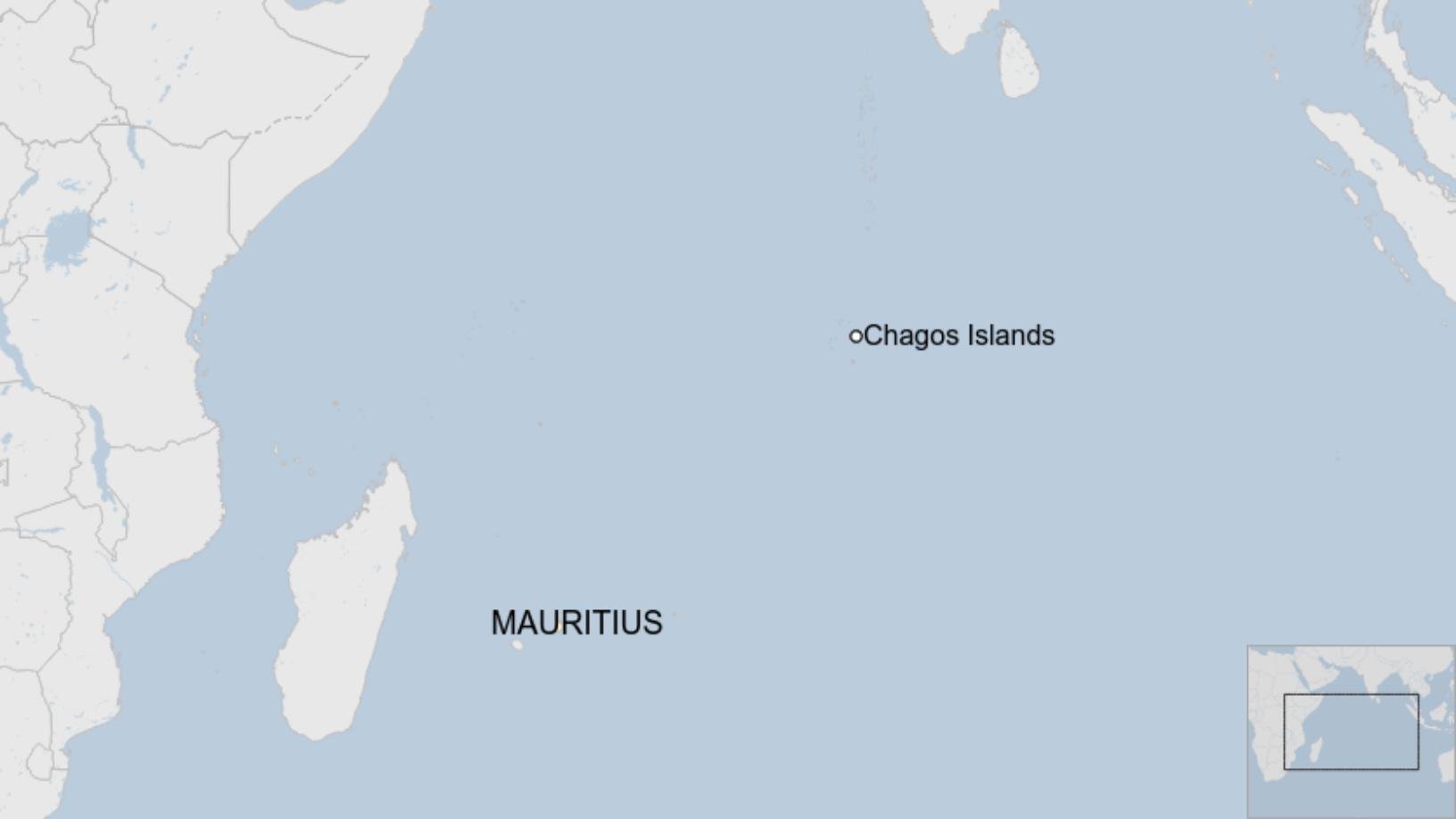


Thursday's ruling emerged from a relatively obscure legal dispute about ocean maps, fishing rights, and hidden reefs, as Mauritius sought to settle a dispute with another Indian Ocean island nation, the Maldives, over their maritime borders.

The Maldives - which supports the UK's claim to the Chagos Islands - had insisted that the boundary question could not be resolved while sovereignty remained in dispute.

The ITLS judges rejected that argument.

The UK, which was the former colonial power in Mauritius, has repeatedly promised to hand control of the Chagos archipelago back to Mauritius once the islands are no longer needed for defence purposes.

Following a secret deal between the UK and the US governments in the 1960s, one of the larger atolls, Diego Garcia, became a strategic American military airbase.

"The end of UK administration has no implications for the US military base at Diego Garcia, which Mauritius is committed to maintaining," Prime Minister Jugnauth confirmed on Thursday.

Britain and the US are anxious to counter the potential expansion of Chinese military power in the Indian Ocean, and have argued that security issues outweigh emotive arguments about the ownership of a handful of tiny, and sparsely populated islands.

Following the Brexit vote, Britain appeared to lose support at the UN.

The UN voted to send the Chagos issue to the ICJ for an advisory opinion, which came down unanimously against the UK in 2019, declaring that Britain was in violation of international law and should immediately move to complete the process of "decolonisation" in relation to Mauritius.

The ICJ's advisory opinion has now been given a powerful endorsement by the ITLS.

The ruling should enable Mauritius to start settling its new maritime borders.

Elderly Chagossians have campaigned for decades to be allowed to return to live on the islands from which some of them were forcibly removed by British troops.

Britain has organised "heritage" visits for some islanders, who now live mostly in the UK and Mauritius.- a scattering of remote atolls to the south of India and east of Africa.

There is a growing international consensus that Britain should complete the process of decolonisation immediately.


Newsletter

Related Articles

0:00
0:00
Close
Brothers Andrew and Tristan Tate Who Turned "Toxic Masculinity" Into a Brand Arrested in Miami as Britain Seeks Their Extradition
Passenger Bound for Germany Refused to Sit Beside a Woman on a Plane — Then Slapped a Flight Attendant
Ukrainian Drone Barrage Kills Eight and Strikes Russian Logistics Network
Key Trends to Watch
Financial Conduct Authority Warns Cloud and Digital Risks Are Becoming a Financial Priority
Jeffrey Donaldson Appeals Sexual Abuse Conviction as Democratic Unionist Party Opens Review
Welsh Health Authorities Launch Emergency Meningitis Vaccination Programme for Students
Scottish Business Activity Falls for Third Month as Companies Face Rising Costs
Bank of England Regulators Demand Better Access to Digital Banking Services
United Kingdom Cuts Bilateral Aid to Several African Countries by Up to Ninety Per Cent
United Kingdom Introduces Tougher Deportation Rules After Rochdale Exploitation Scandal
NHS England Launches Wearable Technology Plan to Reduce Sepsis Deaths
Amazon Web Services Billing Error Sends Trillion-Dollar Invoices to British Companies
Bank of England Takes Direct Regulatory Role Over Major Global Cloud Providers
Extreme Summer Heat Drives Record Fire Risk and Rising Deaths Across Britain
United Kingdom Nationalisation of British Steel Sparks Diplomatic Dispute With China
United Kingdom Economy Shows Weak Growth Ahead of Major Autumn Budget
Andy Burnham Set to Become United Kingdom Prime Minister After Labour Leadership Victory
The Ten World Cup Finals That Defined Football History
Smartphones Are Getting More Expensive, Sales Are Collapsing, and Even Apple Admits: "Prices Will Rise"
The Monaco Bombing Has Become a Test of Ukraine’s Intelligence Accountability
Leadership Change and Strategic Rivalry Redraw the Political Map
Energy Risk, Uneven Growth and the New Geography of Global Capital
The AI Race Enters Its Infrastructure Era
Security and resilience remain long-term national priorities
Britain balances growth ambitions with public finance pressures
Regional devolution becomes a defining theme of the next Labour era
Industrial strategy returns to the centre of British economic policy
Political Instability Remains a Challenge for UK Investment Confidence
Brexit Economic Debate Continues as Public Concerns Over Long-Term Impact Remain
UK Climate Risks Rise as Met Office Warns Extreme Weather Is Becoming More Common
Housing Shortages and Regional Inequality Become Key Priorities Under Incoming Labour Leadership
National Health Service Reform Remains One of Britain’s Biggest Political Challenges
Bank of England Remains at Centre of UK Economic Debate Over Inflation and Growth
UK Economy Shows Recovery Signs but Households and Businesses Remain Under Pressure
Britain Deepens European Defence Cooperation as NATO Allies Seek Stronger Security Capabilities
United Kingdom Expands Sanctions Against Russian Cyber Networks Over Security Threats
UK Industrial Strategy Faces Test After Government Takes Control of British Steel
British Businesses Seek Policy Clarity as Andy Burnham Prepares to Lead Labour Government
Andy Burnham’s Labour Leadership Signals Major Shift Toward Regional Power and Devolution
British Steel Nationalisation Creates New UK-China Tensions Over Control of Strategic Industry
For 36 Years, He Scammed About 300 Luxury Hotels — Until He Was Caught
England's World Cup Exit Expected to Cost Hospitality and Retail £334 Million
Former ICC Prosecutor Aide Speaks Publicly About Allegations Against Karim Khan
Opposition Raises Questions Over June Heatwave Power Grid Pressures
Mastercard Explores Sale of Majority Stake in UK Payments Operator Vocalink
Boeing Forecasts Global Commercial Aircraft Fleet Will Double by 2045
London GP Surgeries Receive £18 Million to Expand Primary Care Capacity
Health Advisers Recommend Nationwide Meningitis B Vaccination for Teenagers
OECD Warns UK Economy Faces Slower Growth and Weak Productivity
×