London Daily

Focus on the big picture.
Thursday, Jun 18, 2026

UK vaccine passports likely to be dropped as way of lifting restrictions

UK vaccine passports likely to be dropped as way of lifting restrictions

Ministers look at how theatres and nightclubs can fully open and spectator events can restart

Plans to make Covid documents a requirement of entry to mass events are likely to be dropped as the government grapples with how it can safely lift the final set of restrictions in England within weeks.

Ministers have been investigating making coronavirus status certificates compulsory in some settings for months, following the lead of Israel, which introduced a “green pass” for people to demonstrate their low-risk of having or transmitting the disease.

As the UK’s vaccination programme continues at greater speed than most countries, questions in Whitehall have focused on how best fully to reopen sectors such as theatres and nightclubs, and restart spectator events including festivals and concerts, without social distancing.

But the Guardian has been told that status documents, which would display proof of vaccination, a recent negative test result, or antibodies, are unlikely to be introduced ahead of 21 June – the final stage of Boris Johnson’s roadmap out of lockdown when all legal limits on social contact are due to be scrapped.

In February, the prime minister announced a review into Covid status certificates – suggesting they could be used in places such as pubs. But the investigation team, led by Cabinet Office minister Michael Gove, later dropped the idea of the documents being required in hospitality settings or any “essential” shop.

Government sources with knowledge of the review have suggested that plans to make the documents a legal requirement are likely to be axed. One said the certificates are “not happening on current thinking” – pointing to Israel preparing to ditch its “green pass” for domestic settings from 1 June – while another said it was an “open secret”.

A third insider stressed that the documents were likely to be used only for international travel, but that the NHS app – which people can use to prove their vaccine status when heading abroad – is continuing to be developed to include negative test results.

The scheme is said not to have been abandoned completely and could be brought back later in the year, if necessary.
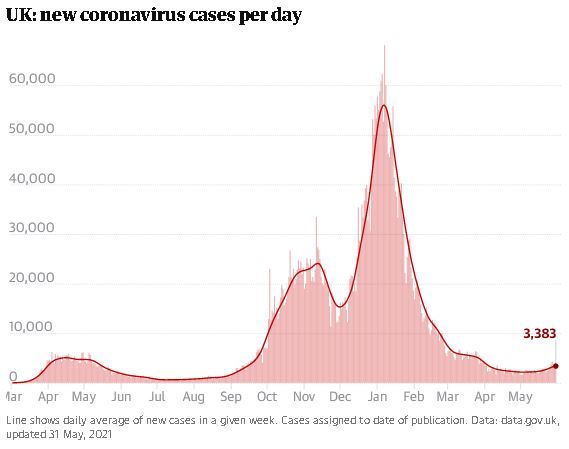

Among reasons for the diminishing interest cited in a report in the Daily Telegraph are that the NHS app could not have been used by foreign visitors and that some people have medical exemptions to getting jabs, with the added complication of children still not being eligible for a vaccine.

The Covid status certificate plan was dealt a severe blow last month, when trials at several mass events were ditched after a “massive backlash”.

Dozens of Conservative MPs have also raised concerns about the plan publicly, and several more have privately, with Johnson facing a backlash that could effectively have wiped out the government’s majority in the Commons.

While businesses are still free to draw up their own schemes, so long as they comply with equalities legislation, the Guardian revealed in April that the Equality and Human Rights Commission warned the documents could amount to unlawful discrimination.

Gove said this week the decision about introducing Covid status certificates remained “finely balanced” and stressed the potential downsides, including “the cost, and the hassle factor”.

A government spokesperson said: “The Covid status certification review is ongoing and no final decisions have been taken yet. The chancellor of the duchy of Lancaster will update parliament after recess.”


Newsletter

Related Articles

0:00
0:00
Close
Health Authorities Warn of Rising Cases of Seasonal Respiratory Illnesses
BAE Systems and Rolls-Royce Advance Multi-Nation Fighter Aircraft Programme
National Archives Publish Declassified Documents on Cold War Energy Security Planning
British Retail Spending Rises Despite Continuing Cost-of-Living Pressures
Wales Launches Social Housing Pilot to Address Affordability Pressures
British Energy Companies Commit £5 Billion to Geothermal and Hydrogen Projects
Northern Ireland Debates Cross-Border Healthcare Partnership With the Republic of Ireland
UK Establishes National Artificial Intelligence Safety Centre With Leading Universities
UK Reports Decline in Small Boat Crossings After Expanding Intelligence Cooperation With France
Scottish Parliament Launches Inquiry Into Delays to Renewable Energy Projects
National Crime Agency Dismantles Alleged Multi-Million-Pound Money Laundering Network in London
Transport Strikes Disrupt Rail and Bus Services Across Northern England
United Kingdom and European Union Open New Security Dialogue on Defense and Border Cooperation
Bank of England Holds Interest Rates at 5% as Services Inflation Remains Elevated
UK Government Unveils Major National Health Service Reform Focused on Decentralization and Performance Funding
Government Advances New Airport Slot Rules to Ease Airline Operating Constraints
BBC Opens Flagship Science-Fiction Franchise to Competitive Production Bids
Chancellor Meets City Leaders Amid Concerns Over Gilt Market Liquidity
Rathbones Shares Fall Seventeen Percent After Regulatory Review Reveals Compliance Failings
United Kingdom Joins Group of Seven Initiative Using Artificial Intelligence and Quantum Computing for Cancer Research
Parliament Debates Doubling Tax Allowance for Pensioners After Major Public Petition
Measles Cases Exceed Seven Hundred in London and the West Midlands
British Military Leadership Faces Parliamentary Scrutiny After Defence Secretary's Sudden Resignation
House of Lords Begins Debate on Steel Industry Nationalisation Legislation
Parliament Advances Bill to Abolish NHS England and Create Single Patient Records
Parliament Fast-Tracks National Security Bill to Expand Powers Against Foreign Threats
United Kingdom and European Union Set July Summit to Deepen Post-Brexit Cooperation
United Kingdom Imposes Seventy New Sanctions on Russia and Expands Support for Ukraine's Nuclear Sector
United Kingdom Announces Social Media Ban for Children Under Sixteen
0British Government Investigates Reports of Russian Warship Firing Warning Shots Near Isle of Wight
UK Supreme Court Revises Legal Definition of Deprivation of Liberty
King’s Birthday Honours Recognise Contributions Across Science, Culture and Public Service
UK Ministry of Defence Reports Interdiction of Russian Shadow Fleet Vessel
UK and US Launch Joint Regulatory Programme for Medicines and Healthcare Products
Solicitor General Refers Murder Sentence to Court of Appeal Under Unduly Lenient Scheme
UK Launches £1.6 Million Mobile Museum Initiative to Expand Cultural Access
Judicial Pay Structure Undergoes Government Review Following Senior Recommendations
Government Confirms Nearly 180 New Youth Hubs Across the United Kingdom
UK Government Expands Careers Support Through Partnership with LinkedIn
Digital News Report Highlights Growing Global Concern Over AI and Information Overload
UK Chancellor Reaffirms Fiscal Discipline and Borrowing Reduction Strategy
UK Government Invests £219 Million in Sustainable Aviation Fuel Development
Rolls-Royce Small Modular Reactors Secures Major Swedish Export Contract
Government Confirms Locations for Nearly 180 Youth Hubs Across Great Britain
UK Government Partners with LinkedIn to Expand Employment Support Services
Reuters Institute Report Flags Rising Public Anxiety Over News and Information Overload
UK Government Commits £219 Million to Expand Sustainable Aviation Fuel Industry
Chancellor Convenes Market Engagement Group to Assess UK Economic Outlook and Productivity Risks
Rolls-Royce Wins Multibillion-Pound Swedish Contract for Small Modular Nuclear Reactors
Government to Ban Social Media Access for Under-Sixteens Across the United Kingdom
×