London Daily

Focus on the big picture.
Sunday, Jan 25, 2026

UK heatwave: How do temperatures compare with 1976?

UK heatwave: How do temperatures compare with 1976?

People on social media have been comparing the high temperatures in much of the UK with the heatwave of 1976, suggesting that the severity of the current hot weather is being exaggerated.

So, what does the evidence show?

How hot was the summer of 1976?


The peak that year was 35.6C. That has already been beaten by the current temperatures and on Tuesday it could go as high as 41C.

The heatwave of 1976 started in June and lasted for two months. There was a lack of rainfall and a significant drought, with the government enforcing water rationing.

The heatwave was rare for that decade. The average maximum temperature in July in the 1970s was 18.7C. In the 2010s, it was more than 20C.
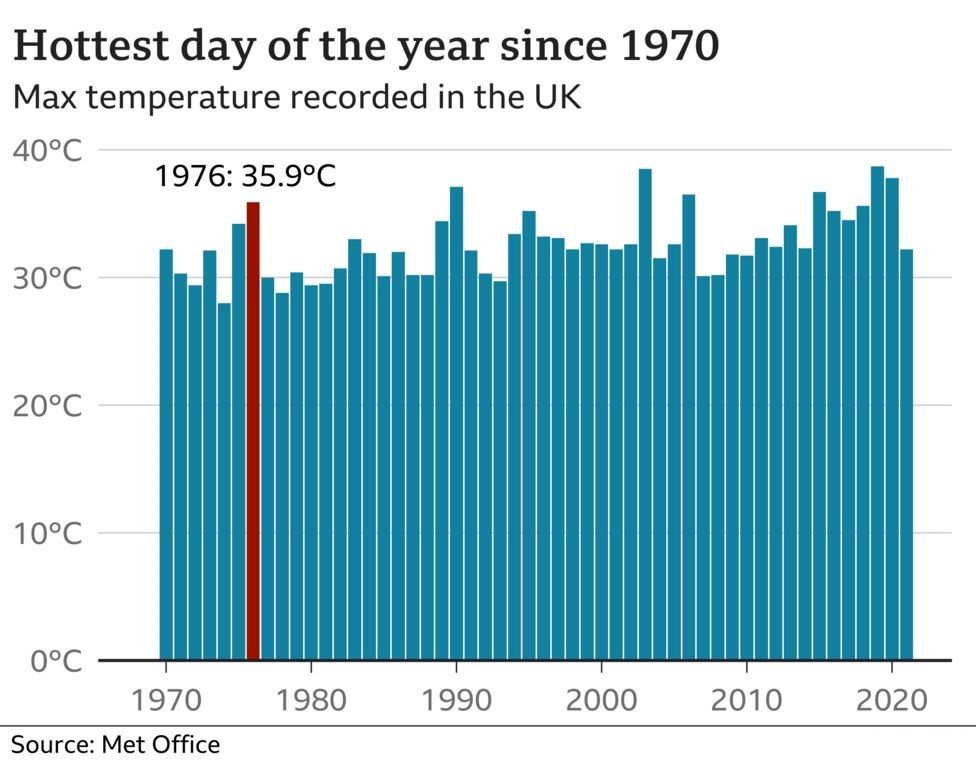

The UK has been slowly getting warmer since the 19th Century, and this has sped up. In the past three decades the country has become 0.9C warmer on average, according to the UK State of the Climate report in 2020.

Nine out of ten of the hottest days ever recorded in the UK have been since 1990, according to the Met Office.

1976 ranks 12th in the list of the hottest UK days on record (some of these, not shown in the chart above, have occurred in the same year).

"1976 was indeed a heatwave and we have had heatwaves before, but the point is they're happening more often and they're becoming more intense," says Prof Hannah Cloke, a climate scientist at the University of Reading.

There is also the scale of the heatwaves to consider, when comparing temperatures to those in 1976.

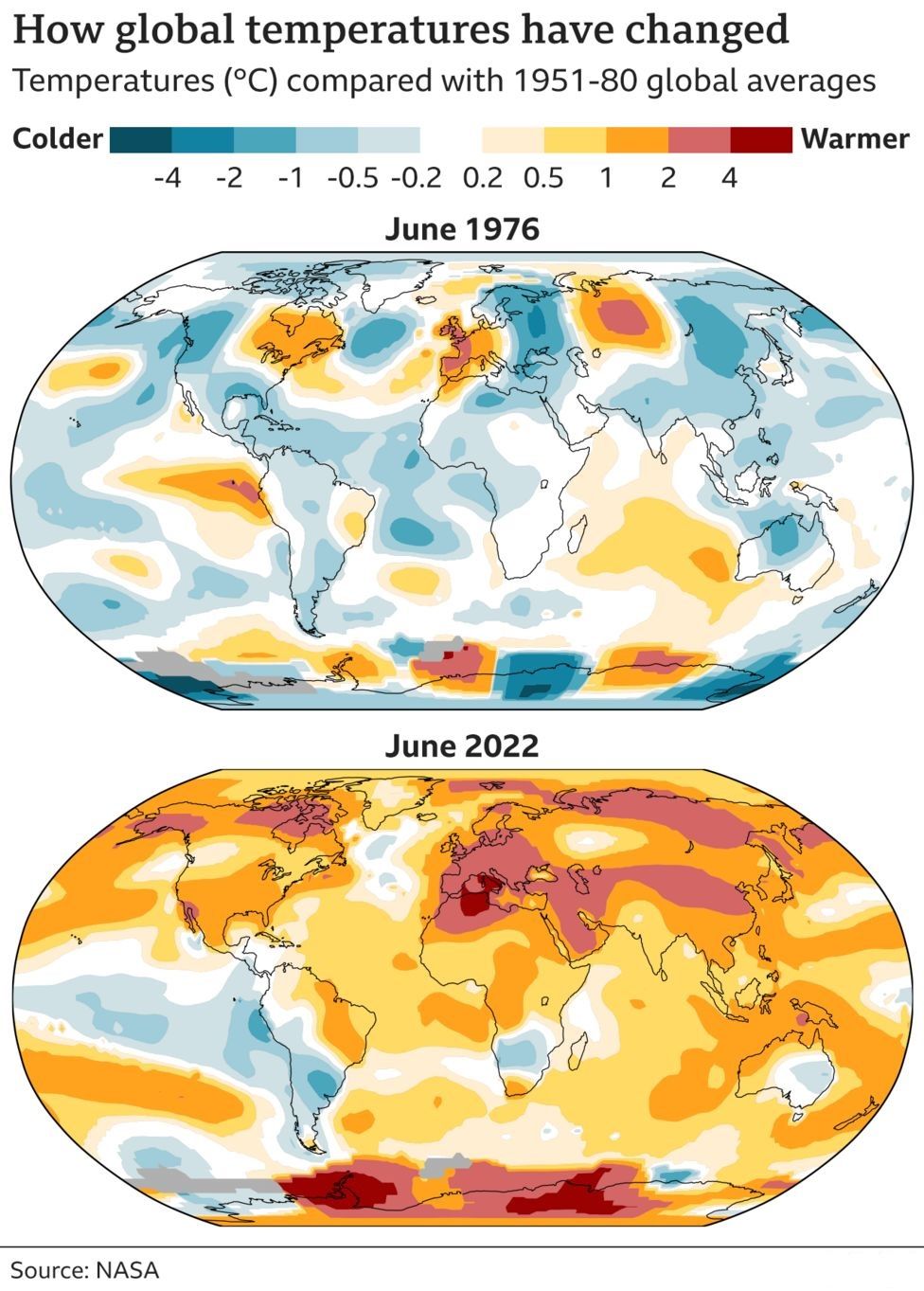
That summer, the UK and France were among a handful of countries experiencing high temperatures.

But if you look at the heat maps (produced by NASA) for June 2022, it shows many more countries affected.

"We can easily see how much warmer the global climate has become - with very few areas actually colder than normal," says BBC Weather presenter, Matt Taylor.

Who's spreading the misleading comparison?


Suggestions that there is nothing unusual about this heatwave appear to have found a willing audience among climate change sceptics.

Hundreds of people have shared their experiences of the 1976 heatwave on social media, with some making the misleading suggestion that the current heatwave is "no different".
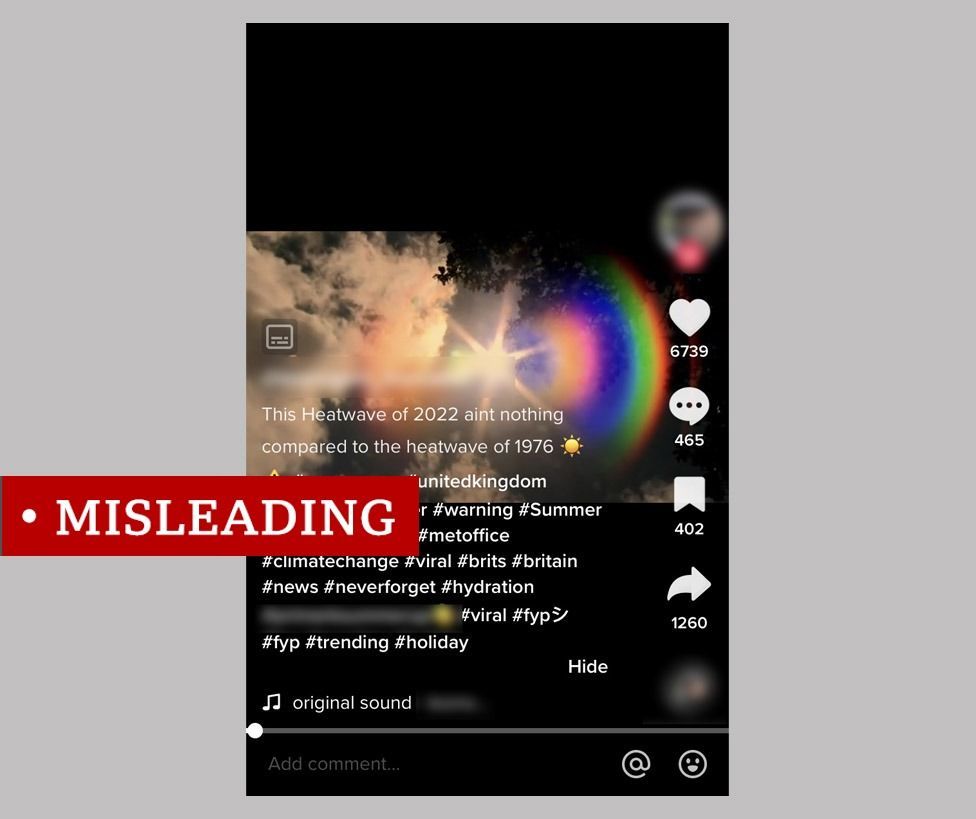

Others have accused the Met Office and the media of spreading "alarmism" and "hysteria". Some have suggested people need to "toughen up", describing those complaining about the heat as "snowflakes".

But even in the 1976 heatwave - which saw lower temperatures - excess deaths in parts of the country were up 30%.

Last week, the UK Health Security Agency issued its highest level four heat alert, warning illness and death could occur "among the fit and healthy".

The comparison with the 1976 heatwave has also proven popular among users sharing conspiracy theories - including unfounded claims that a "climate lockdown" is about to be imposed.

How is the current heatwave linked to climate change?


The Met Office estimates that this heatwave has been made ten times more likely because of climate change.

The overwhelming majority of scientists agree greenhouse gases - which trap the sun's heat - are causing a rise in global temperatures and climate change.

This has brought more extreme weather. Periods of intense heat do occur within natural weather patterns, but they are becoming more frequent around the world, more intense and are lasting longer as a result of global warming.

"We should expect more and longer heatwaves in the future," says Prof Nigel Arnell, a climate scientist at Reading University.


Newsletter

Related Articles

0:00
0:00
Close
ICE and DHS immigration raids in Minneapolis: the use-of-force accountability crisis in mass deportation enforcement
UK’s Starmer and Trump Agree on Urgent Need to Bolster Arctic Security
Starmer Breaks Diplomatic Restraint With Firm Rebuke of Trump, Seizing Chance to Advocate for Europe
UK Finance Minister Reeves to Join Starmer on China Visit to Bolster Trade and Economic Ties
Prince Harry Says Sacrifices of NATO Forces in Afghanistan Deserve ‘Respect’ After Trump Remarks
Barron Trump Emerges as Key Remote Witness in UK Assault and Rape Trial
Nigel Farage Attended Davos 2026 Using HP Trust Delegate Pass Linked to Sasan Ghandehari
Gold Jumps More Than 8% in a Week as the Dollar Slides Amid Greenland Tariff Dispute
BlackRock Executive Rick Rieder Emerges as Leading Contender to Succeed Jerome Powell as Fed Chair
Boston Dynamics Atlas humanoid robot and LG CLOiD home robot: the platform lock-in fight to control Physical AI
United States under President Donald Trump completes withdrawal from the World Health Organization: health sovereignty versus global outbreak early-warning access
FBI and U.S. prosecutors vs Ryan Wedding’s transnational cocaine-smuggling network: the fight over witness-killing and cross-border enforcement
Trump Administration’s Iran Military Buildup and Sanctions Campaign Puts Deterrence Credibility on the Line
Apple and OpenAI Chase Screenless AI Wearables as the Post-iPhone Interface Battle Heats Up
Tech Brief: AI Compute, Chips, and Platform Power Moves Driving Today’s Market Narrative
NATO’s Stress Test Under Trump: Alliance Credibility, Burden-Sharing, and the Fight Over Strategic Territory
OpenAI’s Money Problem: Explosive Growth, Even Faster Costs, and a Race to Stay Ahead
Trump Reverses Course and Criticises UK-Mauritius Chagos Islands Agreement
Elizabeth Hurley Tells UK Court of ‘Brutal’ Invasion of Privacy in Phone Hacking Case
UK Bond Yields Climb as Report Fuels Speculation Over Andy Burnham’s Return to Parliament
America’s Venezuela Oil Grip Meets China’s Demand: Market Power, Legal Shockwaves, and the New Rules of Energy Leverage
TikTok’s U.S. Escape Plan: National Security Firewall or Political Theater With a Price Tag?
Trump’s Board of Peace: Breakthrough Diplomacy or a Hostile Takeover of Global Order?
The Greenland Gambit: Economic Genius or Political Farce?
Will AI Finally Make Blue-Collar Workers Rich—or Is This Just Elite Tech Spin?
Prince William to Make Official Visit to Saudi Arabia in February
Prince Harry Breaks Down in London Court, Says UK Tabloids Have Made Meghan Markle’s Life ‘Absolute Misery’
Malin + Goetz UK Business Enters Administration, All Stores Close
EU and UK Reject Trump’s Greenland-Linked Tariff Threats and Pledge Unified Response
UK Deepfake Crackdown Puts Intense Pressure on Musk’s Grok AI After Surge in Non-Consensual Explicit Images
Prince Harry Becomes Emotional in London Court, Invokes Memory of Princess Diana in Testimony Against UK Tabloids
UK Inflation Rises Unexpectedly but Interest Rate Cuts Still Seen as Likely
AI vs Work: The Battle Over Who Controls the Future of Labor
Buying an Ally’s Territory: Strategic Genius or Geopolitical Breakdown?
AI Everywhere: Power, Money, War, and the Race to Control the Future
Trump vs the World Order: Disruption Genius or Global Arsonist?
Arctic Power Grab: Security Chessboard or Climate Crime Scene?
Starmer Steps Back from Trump’s ‘Board of Peace’ Amid Strained US–UK Relations
Prince Harry’s Lawyer Tells UK Court Daily Mail Was Complicit in Unlawful Privacy Invasions
UK Government Approves China’s ‘Mega Embassy’ in London Amid Debate Over Security and Diplomacy
Trump Cites UK’s Chagos Islands Sovereignty Shift as Justification for Pursuing Greenland Acquisition
UK Government Weighs Australia-Style Social Media Ban for Under-Sixteens Amid Rising Concern Over Online Harm
Trump Aides Say U.S. Has Discussed Offering Asylum to British Jews Amid Growing Antisemitism Concerns
UK Seeks Diplomatic De-escalation with Trump Over Greenland Tariff Threat
×