London Daily

Focus on the big picture.
Monday, Apr 20, 2026

UK health department plan for return to office working put on hold

UK health department plan for return to office working put on hold

Exclusive: DHSC scraps timetable requiring civil servants to be in offices for up to eight days a month from September

Sajid Javid’s health department has abandoned plans to end civil servants’ ability to work from home full-time.

Staff at the Department of Health and Social Care (DHSC) were told this week that the requirement for them to be working in Whitehall between four and eight days every month, meant to come into force from September, had been scrapped.

It came as Downing Street said there should be a gradual return of mandarins to their desks over the summer.

Different government departments are taking divergent approaches to managing workforces that have changed dramatically since the Covid outbreak began – with many staff seconded into different teams. A government source said there had been “massive fluctuations in numbers”, meaning office space was at a premium in some places.

However from 19 July, the government has dropped its formal advice for people to work from home where possible, now leaving it up to employers. Some Tory MPs have encouraged Whitehall to “lead by example” by telling civil servants to come back to Westminster.

The chancellor, Rishi Sunak, compounded that pressure by recently extolling the benefits of working in an office, saying it was “really beneficial” for him when he started his career to meet colleagues in person.

“I doubt I would have had those strong relationships if I was doing my summer internship or my first bit of my career over Teams and Zoom,” he said, adding that “for young people in particular, being in able to physically be in the office is valuable”.

The comments signalled a more cautious approach was being taken than the one taken last year, when briefings abounded that people should go back to the office or risk losing their job.

DHSC had put its staff on notice that from September, the “minimum expectation” was they would need to be in the office for a minimum of four and a maximum of eight days every month – unless there was a business or wellbeing reason.

However in an announcement seen by the Guardian, DHSC’s director of workplace and director of HR told staff on Thursday that “it’s clear that we cannot proceed with this phase on the planned timescale”.

“As always, we’ll continue reviewing the public health advice as it’s updated, and we’ll still aim to move to phase 2 in the coming months,” the note said, adding this would rely on “further changes” to the guidance on Covid-secure work spaces.

Layla Moran, a Liberal Democrat MP and chair of the all-party parliamentary group on coronavirus, said it was an example of “yet more mixed messaging from the government at a time when the public and businesses need clarity”.

She said the decision contrasted with Sunak’s comments, “showing the inconsistency at the heart of the government’s approach”.

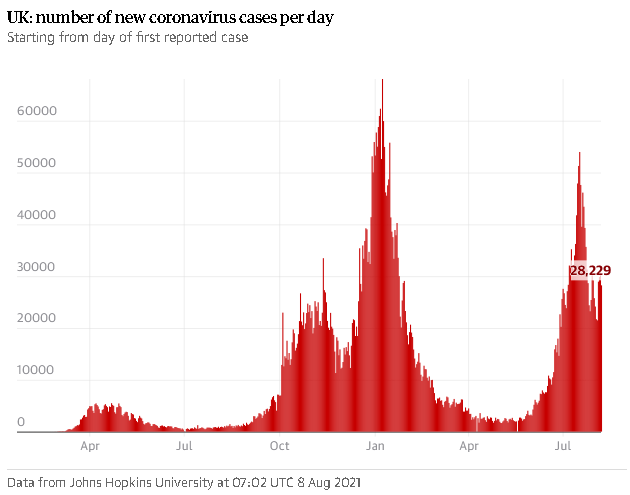
Moran added: “Ministers shouldn’t be urging people back to the office at a time when cases remain high and against the government’s own workplace safety guidance. Reducing transmission remains important to prevent the emergence of new variants that could evade current vaccines.”

In consultations on the return to offices, some DHSC staff said they felt forcing people to come back to Whitehall was “unnecessary” – given their ability to work remotely during a hugely challenging period – and have resisted moves to introduce a set number of days on which people are mandated to be in the office. But others have said younger workers and new starters will miss out on building relationships with colleagues.

Earlier this week, No 10 said the number of civil servants returning to the office was increasing “gradually and cautiously”.

A government spokesperson said: “Our approach, which builds on our learning during the pandemic, takes advantage of the benefits of both office and home-based working across the UK.

“Departments have flexibility to make working arrangements which meet their requirements.”

Comments

Martin Frowd 137 days ago
This article is over four years old (Aug 2021), why is it appearing on a current search and with today's (3 Dec 2025) date on it?

Newsletter

Related Articles

0:00
0:00
Close
News Roundup
Microsoft lost 2.5 millions users (French government) to Linux
Privacy Problems in Microsoft Windows OS
News roundup
Péter András Magyar and the Strategic Reset of Hungary
Hungary After the Landslide — A Strategic Reset in Europe
Meghan Markle Plans Exclusive Women-Focused Retreat During Australia Visit
Starmer and Trump Hold Strategic Talks on Securing Strait of Hormuz Amid Rising Tensions
Unofficial Australia Visit by Prince Harry and Meghan Expected to Stir Tensions with Royal Circles
Pipeline Attack Cuts Significant Share of Saudi Arabia’s Oil Export Capacity
UK Stocks Rise on Ceasefire Momentum and Renewed Focus on Diplomacy
UK to Hold Further Strategic Talks on Strait of Hormuz Security
Starmer Voices Frustration as Global Tensions Drive Up UK Energy Costs
UK Students Voice Concern Over Proposal for Automatic Military Draft Registration
Rising Volatility Drives Uncertainty in UK Fuel and Petrol Prices
UK Moves to Deploy ‘Skyhammer’ Anti-Drone System to Strengthen Airspace Defense
New Analysis Explores UK Budget Mechanics in ‘Behind the Blue’ Feature
Man Arrested After Four Die in Channel Crossing Tragedy
UK Tightens Immigration Framework with New Sponsor Rules and Fee Increases
UK Foreign Secretary Highlights Impact of Intensified Strikes in Lebanon
UK Urges Inclusion of Lebanon in US-Iran Ceasefire Framework
UK Stocks Ease as Ceasefire Doubts in Middle East Weigh on Investor Confidence
UK Reassesses Cloud Strategy Amid Criticism Over Limited Support Measures
UK Calls for Full and Toll-Free Access Through Strait of Hormuz Amid Rising Tensions
Starmer Signals Strategic Shift for Britain Amid Escalating Iran-Linked Tensions
UK Issues Firm Warning to Russia Over Covert Underwater Military Activity
OpenAI Halts Stargate UK Project, Casting Uncertainty Over Britain’s AI Expansion Plans
Starmer Voices Frustration Over Global Pressures Driving UK Energy Costs Higher
UK Deploys Military Assets to Protect Undersea Cables From Suspected Russian Threat
Canada Aligns With US, UK and Australia as Europe Prepares Major Digital Border Overhaul
Meghan Markle’s Planned Australia Appearance Sparks Fresh Speculation
Starmer Warns Sustained Effort Needed to Ensure US–Iran Ceasefire Holds
UK to Partner with Shipping Industry to Rebuild Confidence in Strait of Hormuz, Cooper Says
UK Interest Rate Expectations Ease Following US–Iran Ceasefire Agreement
Starmer Signals Major Effort Needed to Fully Reopen Strait of Hormuz During Gulf Visit
UK Fuel Prices Face Ongoing Volatility Amid Global Pressures and Domestic Factors
Kanye West’s Planned Italy Festival Appearance Draws Debate After UK Entry Ban
Smuggling Routes Shift Toward Belgium as Migrant Crossings to UK Evolve
Ceasefire Offers Potential Relief for UK Fuel and Food Prices Amid Ongoing Uncertainty
Iran Conflict Raises Questions Over UK’s Global Influence and Military Preparedness
Senator McConnell Visits Kentucky to Highlight Federal Investment in Local Projects
Kanye West Barred from Entering UK as Legal Grounds Come into Focus
UK Denies Visa to Kanye West After Sponsors Withdraw from Wireless Festival
Trump-Era Forest Service Restructuring Leads to Closure of UK Lab Focused on Kentucky Woodland Health
Foreign Students in the UK Describe Harsh Living Conditions and Financial Pressures
Reform UK Proposes Visa Restrictions on Nations Pursuing Reparations Claims
Public Reaction Divides Over UK Decision to Bar Kanye West
Calls Grow for UK to Review US Base Access Following Concerns Over Escalating Rhetoric
UK Indicates It Will Not Permit Use of Its Bases for Potential US Strikes on Iran’s Energy Infrastructure
UK Prime Minister Defends Decision to Bar Kanye West, Questions Festival Booking
×