UK Elections Expose Strain in Political System as Voter Fragmentation Deepens
Local election results are intensifying pressure on Britain’s main parties, revealing declining voter loyalty, regional instability, and growing volatility in national politics
The United Kingdom’s local elections have become a stress test of the country’s political system, exposing a broader structural shift away from traditional two-party dominance toward fragmented and regionally uneven voter behaviour.
What is driving the story is a system-level transformation: the gradual erosion of stable party loyalty that has underpinned British politics for decades.
As results continue to be counted and analysed, early outcomes point to significant losses for the two dominant national parties, Labour and the Conservatives, alongside gains for smaller parties and independents in several council areas.
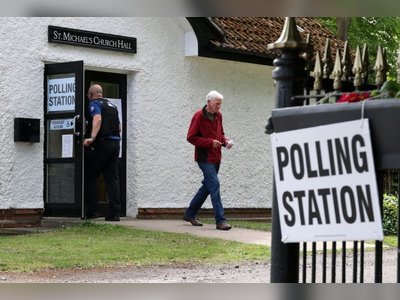
While local elections are not direct indicators of general election outcomes, they are widely used as a proxy for national political sentiment.
This cycle has intensified that interpretation because of unusually high volatility in voting patterns.
The Conservatives have faced particular pressure in several regions where they previously held strong council control, with losses attributed to voter dissatisfaction over national economic conditions, public services, and internal party instability following years of leadership changes.
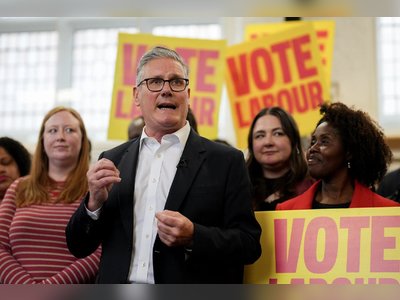
Labour, despite leading nationally in opinion polling, has also experienced uneven performance, with gains in some urban areas offset by weaker-than-expected results in others.
Smaller parties have played a more prominent role than in previous cycles.
Reform-oriented and localist groups have captured votes from both major parties, reflecting a broader breakdown in traditional partisan alignment.
In some areas, independent candidates have benefited from highly localised campaigns focused on housing, transport, and council tax pressures rather than national ideology.
The mechanism behind this shift is not a single event but a long-term structural change.
Voter identification with major parties has weakened over time, while electoral competition has become more sensitive to local issues, leadership perceptions, and protest voting.
This has produced councils where no single party holds clear dominance and where coalition or minority control is increasingly common.
The implications extend beyond local government.
Political analysts view the results as a warning sign for national stability, particularly ahead of a general election cycle in which neither of the two major parties appears able to guarantee broad, uniform support across regions.
The fragmentation increases the likelihood of hung parliaments, coalition negotiations, and policy gridlock.
At the same time, the electoral system itself is under renewed scrutiny.
Britain’s first-past-the-post voting structure tends to amplify swings in voter sentiment, turning modest shifts in public opinion into large changes in seat allocation.
Critics argue that this dynamic now contributes to instability rather than clarity, as smaller parties can gain influence without proportional representation of national vote share.
For governing institutions, the immediate consequence is operational pressure on local councils, many of which already face tight budgets and rising demand for public services.
Political uncertainty at the national level compounds this by delaying long-term funding decisions and reform plans.
The results have therefore become more than a routine democratic exercise.
They are functioning as an early indicator of a political system under strain, where traditional alignments are weakening faster than new stable configurations are forming.
That imbalance is now shaping both local governance and the trajectory of national politics in the United Kingdom.
What is driving the story is a system-level transformation: the gradual erosion of stable party loyalty that has underpinned British politics for decades.
As results continue to be counted and analysed, early outcomes point to significant losses for the two dominant national parties, Labour and the Conservatives, alongside gains for smaller parties and independents in several council areas.
While local elections are not direct indicators of general election outcomes, they are widely used as a proxy for national political sentiment.
This cycle has intensified that interpretation because of unusually high volatility in voting patterns.
The Conservatives have faced particular pressure in several regions where they previously held strong council control, with losses attributed to voter dissatisfaction over national economic conditions, public services, and internal party instability following years of leadership changes.
Labour, despite leading nationally in opinion polling, has also experienced uneven performance, with gains in some urban areas offset by weaker-than-expected results in others.
Smaller parties have played a more prominent role than in previous cycles.
Reform-oriented and localist groups have captured votes from both major parties, reflecting a broader breakdown in traditional partisan alignment.
In some areas, independent candidates have benefited from highly localised campaigns focused on housing, transport, and council tax pressures rather than national ideology.
The mechanism behind this shift is not a single event but a long-term structural change.
Voter identification with major parties has weakened over time, while electoral competition has become more sensitive to local issues, leadership perceptions, and protest voting.
This has produced councils where no single party holds clear dominance and where coalition or minority control is increasingly common.
The implications extend beyond local government.
Political analysts view the results as a warning sign for national stability, particularly ahead of a general election cycle in which neither of the two major parties appears able to guarantee broad, uniform support across regions.
The fragmentation increases the likelihood of hung parliaments, coalition negotiations, and policy gridlock.
At the same time, the electoral system itself is under renewed scrutiny.
Britain’s first-past-the-post voting structure tends to amplify swings in voter sentiment, turning modest shifts in public opinion into large changes in seat allocation.
Critics argue that this dynamic now contributes to instability rather than clarity, as smaller parties can gain influence without proportional representation of national vote share.
For governing institutions, the immediate consequence is operational pressure on local councils, many of which already face tight budgets and rising demand for public services.
Political uncertainty at the national level compounds this by delaying long-term funding decisions and reform plans.
The results have therefore become more than a routine democratic exercise.
They are functioning as an early indicator of a political system under strain, where traditional alignments are weakening faster than new stable configurations are forming.
That imbalance is now shaping both local governance and the trajectory of national politics in the United Kingdom.