
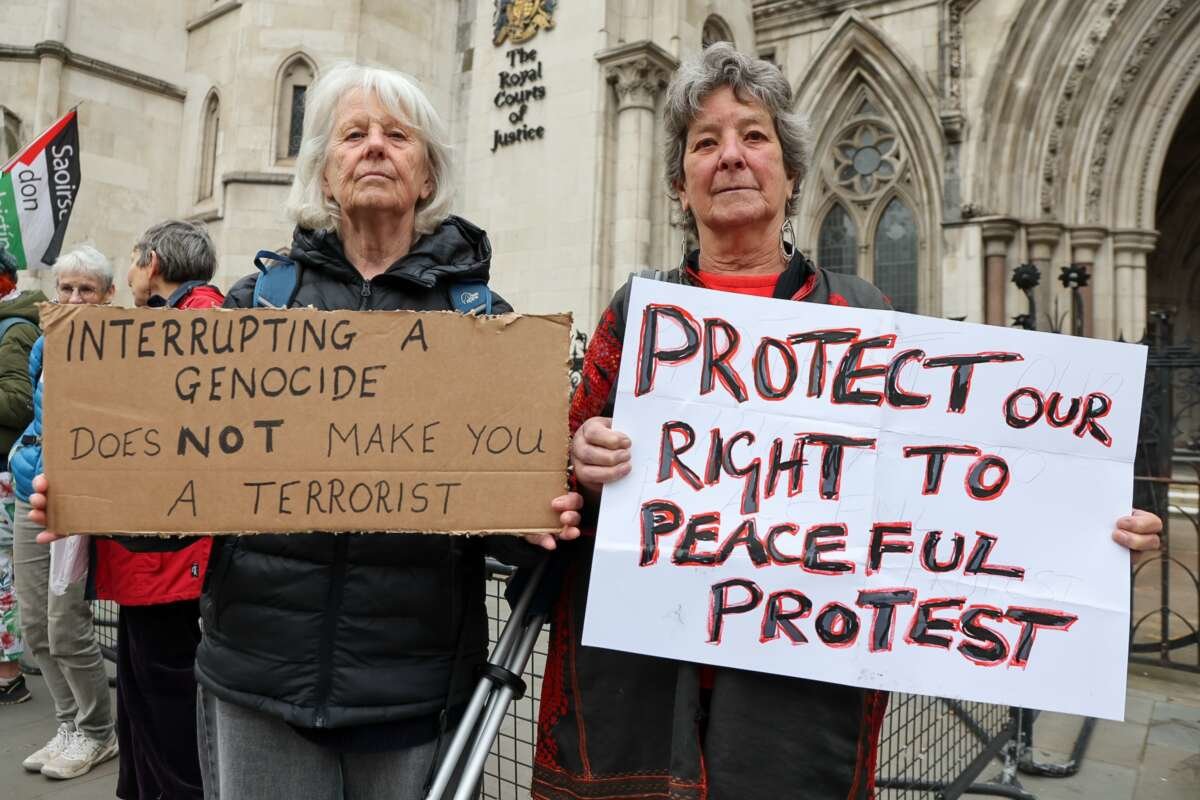
UK courts convict Palestine Action activists amid escalating legal pressure on protest movement
Recent convictions linked to protest actions against defence and arms-related sites highlight growing tensions over the boundaries of political activism and criminal law in Britain
The UK’s criminal justice system has been increasingly used to adjudicate protest activity linked to Palestine Action, a direct-action group that targets companies and sites it associates with the production or supply of military equipment used by Israel.
Recent court outcomes involving individuals connected to the group have intensified debate over where lawful protest ends and criminal conduct begins, particularly amid heightened public tensions following the Israel–Gaza war.
The core development is that courts in England have convicted activists linked to Palestine Action in cases arising from protest actions involving property damage, forced entry, or disruption at commercial and defence-related facilities.
These prosecutions have generally been brought under existing criminal law frameworks, including offences such as criminal damage, aggravated trespass, and public order violations rather than under terrorism legislation.
What is confirmed is that Palestine Action has conducted a sustained campaign of direct action targeting sites it identifies as connected to arms manufacturing or supply chains linked to Israel’s military operations.
These actions have included vandalism, occupation of premises, and attempts to disrupt production or operations.
Authorities have responded through arrests, prosecutions, and in some cases custodial sentences depending on the severity of the offence and prior criminal history of defendants.
The legal mechanism underpinning these cases is not new.
UK law allows for the prosecution of protest-related activity when it crosses into criminal damage, obstruction, or trespass.
Courts are then required to assess intent, proportionality, and the extent of harm or disruption caused.
In several recent cases, judges have ruled that the actions exceeded lawful protest rights, particularly where significant financial damage or operational disruption was demonstrated.
The broader context is a rapid expansion of protest activity across the UK linked to the Israel–Gaza conflict.
Since the escalation of hostilities, demonstrations, campus occupations, and direct-action campaigns have increased significantly, placing pressure on police resources and the courts.
Authorities have repeatedly emphasised that while peaceful protest is protected under law, certain forms of disruptive or destructive action will be prosecuted.
The key issue is the legal and political boundary between protest and criminality in a highly polarised environment.
Supporters of Palestine Action argue that their tactics are a necessary response to what they view as state-backed military supply chains and that traditional protest channels are insufficient.
Critics, including government officials and affected companies, argue that such actions amount to unlawful interference with legitimate businesses and risk escalating social tensions.
Some civil liberties groups have raised concerns that the cumulative effect of prosecutions could have a chilling impact on protest rights, particularly if sentencing is perceived as disproportionate.
At the same time, law enforcement agencies maintain that consistent application of criminal law is essential to maintaining public order and protecting infrastructure.
The trajectory of these cases indicates continued legal scrutiny of direct-action protest movements in the UK. Courts are expected to remain a central arena in determining the limits of protest behaviour, particularly as political and social divisions surrounding the conflict continue to influence domestic activism and enforcement priorities.
Recent court outcomes involving individuals connected to the group have intensified debate over where lawful protest ends and criminal conduct begins, particularly amid heightened public tensions following the Israel–Gaza war.
The core development is that courts in England have convicted activists linked to Palestine Action in cases arising from protest actions involving property damage, forced entry, or disruption at commercial and defence-related facilities.
These prosecutions have generally been brought under existing criminal law frameworks, including offences such as criminal damage, aggravated trespass, and public order violations rather than under terrorism legislation.
What is confirmed is that Palestine Action has conducted a sustained campaign of direct action targeting sites it identifies as connected to arms manufacturing or supply chains linked to Israel’s military operations.
These actions have included vandalism, occupation of premises, and attempts to disrupt production or operations.
Authorities have responded through arrests, prosecutions, and in some cases custodial sentences depending on the severity of the offence and prior criminal history of defendants.
The legal mechanism underpinning these cases is not new.
UK law allows for the prosecution of protest-related activity when it crosses into criminal damage, obstruction, or trespass.
Courts are then required to assess intent, proportionality, and the extent of harm or disruption caused.
In several recent cases, judges have ruled that the actions exceeded lawful protest rights, particularly where significant financial damage or operational disruption was demonstrated.
The broader context is a rapid expansion of protest activity across the UK linked to the Israel–Gaza conflict.
Since the escalation of hostilities, demonstrations, campus occupations, and direct-action campaigns have increased significantly, placing pressure on police resources and the courts.
Authorities have repeatedly emphasised that while peaceful protest is protected under law, certain forms of disruptive or destructive action will be prosecuted.
The key issue is the legal and political boundary between protest and criminality in a highly polarised environment.
Supporters of Palestine Action argue that their tactics are a necessary response to what they view as state-backed military supply chains and that traditional protest channels are insufficient.
Critics, including government officials and affected companies, argue that such actions amount to unlawful interference with legitimate businesses and risk escalating social tensions.
Some civil liberties groups have raised concerns that the cumulative effect of prosecutions could have a chilling impact on protest rights, particularly if sentencing is perceived as disproportionate.
At the same time, law enforcement agencies maintain that consistent application of criminal law is essential to maintaining public order and protecting infrastructure.
The trajectory of these cases indicates continued legal scrutiny of direct-action protest movements in the UK. Courts are expected to remain a central arena in determining the limits of protest behaviour, particularly as political and social divisions surrounding the conflict continue to influence domestic activism and enforcement priorities.