London Daily

Focus on the big picture.
Wednesday, Jul 29, 2026

UK economy continues recovery in July

UK economy continues recovery in July

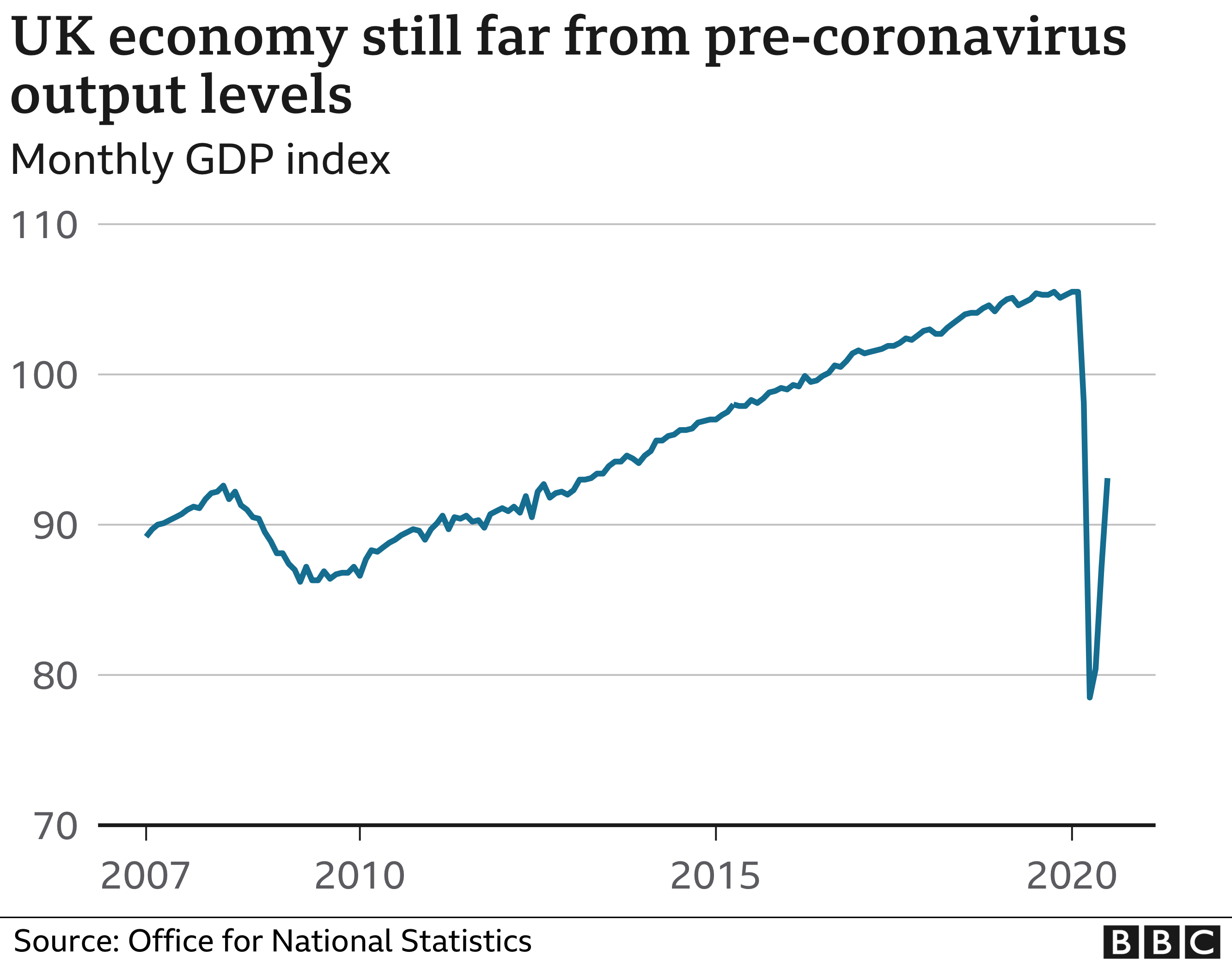
The UK economy grew by 6.6% in July, according to official figures, but output remains far below pre-pandemic levels.

It is the third month in a row that the economy has expanded.

But the Office for National Statistics (ONS) said that the UK "has still only recovered just over half of the lost output caused by the coronavirus".

Hairdressers, pubs and restaurants contributed to growth after companies were allowed to reopen in July.

However, the UK's economy is still 11.7% smaller than it was in February and growth in July was slower than the 8.7% expansion seen in June.

Thomas Pugh, UK economist at Capital Economics, said the reopening of restaurants and pubs meant the accommodation and food services sector "rose by a whopping 140.8%" between June and July.


However, activity in this sector was 60.1% below the level recorded in February.

And while Mr Pugh expects the Eat Out to Help Out scheme to provide a further boost in August, "now that most sectors in the economy are open again there is little scope for further large rises in monthly GDP".



Up, up, but not away. The UK economy continued a sharp recovery from lockdown in July, growing by a bumper 6.6% in the month. But the rate of recovery was a little slower than in June, raising some concerns about the ongoing strength of the bounce back.

The economy is still nearly 12% smaller than before the pandemic crisis, and has recovered just over half of the lost output during the shutdowns.

While the third quarter is on course to see a record number for growth and the official end of recession, fears remain that the recovery could peter out.

Business groups continue to push for extensions to government support packages that are due to close. The figures in July reflected the partial reopening of retail, manufacturing, and some public sector activities such as schools.

The UK fell into recession after activity shrank for the first and second quarters of this year after the government announced a lockdown to stop the spread of the coronavirus.

Mr Pugh questioned how strong the UK's recovery would be throughout the rest of the year.

"Talk of tax rises at the next Budget, a further deterioration in the Brexit negotiations and a worrying rise in the number of virus cases and tighter social distancing restrictions will all conspire to slow the recovery even further," he said.
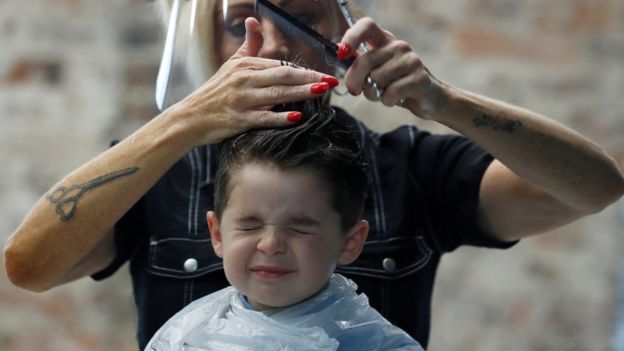

Hairdressers contributed to economic growth in July after being allowed to reopen


Dean Turner, economist at UBS Global Wealth Management, forecasts that it will take until the end of 2021 before the UK recovers to pre-pandemic levels.

"Even with a managed exit from the Brexit transition agreement, it is unlikely that the lost output would be recovered before the end of next year," he said.

"The latest twist in negotiations raises the prospect that any recovery may take longer."

Meanwhile, the Coronavirus Job Retention Scheme is due to end on 31 October.

Former prime minister Gordon Brown, warned that ending the furlough scheme was a "cliff-edge" that could trigger "a tsunami of unemployment".

"The government's got to change course here," he told the BBC's Today programme.

Mr Brown called on the government to introduce a short-time working scheme, such as those in France and Germany. This would allow firms to reduce employees' working hours while keeping them in jobs, with the state topping up their salaries.

"You have got to send a signal that unemployment matters," he said. "We don't want to destroy any more capacity and skills in the economy."


Cars, alcohol and 'staycations'


The reopening of pubs and restaurants in July boosted the alcohol industry by 32.7% while the car sector saw demand return to pre-pandemic levels.

"Car sales exceeded pre-crisis levels for the first time with showrooms having a particularly busy time," said Darren Morgan, director of economic statistics at the ONS.

"All areas of manufacturing, particularly distillers and car makers, saw improvements, while housebuilding also continued to recover."

Keeping youngsters occupied while at home also continued to boost demand for toys and games, said the ONS, while holidaying in the UK supported campsites, cottages and caravan parks "because of a large increase in staycations".

Newsletter

Related Articles

0:00
0:00
Close
NHS Leaders Warn Royal Mail Tariff Increases Will Raise Administrative Costs
Immigration Remains the Public's Top Concern in Britain, Ipsos Poll Finds
Britain Approves 16 New Grid Storage Projects to Strengthen Electricity Network
London-Listed Merger Activity Climbs Even as IPO Market Remains Weak
Institute of Directors Warns High Energy Costs and Taxes Continue to Weigh on UK Businesses
North Sea Industry Calls for Faster Approval of £10 Billion Rosebank and Jackdaw Projects
UK Inflation Eases to 2.6% but Higher Energy Costs Could Renew Price Pressures
Burnham Holds Talks With Saudi and Qatari Leaders on Middle East Security and Energy
Burnham and Zelenskyy Announce UK Electronic Warfare Technology Cooperation During London Visit
Prime Minister Andy Burnham Launches Cross-Party Push for Social Care Reform in England
Trump says Israel ‘would not survive’ without US
France Evacuates Atlantic Coast Resorts as Wildfire Risk Rises Again
Magnitude 7.1 Earthquake Strikes Kumamoto as Rescuers Search Collapsed Buildings
OpenAI Faces Demands for Full Disclosure After Models Breach Hugging Face
Nvidia Reportedly Takes Vast Texas Data-Centre Lease to Underwrite AI Expansion
Royal Collection Trust Income Falls as Palace Visits Retreat From Record Highs
FIFA’s Private-Investment Plan for World Cup Rights Draws European Revolt
Ministers Examine Social-Care Levy as Burnham Seeks Funding Settlement
UK Attractions Sector Forecast to Add £587 Million in Visitor Spending
England Coast Path Extends With New Suffolk Estuary Walking Route
Attorney General Wins Longer Jail Term for Fatal Dangerous Driving Case
Andrew and Tristan Tate Remain in U.S. Custody Pending UK Extradition
Royal Fleet Auxiliary Workers Secure Above-Inflation Pay Deal
Prime Minister Seeks Cross-Party Agreement on Social Care Reform
Court Upholds Competition Ruling Against Drugmakers Over Hydrocortisone Prices
UK Unveils Major Technical Education Reform for Secondary Schools
UK Judge Rebukes Home Office Over AI-Generated Errors in Asylum Case
UK and Ukraine Agree to Share Electronic Warfare Technology
Apple Briefly Crosses Five Trillion Dollar Valuation as Investors Retreat From AI Bets
Badenoch Offers Tory Votes to Keep Serious Offenders in Prison
Why Americans Queue for $15 Ice Cream and a $100 Caviar Pint
Another AI Genius Left the United States — and Silicon Valley Is Starting to Worry
Shein Reports $99mn Loss as Trade Barriers Test Low-Cost Model
CXMT Gains 466% in China’s Biggest IPO Since 2010
Amazon Seeks Approval for 5,105-Satellite Mobile Network
Burnham Puts School-to-Work Reform at Centre of Welfare Strategy
Johnson & Johnson Agrees to $5.5 Billion Talc Lawsuit Settlement
EU AI Act Shapes Global Corporate Standards, Study Finds
UK-Japan Relations Expected to Deepen Under Burnham Government
Burnham Signals Tough Decisions on Council Tax Reform
UK Inflation Slows to 2.6% in June
Bank of England Holds Interest Rates at 3.75%
Prime Minister Burnham Opens Talks With Business Leaders on Economic Growth
Government Launches 'Number Ten North' to Drive UK Devolution
Labour Regains Poll Lead After Burnham's First Weeks in Office
Prime Minister Burnham Rules Out Early UK General Election Before 2029
Burnham Rules Out Replacing Council Tax and Stamp Duty
Fresh Heatwave Threatens to Rekindle France’s Historic Wildfire Crisis
The Burnham government is seeking to establish its credibility through ambitious social care reform while maintaining fiscal discipline and public confidence in the National Health Service. Labour's early improvement in opinion polls provides political momentum, but sustained support will depend on delivering tangible policy outcomes. Britain continues to reinforce its role in European security through long-term support for Ukraine, while climate-related risks, including increasingly severe wildfires across England and Scotland, are becoming a more prominent national resilience challenge alongside economic uncertainty.
United Kingdom Economy Remains Exposed to Global Energy Risks
×