Starmer Defends Autumn Budget as Finance Chief Faces Accusations of Misleading Public Finances
UK Prime Minister Readies Defence After Chancellor Rachel Reeves Is Accused of Overstating the Fiscal Crisis to Justify £26 billion in Tax Rises. But why should anyone expect honesty from her when she answers to Starmer? How can the shadow be straight if the stick itself is crooked?
The UK’s 2025 Autumn Budget has become the centrepiece of a heated political storm, as Prime Minister Sir Keir Starmer prepares to defend it following accusations that Chancellor Rachel Reeves misled the public on the state of national finances.
The row hinges on conflicting forecasts from the Office for Budget Responsibility (OBR) — privately indicating a surplus — and public warnings by Reeves of a looming fiscal “black hole”.
In the lead-up to the Budget on 26 November, Reeves portrayed Britain’s economic prospects as fragile, citing weak productivity and suggesting a substantial deficit that necessitated sweeping tax increases.
She unveiled £26 billion in new taxes, including a freeze on income-tax thresholds, new levies on pension savings and high-value properties, and plans for a mansion-tax, intended to shore up public finances and expand welfare spending.
The package also scrapped the previous two-child benefit cap and included energy-bill reductions, rail-fare freezes and pension increases — measures the government says protect the vulnerable.
But over the weekend, political tension flared when the OBR released a letter revealing it had privately informed Reeves before her November speech that forecast adjustments — namely higher than expected real wages and inflation — meant public finances were on course to deliver a surplus of approximately £4.2 billion.
That surplus, critics now argue, undermines the narrative of emergency that justified the tax rises.
Allegations followed that the Chancellor overstated the depth of the fiscal hole — a move some describe as misleading and possibly breaching trust with both the public and the cabinet.
Reeves has staunchly denied any deception.
She argues that the surplus was too modest to provide adequate fiscal headroom.
In media interviews she said she deliberately expanded the cushion to £21.7 billion against her own fiscal rules to grant the central bank room to lower interest rates — a strategic move meant to stabilise the economy.
She told the public she remains “proud” of the Budget’s balance between fairness and financial prudence.
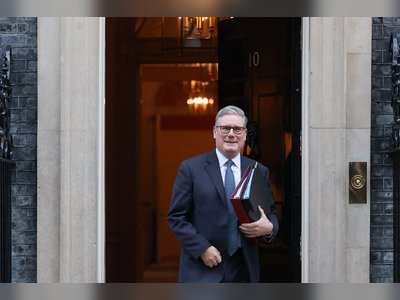
Sir Keir Starmer, whose fate is now closely tied to Reeves, is scheduled to deliver a public defence of the Budget shortly.
In his address he is expected to underscore benefits such as lower energy costs, support for pensioners, freezing rail fares, and promised deregulation and fast-track infrastructure projects — including plans to accelerate nuclear power expansion as a stimulus for growth.
Yet not all in his own party appear at ease.
Some senior figures view the Budget as a political gamble.
For many voters, the whirlwind of tax rises will land far more heavily than the reliefs — raising concerns over the burden on working- and middle-class households.
Whether the government’s gamble on fiscal responsibility and social spending will restore public trust remains uncertain, but what is clear is the UK now faces a critical moment: balancing economic stability, social equity, and political credibility in a highly charged environment.
The row hinges on conflicting forecasts from the Office for Budget Responsibility (OBR) — privately indicating a surplus — and public warnings by Reeves of a looming fiscal “black hole”.
In the lead-up to the Budget on 26 November, Reeves portrayed Britain’s economic prospects as fragile, citing weak productivity and suggesting a substantial deficit that necessitated sweeping tax increases.
She unveiled £26 billion in new taxes, including a freeze on income-tax thresholds, new levies on pension savings and high-value properties, and plans for a mansion-tax, intended to shore up public finances and expand welfare spending.
The package also scrapped the previous two-child benefit cap and included energy-bill reductions, rail-fare freezes and pension increases — measures the government says protect the vulnerable.
But over the weekend, political tension flared when the OBR released a letter revealing it had privately informed Reeves before her November speech that forecast adjustments — namely higher than expected real wages and inflation — meant public finances were on course to deliver a surplus of approximately £4.2 billion.
That surplus, critics now argue, undermines the narrative of emergency that justified the tax rises.
Allegations followed that the Chancellor overstated the depth of the fiscal hole — a move some describe as misleading and possibly breaching trust with both the public and the cabinet.
Reeves has staunchly denied any deception.
She argues that the surplus was too modest to provide adequate fiscal headroom.
In media interviews she said she deliberately expanded the cushion to £21.7 billion against her own fiscal rules to grant the central bank room to lower interest rates — a strategic move meant to stabilise the economy.
She told the public she remains “proud” of the Budget’s balance between fairness and financial prudence.
Sir Keir Starmer, whose fate is now closely tied to Reeves, is scheduled to deliver a public defence of the Budget shortly.
In his address he is expected to underscore benefits such as lower energy costs, support for pensioners, freezing rail fares, and promised deregulation and fast-track infrastructure projects — including plans to accelerate nuclear power expansion as a stimulus for growth.
Yet not all in his own party appear at ease.
Some senior figures view the Budget as a political gamble.
For many voters, the whirlwind of tax rises will land far more heavily than the reliefs — raising concerns over the burden on working- and middle-class households.
Whether the government’s gamble on fiscal responsibility and social spending will restore public trust remains uncertain, but what is clear is the UK now faces a critical moment: balancing economic stability, social equity, and political credibility in a highly charged environment.