

Tory leadership: I'd rather lose doing right thing, says Sunak
Rishi Sunak has said he would rather lose the Tory leadership race than "win on a false promise".
In a BBC interview, the former chancellor said he would tell people what "they needed to hear" and stay "true" to his values.
He added the next prime minister had a "moral responsibility" to support poorer households with payments for energy bills.
And he said rival Liz Truss's plan for tax cuts would not help the most needy.
He told the BBC's Nick Robinson he would spend billions of pounds on further targeted payments to pensioners and those on low incomes.
The plan marks a contrast with Foreign Secretary Ms Truss, who argues tax cuts are a more Conservative way to help with rising living costs.
How to help households with rising energy bills has become a key dividing line in the contest to succeed Boris Johnson as next UK prime minister.
Nick Robinson sits down with Conservative leadership candidate Rishi Sunak to see where he stands on the issues that matter to you.
As the war on words over energy turned increasingly bitter on Wednesday, Ms Truss's team said Mr Sunak's "socialist tax and spend" proposals would tip the UK into recession.
The foreign secretary said helping people with tax cuts would be better for the economy and would be her "first port of call" if she becomes prime minister.
But in his BBC interview, Mr Sunak said her plan would not help "millions of people" who only pay low or no taxes, whilst his winter payments would ensure support for those "that most need our help".
Ms Truss has not ruled out extra payments this winter if she enters No 10 - and said earlier that she would do "all that I can to help struggling households".
Mr Sunak's campaign argued the comments showed she was considering direct payments, calling it a U-turn.
Mr Sunak said it was too early to put a precise figure on how much his extra payments would be worth, or what they would cost.
However, he suggested they would compensate for a projected £400 increase in bills compared to predictions earlier this year.
These extra payments would come on top of a £15bn package of payments he announced as chancellor in May.
Pushed on whether the extra payments would cost a "few billion" or more than £10bn, he replied: "It's much closer to former than the latter."
He said the "temporary" support would be made by increasing the scale of payments to pensioners and low-income households due in the autumn.
He said his plan to cut VAT on energy bills, announced earlier in the campaign, would ensure people of all incomes receive some help.
He has said public borrowing required to fund his plans can be minimised through "efficiencies" in government spending - although he has not set out detailed plans.
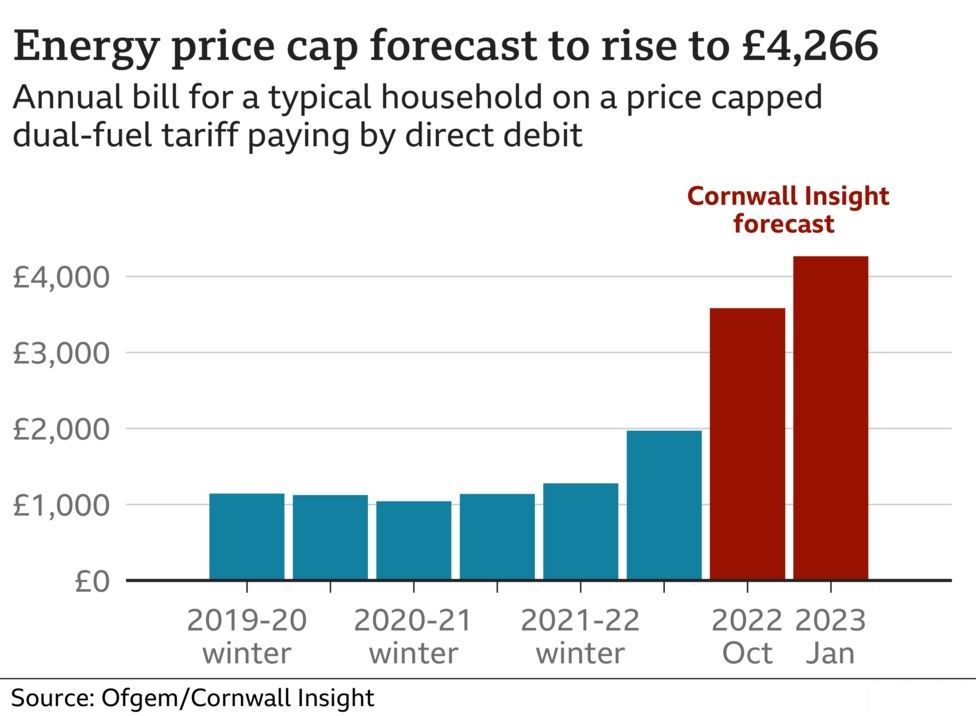
It comes after a forecast on Tuesday suggested bills for a typical household could hit £4,266 next year, higher than predictions made earlier this year.
"That's why I do feel a moral responsibility as PM to go further, and get extra help to people over the autumn and the winter," he added.
On Wednesday, Ms Truss said her plan for tax cuts would "turbocharge our economy, grow the size of the pie and increase prosperity for everyone".
A spokesperson for her campaign added: "people didn't vote for the Conservative Party to be subjected to old fashioned Gordon Brown-style politics of envy".
The BBC has also invited Liz Truss to a one-on-one interview with Nick Robinson and says it has been discussing timings with her team.
Analysis by David Cornock, BBC political correspondent
Both Rishi Sunak and Liz Truss believe they are on the right side of the moral argument over the cost of living crisis that is dominating this leadership election.
Liz Truss argues that putting up taxes is immoral - but Rishi Sunak told Nick Robinson the government had a "moral responsibility" to go further to help those who cannot afford to heat their homes.
He suggested bills could be £400 higher than anticipated when he was chancellor. How much further would he go? Anyone hoping for specific figures will have to wait but there were strong hints of targeted help for pensioners and those on the lowest incomes.
This interview may be seen and heard by millions but both candidates have tried, to varying degrees, to target their message at the 160,000 or so Conservative Party members who will choose our next prime minister.
Mr Sunak, the self-styled underdog in this contest, appeared to acknowledge that those members may prefer to hear Liz Truss's message on tax cuts.
He said he went into the contest prepared to tell people "what they needed to hear rather than what they needed to hear, not necessarily what they wanted to hear".
That doesn't mean he hasn't refined his own message during the campaign - he's promising to cut VAT on energy bills, a position he rejected in government - but he made clear he would rather lose (or win) on his own terms.
Rishi Sunak said he wants to "restore trust in politics"
Rishi Sunak explains his plans to tackle spirally energy costs.