London Daily

Focus on the big picture.
Thursday, Jun 04, 2026

Tighter checks at Hong Kong quarantine hotels to stop guests breaking rules

Tighter checks at Hong Kong quarantine hotels to stop guests breaking rules

So far, 199 people have been found breaking infection-control rules, such as by stepping out of their rooms to exercise or share food and drinks with others.

Hong Kong health authorities have stepped up measures to curb the transmission of Covid-19 in designated quarantine hotels, where hundreds of guests have been found breaching infection-control rules.

Among other issues, hotels have been told to separate arriving and departing guests, conduct CCTV monitoring round the clock to ensure those in quarantine do not leave their rooms and take steps to keep their staff safe too.

So far, 199 people have been convicted by the courts for breaching quarantine orders such as by stepping out of their rooms to exercise or share food and drinks with others on the same floor.

On Friday, the city’s third case of the more transmissible “Delta Plus” variant of the coronavirus was confirmed at the Four Points by Sheraton Tung Chung hotel, where all three patients were quarantined on the same floor from November 1 to 6.
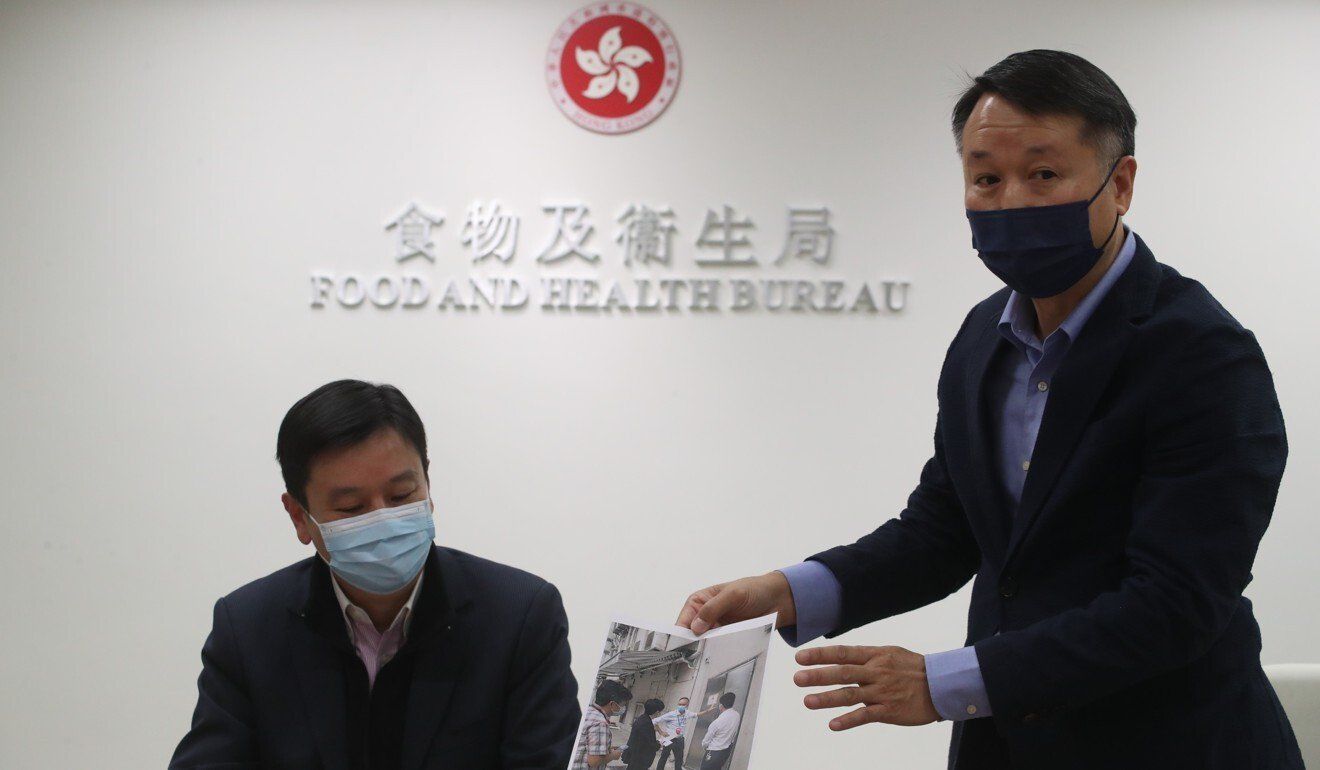
Vincent Fung (left) and Joseph Au


Health experts said the second patient, a British man carrying the variant, probably infected the man in the room next to his after breathing heavily during exercise and spreading the coronavirus through the air. Both met briefly when they opened their room doors to get their food.

To lower the risk of transmission, the Office of Designated Quarantine Hotels supervising the city’s 36 designated hotels with 10,000 rooms, said hospital-grade air purifiers equipped with suction ducts were being used when staff collected specimens from those quarantined.

Hotels must keep arriving and departing quarantine guests separated by designing a “dirty route” for those checking in and a “clean route” for those who leave.

Joseph Au Chin-chau, compliance controller for operations and security at the office, said not all hotels that wanted to take in quarantine guests had been approved.

“We have a strict assessment of their ability to meet our standards. We have turned down some applications as the hotel design made it hard for them to meet our infection-control requirements,” he said.

The office also conducted simulation exercises to show the hotels what to do if a guest was found to be infected.

To monitor guests and ensure that they did not leave their rooms, the hotels must install CCTV cameras, with motion sensors that covered blind spots and alerted security if people passed by.

Guests undergoing quarantine must not be sent to rooms that were not covered by the surveillance system.

The designated quarantine hotels scheme began last December for people arriving in Hong Kong and has served a total of 154,000 people so far.

About 600 Covid-19 cases have been identified at the hotels, or close to 15 per cent of the total confirmed cases since then.

The office said about 300 hotel guests were found to have breached their quarantine orders.

“We have seen people stepping out of their rooms during their quarantine, to exercise or share candy and wine with their neighbours along the corridor,” Au said.

He said his team inspected the hotels and reviewed their CCTV footage daily to check that neither hotel staff nor guests violated the rules.

Some hotels were found to have failed to comply with health guidelines on properly disposing of rubbish or they did not monitor their security cameras round the clock.

Some hotels were given verbal or written warnings, while others were punished by having the number of rooms they could use slashed.

The office was aware of complaints by quarantine guests who found filthy rooms with mould, stains and clogged bathtubs. It advised the hotels to improve their housekeeping, but generally left the establishments to sort out these matters with their guests.

“We also give suggestions and share good practices for the hotels to learn from,” Au said. “For example, some hotels have staff who make greeting phone calls to guests every day.”

Hong Kong reviews the number of hotels on the designated list regularly and a sixth cycle of the scheme will begin on December 1, with 40 hotels offering about 11,500 rooms.

Vincent Fung Hao-yin, deputy director of the office, said it hoped to have “as many hotels as possible” in the seventh cycle, beginning in March.

“We expect more people to travel back to Hong Kong as it has been two years since the start of the pandemic,” he said. “I believe more people will want to come back to the city after such a long time.”

Asked whether hotels could do more to prevent the spread of the coronavirus, respiratory medicine expert Dr Leung Chi-chiu suggested that staff use a negative pressure HEPA tent when collecting specimens from quarantined guests to prevent aerosols from infected people spreading out of their rooms or into adjacent rooms.

Newsletter

Related Articles

0:00
0:00
Close
Japanese Technology Firm Fujitsu Launches Advanced Artificial Intelligence Tool for Corporate Disclosures
South Africa Officially Launches Nationwide Campaign for Highly Contested Local Government Elections
United Kingdom Commits Additional Funding for Unexploded Ordnance Clearance in Laos
Singapore Announces Stringent New Greenhouse Gas Regulations for Commercial Cooling Systems
Cambodia and Thailand Hold High-Level Border Security Talks at United Nations Headquarters
Myanmar Military Government and China Sign Major Agreement to Upgrade Media and Cultural Cooperation
Knife Attack at Swiss Train Station Leaves Three Injured in Suspected Act of Domestic Terrorism
Transnational Extortion Gang Threatens Canadian Police With Army of One Thousand Armed Operatives
Australia Imposes Forty-Two-Day Quarantine on Cruise Ship Passengers Following Deadly Hantavirus Outbreak
International Monetary Fund Unlocks Seven Hundred Million United States Dollars for Sri Lanka Following Economic Reforms
Australia Launches Record One Point Four Billion Dollar Lawsuit Against Chemical Giant 3M Over Contamination
China and Canada Foreign Ministers Meet in Ottawa in Effort to Stabilize Strained Diplomatic Ties
Indonesia Demands Urgent United Nations Security Council Reform Amid Escalating Global Conflicts
Extreme Weather Patterns Trigger Severe Drought in Madagascar and Destructive Flooding in East Africa
Indian State of Karnataka Faces Political Upheaval as Chief Minister Siddaramaiah Abruptly Resigns
Philippines and Japan Reaffirm Defense Ties as Crucial for Indo-Pacific Regional Stability
Norway Joins French Nuclear Deterrence Initiative in Major Shift for European Security Architecture
Global Critical Mineral Alliances Expand as Western Nations Move to Counter Chinese Supply Dominance
United States Imposes Fifty Percent Tariffs on Mexican Steel and Aluminum Ahead of Trade Pact Review
European Union and China Head Toward Major Trade Conflict Over Clean Technology Exports
United States Economic Growth Severely Downgraded to One Point Six Percent as Stagflation Fears Mount
World Health Organization Warns Central African Ebola Epidemic is Outpacing Containment Efforts
United States Treasury Department Conditions Sanctions Relief on Reopening of the Strait of Hormuz
Iranian Air Defenses Intercept and Destroy United States Military Drone Over Bushehr Province
Iranian Armed Forces Launch Ballistic Missiles Toward Unspecified Targets Prompting Regional Condemnation
United Nations Secretary-General Warns Global Order Facing Highest Level of Conflict Since 1945
Israel Issues Sweeping Evacuation Orders in Southern Lebanon Amid Intensified Hezbollah Conflict
Russia Announces Systemic Military Strikes Targeting Ukrainian Defense and Energy Infrastructure
United States and Iranian Negotiators Reach Draft Agreement to Extend Ceasefire and Resume Nuclear Talks
United Nations Security Council Deeply Divided Over United States Capture of Venezuelan President
US and Iran Exchange Direct Military Strikes Amid Fragile Gulf Ceasefire
World Health Organization Warns of Catastrophic Ebola Outbreak in DR Congo
Russia Threatens New Wave of Strikes on Ukrainian Infrastructure and Embassies
Scientists Warn Atlantic Ocean Currents Could Collapse Faster Than Projected
Anthropic Reaches $900 Billion Valuation in Historic AI Funding Round
Washington Imposes Crippling Sanctions on Iranian Maritime Authority
Japan and the Philippines Initiate Strategic Intelligence-Sharing Pact
Microsoft Deploys Autonomous Computer-Using AI Agents to Global Markets
Anthropic Secures $45 Billion Compute Infrastructure Agreement With SpaceX
U.S. Director of National Intelligence Resigns Amid Administration Shakeup
Micron Technology Crosses Trillion-Dollar Valuation Amid Unprecedented Hardware Demand
Canada and Germany Finalize Historic Long-Term LNG Export Agreement
China Expands International Travel Restrictions on Domestic AI Researchers
Japan Approves Sweeping Overhaul of National Intelligence Apparatus
Global Airlines Scramble Logistics as Middle East Airspace Remains Fractured
Japan's Naphtha Imports Plunge 47 Percent Amid Strait of Hormuz Closure
Global Crude Prices Retreat Below $96 as Gulf Tensions Momentarily Ease
Generative AI Outperforms Human Baselines in Landmark Global Creativity Study
NASA Partners With Private Aerospace to Unveil Permanent Lunar Base Architecture
South Korean Equity Markets Surge on Next-Generation Memory Chip Frenzy
×