London Daily

Focus on the big picture.
Thursday, Jun 18, 2026

Super League: Why are football's biggest clubs starting a new tournament?

Super League: Why are football's biggest clubs starting a new tournament?

A plan by some of the world's biggest football clubs to start a new European Super League (ESL), has provoked strong opposition.

The clubs involved say the ESL will benefit football as a whole, but critics say it's driven by greed.

Which teams want the Super League?


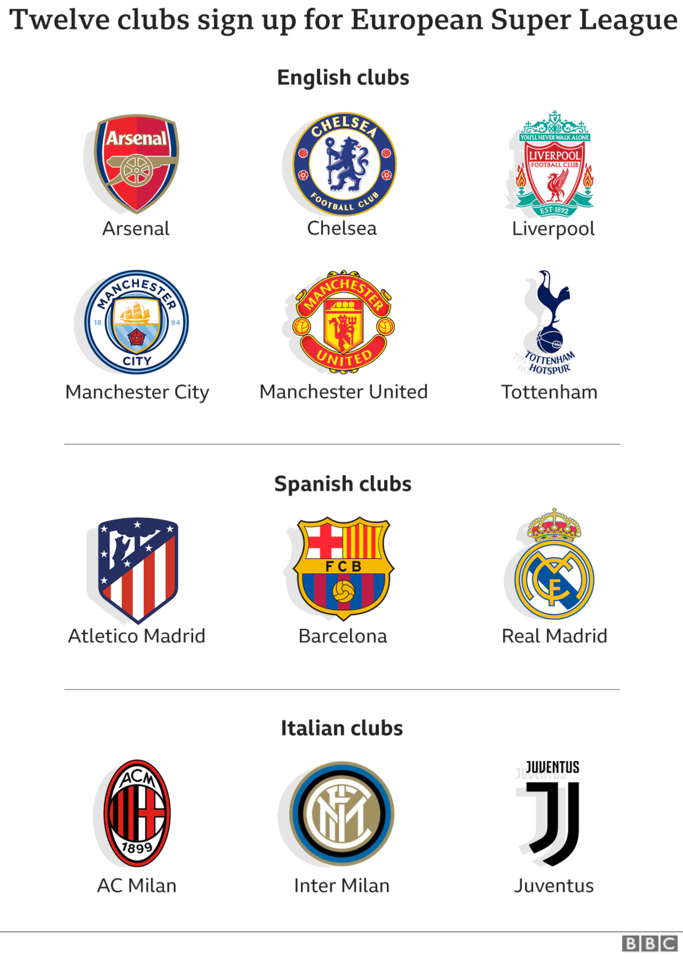
Twelve clubs have signed up - six of them from the English Premier League.

Arsenal, Chelsea, Liverpool, Manchester City, Manchester United and Tottenham, would join AC Milan, Atletico Madrid, Barcelona, Inter Milan, Juventus and Real Madrid.

The clubs want a new midweek competition and to continue competing in national leagues.

The ESL would have 20 teams. Of these, the 12 founding members - plus three yet to join - would be permanent and never face relegation.

Five other sides would qualify each year.

The new league would rival the current Champions League competition, one of the biggest club tournaments in football.


Why is the plan widely opposed?


The move has been condemned by fans, pundits and by most football bodies not involved.

With 15 teams in the ESL not facing qualification or relegation, critics say it will create a closed shop at the top of football.

The Premier League says it "attacks the principles of open competition and sporting merit".

Culture Secretary Oliver Dowden said the plans threatened the pyramid structure of English football, "where funds from the globally successful Premier League flow down the leagues and into local communities".

There's also the fear that the ESL would draw huge global TV audiences away from existing leagues such as England's Premier League and Italy's Serie A.

Why do the teams want a Super League?


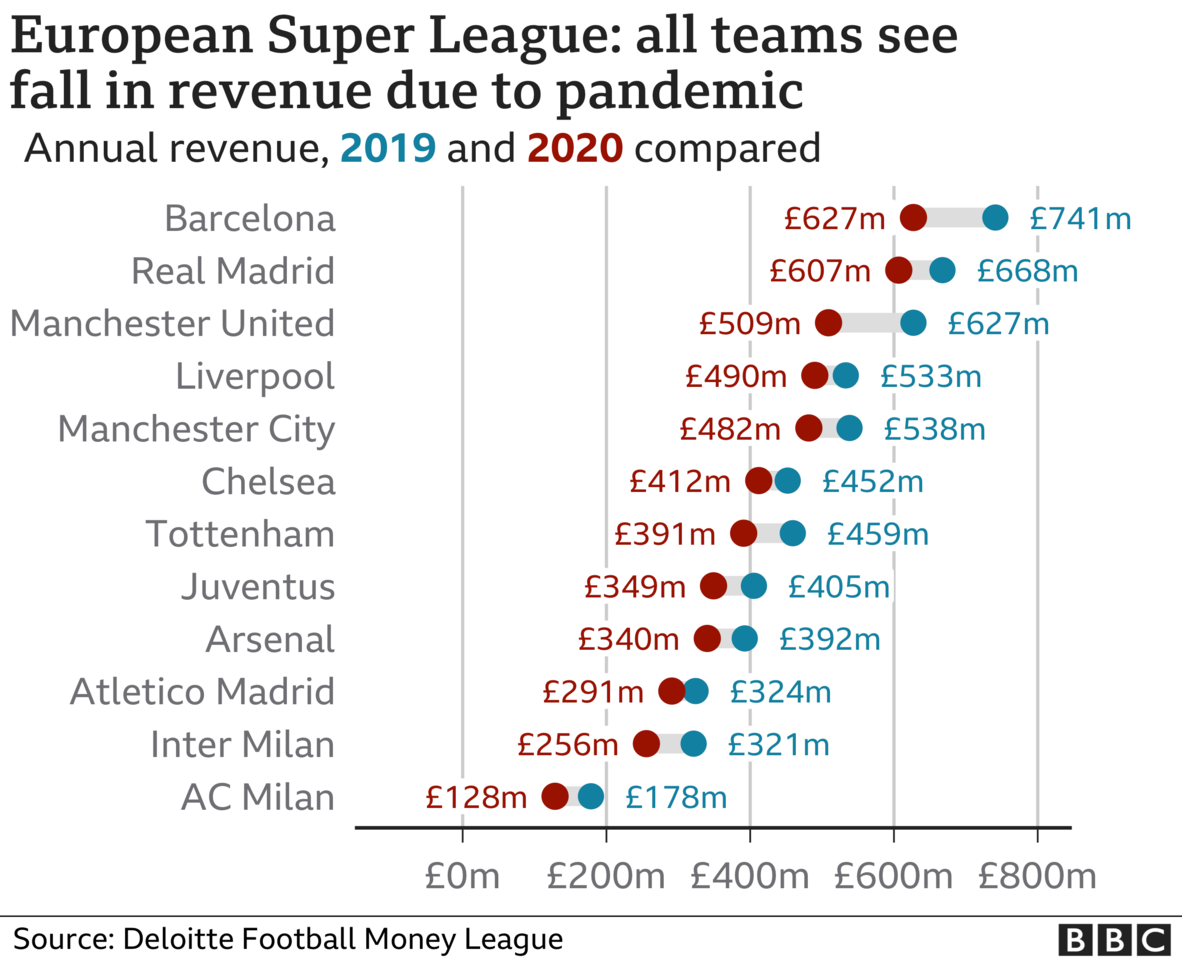
Money seems to be the driving force.
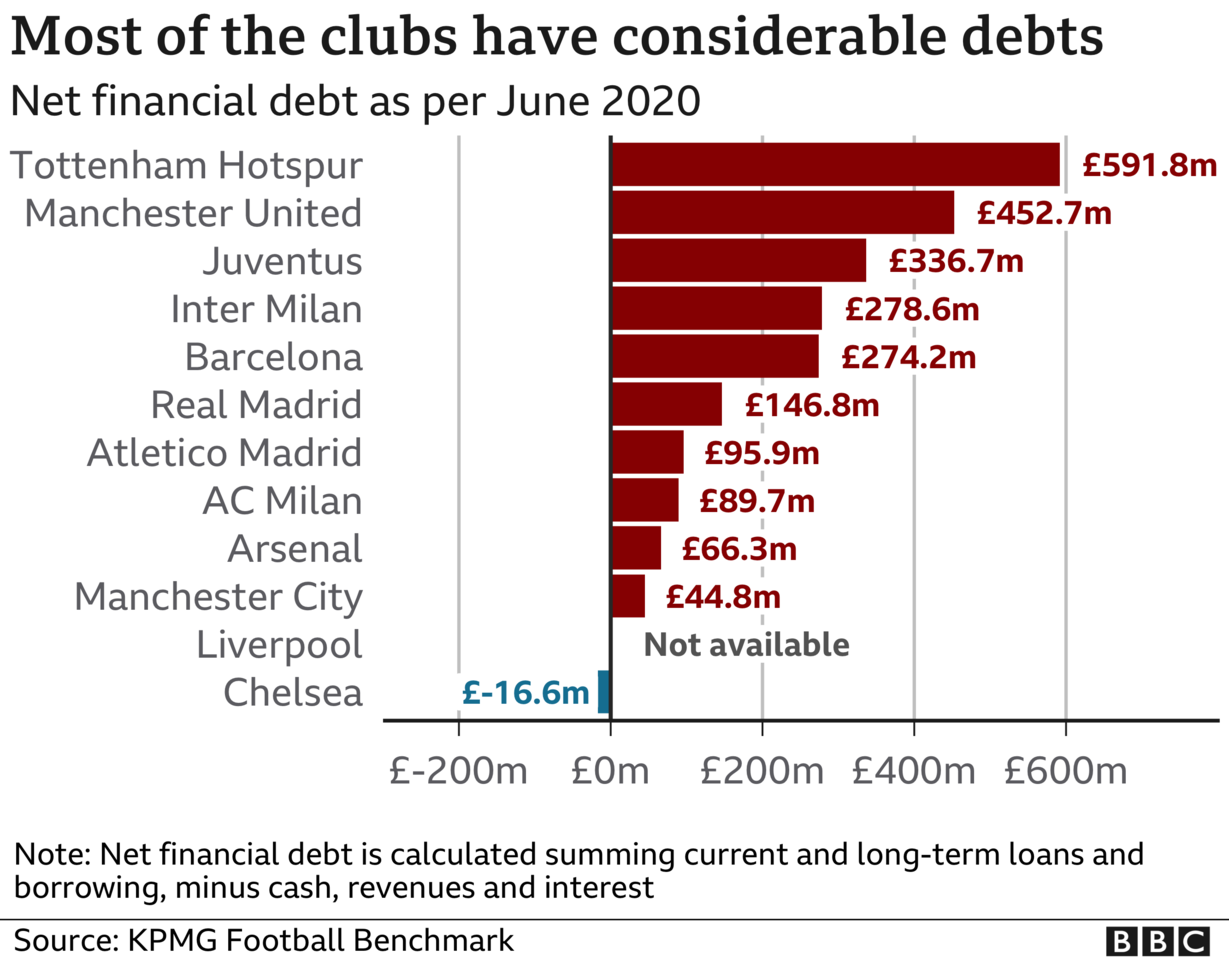

Football club revenues have been hit hard by the Covid pandemic, with disrupted fixtures and a lack of spectators.

Big clubs have superstar players with multi-million pound salaries to be paid.

The founding clubs are being enticed with a share of a €3.5bn (£3bn) grant provided by the investment bank JP Morgan.

The ESL argues the new tournament "will provide significantly greater economic growth and support for European football".

How would the Super League work?


Under the proposals, the ESL would start in August each year, with plans to launch "as soon as practicable".

The 20-team league would be split into two groups of 10, playing each other home and away.

The top three in each group would qualify for the quarter-finals, with the teams in fourth and fifth playing a two-legged play-off for the two remaining spots.

From then on, it would have the same two-leg knockout format used in the Champions League, with a final in May at a neutral venue.

What's being done to stop the ESL?


Uefa, Europe's football governing body, had hoped plans for a new 36-team Champions League would head off the formation of a Super League.

Sports bodies say they will "remain united" in trying to stop the breakaway league, using legal and sporting measures if required.

Uefa's president has warned that the clubs would be banned from all other competitions at domestic and international level.

He said that players would also be prevented from representing their national teams at the World Cup.

Can the government stop English teams joining?


Prime Minister Boris Johnson has said the government is "going to look at everything that we can do with the football authorities to make sure that this doesn't go ahead in the way that it's currently being proposed".

Asked if the government could claw back coronavirus loans to the clubs, a Downing Street spokesman said it was looking at all options.

No 10 has also refused to rule out introducing legislation.

What happens next?


Much could depend on which other teams sign up.

Bayern Munich, Borussia Dortmund and Paris St Germain - the biggest clubs in Germany and France - have not thrown their lot in with the breakaway league.

The world governing body, Fifa, previously said it would not recognise a breakaway European league.

Fifa has expressed its "disapproval" and called on "all parties involved in heated discussions to engage in calm, constructive and balanced dialogue for the good of the game".

Meanwhile, the ESL is trying to block any sanctions Uefa or Fifa may try to enforce over the formation of the league.


"We will do whatever it takes to protect our national game" – Culture Secretary Oliver Dowden


Newsletter

Related Articles

0:00
0:00
Close
Health Authorities Warn of Rising Cases of Seasonal Respiratory Illnesses
BAE Systems and Rolls-Royce Advance Multi-Nation Fighter Aircraft Programme
National Archives Publish Declassified Documents on Cold War Energy Security Planning
British Retail Spending Rises Despite Continuing Cost-of-Living Pressures
Wales Launches Social Housing Pilot to Address Affordability Pressures
British Energy Companies Commit £5 Billion to Geothermal and Hydrogen Projects
Northern Ireland Debates Cross-Border Healthcare Partnership With the Republic of Ireland
UK Establishes National Artificial Intelligence Safety Centre With Leading Universities
UK Reports Decline in Small Boat Crossings After Expanding Intelligence Cooperation With France
Scottish Parliament Launches Inquiry Into Delays to Renewable Energy Projects
National Crime Agency Dismantles Alleged Multi-Million-Pound Money Laundering Network in London
Transport Strikes Disrupt Rail and Bus Services Across Northern England
United Kingdom and European Union Open New Security Dialogue on Defense and Border Cooperation
Bank of England Holds Interest Rates at 5% as Services Inflation Remains Elevated
UK Government Unveils Major National Health Service Reform Focused on Decentralization and Performance Funding
Government Advances New Airport Slot Rules to Ease Airline Operating Constraints
BBC Opens Flagship Science-Fiction Franchise to Competitive Production Bids
Chancellor Meets City Leaders Amid Concerns Over Gilt Market Liquidity
Rathbones Shares Fall Seventeen Percent After Regulatory Review Reveals Compliance Failings
United Kingdom Joins Group of Seven Initiative Using Artificial Intelligence and Quantum Computing for Cancer Research
Parliament Debates Doubling Tax Allowance for Pensioners After Major Public Petition
Measles Cases Exceed Seven Hundred in London and the West Midlands
British Military Leadership Faces Parliamentary Scrutiny After Defence Secretary's Sudden Resignation
House of Lords Begins Debate on Steel Industry Nationalisation Legislation
Parliament Advances Bill to Abolish NHS England and Create Single Patient Records
Parliament Fast-Tracks National Security Bill to Expand Powers Against Foreign Threats
United Kingdom and European Union Set July Summit to Deepen Post-Brexit Cooperation
United Kingdom Imposes Seventy New Sanctions on Russia and Expands Support for Ukraine's Nuclear Sector
United Kingdom Announces Social Media Ban for Children Under Sixteen
0British Government Investigates Reports of Russian Warship Firing Warning Shots Near Isle of Wight
UK Supreme Court Revises Legal Definition of Deprivation of Liberty
King’s Birthday Honours Recognise Contributions Across Science, Culture and Public Service
UK Ministry of Defence Reports Interdiction of Russian Shadow Fleet Vessel
UK and US Launch Joint Regulatory Programme for Medicines and Healthcare Products
Solicitor General Refers Murder Sentence to Court of Appeal Under Unduly Lenient Scheme
UK Launches £1.6 Million Mobile Museum Initiative to Expand Cultural Access
Judicial Pay Structure Undergoes Government Review Following Senior Recommendations
Government Confirms Nearly 180 New Youth Hubs Across the United Kingdom
UK Government Expands Careers Support Through Partnership with LinkedIn
Digital News Report Highlights Growing Global Concern Over AI and Information Overload
UK Chancellor Reaffirms Fiscal Discipline and Borrowing Reduction Strategy
UK Government Invests £219 Million in Sustainable Aviation Fuel Development
Rolls-Royce Small Modular Reactors Secures Major Swedish Export Contract
Government Confirms Locations for Nearly 180 Youth Hubs Across Great Britain
UK Government Partners with LinkedIn to Expand Employment Support Services
Reuters Institute Report Flags Rising Public Anxiety Over News and Information Overload
UK Government Commits £219 Million to Expand Sustainable Aviation Fuel Industry
Chancellor Convenes Market Engagement Group to Assess UK Economic Outlook and Productivity Risks
Rolls-Royce Wins Multibillion-Pound Swedish Contract for Small Modular Nuclear Reactors
Government to Ban Social Media Access for Under-Sixteens Across the United Kingdom
×