London Daily

Focus on the big picture.
Saturday, May 16, 2026

SpaceX: Space storm destroys 40 of Elon Musk's Starlink satellites

SpaceX: Space storm destroys 40 of Elon Musk's Starlink satellites

The vast majority of satellites launched last week will fall back to Earth and burn up rather than go into orbit, SpaceX says - "at a considerable cost to us".

SpaceX has confirmed that a geomagnetic storm destroyed most of the Starlink satellites it launched last Friday.

Elon Musk's company said that 40 of its 49 satellites were going to fall back to Earth - though they are designed to burn up on re-entry - after a space storm "significantly impacted" them.

They were part of a planned satellite constellation that is intended to eventually provide constant internet coverage for most of the world.
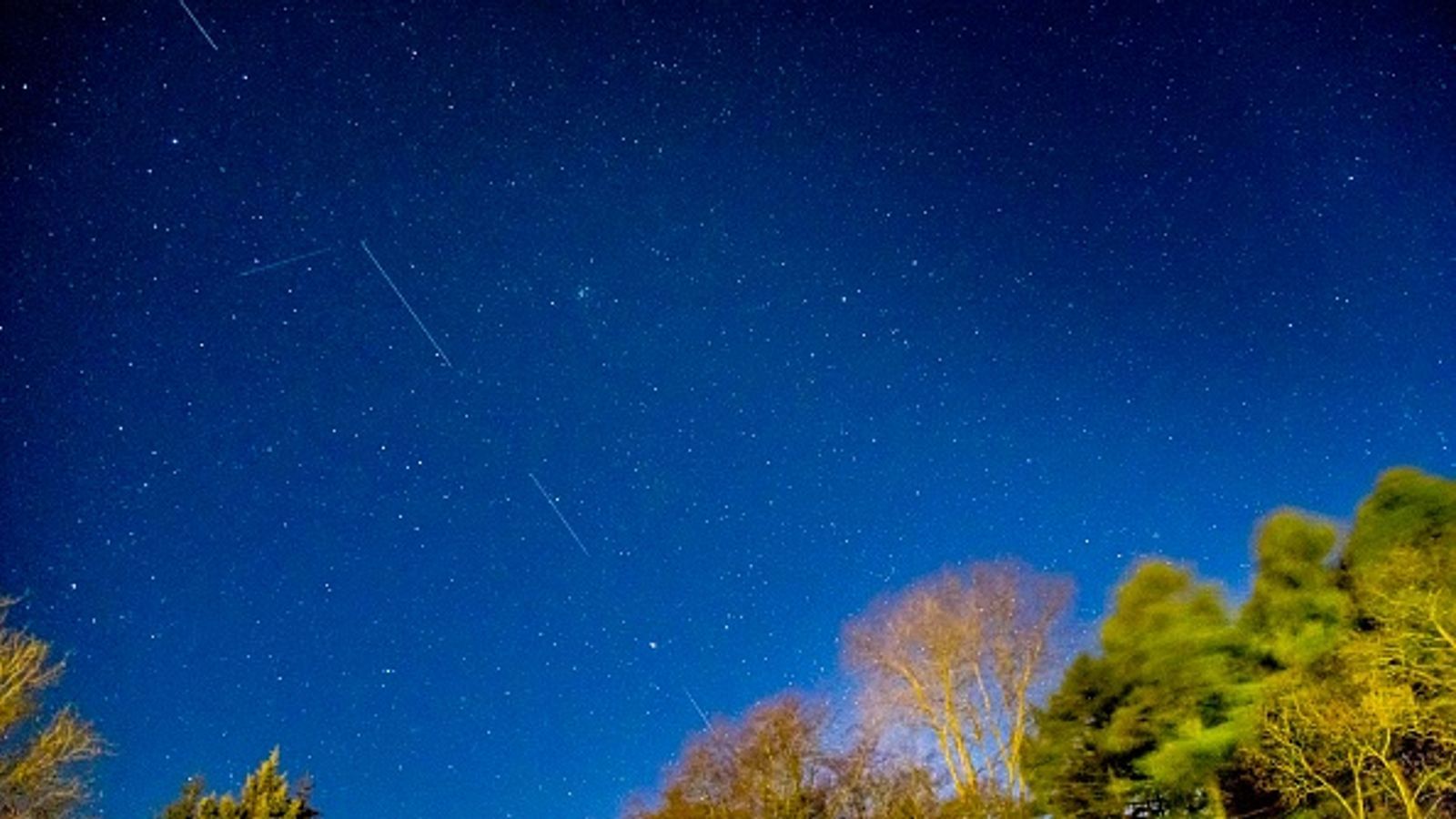
Starlink's satellites have been accused of 'ruining the night sky' for astronomers


What is Starlink?


The Starlink project is intended to provide broadband-speed internet access across the planet and generate cash for Musk's other space ambitions.

Musk said: "We think this is a key stepping stone on the way towards establishing a self-sustaining city on Mars and a base on the moon."

The company has already launched 2,000 satellites and has permission from the US authorities to send up 12,000 in total.

But critics fear that the fleet of satellites will ruin the night sky for astronomers attempting to observe distant parts of the universe.

SpaceX says it is darkening its satellites with a software upgrade so they will fly with their "knife edge" to the sun to minimise reflections.
Elon Musk plans to use the money from Starlink to fund missions to Mars


What happened?


The storm, which was caused by solar activity, made the Earth's atmosphere warm and expand.

This is not in itself unusual, and the impact of a geomagnetic storm on de-orbiting spacecraft has also been cited as a concern by NASA in its plan to crash the International Space Station into a "spacecraft cemetery" when it is finally retired.

The denser atmosphere at the initial orbital altitude for the satellites caused atmospheric drag to increase up to 50% higher than SpaceX had seen in previous launches, the company said.

Ultimately this means that "up to 40 of the satellites will re-enter or already have re-entered the Earth's atmosphere", it said.

The satellites posed no risk to Earth, the company added.

"The de-orbiting satellites pose zero collision risk with other satellites and by design demise upon atmospheric re-entry - meaning no orbital debris is created and no satellite parts hit the ground."

The company said that it deployed its satellites into lower orbits "so that in the very rare case any satellite does not pass initial system checkouts it will quickly be de-orbited by atmospheric drag".

"While the low deployment altitude requires more capable satellites at a considerable cost to us, it’s the right thing to do to maintain a sustainable space environment," it added.

Newsletter

Related Articles

0:00
0:00
Close
The Great Western Exit: Why Best Citizens Are Fleeing the Rich World [PODCAST]
The New Robber Barons of Intelligence: Are AI Bosses More Powerful Than Rockefeller?
The End of the Old Order [Podcast]
Britain’s Democracy Is Now a Costume
The AI Gold Rush Is Coming for America’s Last Open Spaces [Podcast]
The Pentagon’s AI Squeeze: Eight Tech Giants Get In, Anthropic Gets Shut Out [Podcast]
The War Map: Professor Jiang’s Dark Theory of Iran, Trump, China, Russia, Israel, and the Coming Global Shock [Podcast]
Labour Is No Longer a National Party [Podcast]
AI Isn’t Stealing Your Job. It’s Dismantling It Piece by Piece.
Lawyers vs Engineers: Why China Builds While America Litigates [Podcast]
Churchill’s Glass: The Drunk, the Doctor, and the Myth Britain Refuses to Sober Up From
Apple issues an unusual warning: this is how your iPhone can be hacked without you doing anything
Kennedy’s Quiet War on Antidepressants Sparks Alarm Across America’s Medical Establishment
The Met Gala Meets the Age of Billionaire Backlash
Russian Oligarch’s Superyacht Crosses Hormuz via Iran-Controlled Route
Gunfire Disrupts White House Correspondents’ Dinner as Trump Is Evacuated
A Leak, a King, and a Fracturing Alliance
Inside the Gates Foundation Turmoil: Layoffs, Scrutiny, and the Cost of Reputational Risk
UK Biobank Breach Exposes Health Data of 500,000, Listed for Sale on Chinese Platform
KPMG Cuts Around 10% of US Audit Partners After Failed Exit Push
French Police Probe Suspected Weather-Data Tampering After Unusual Polymarket Bets on Paris Temperatures
CATL Unveils Revolutionary EV Battery Tech: 1000 km Range and 7-Minute Charging Ahead of Beijing Auto Show
Crypto Scammers Capitalize on Maritime Chaos Near the Strait of Hormuz: A Rising Threat to Shipping Companies
Changi Airport: How Singapore Engineered the World’s Most Efficient Travel Experience
Power Dynamics: Apple’s Leadership Shakeup, Geopolitical Risks in the Strait of Hormuz, and Europe's Energy Strategy Amidst Global Challenges
Apple's Leadership Transition: Can New CEO John Ternus Navigate AI Challenges and Geopolitical Pressures?
Italy’s €100K Tax Gambit: Europe’s Soft Power Tax Haven
News Roundup
Microsoft lost 2.5 millions users (French government) to Linux
Privacy Problems in Microsoft Windows OS
News roundup
Péter András Magyar and the Strategic Reset of Hungary
Hungary After the Landslide — A Strategic Reset in Europe
Meghan Markle Plans Exclusive Women-Focused Retreat During Australia Visit
Starmer and Trump Hold Strategic Talks on Securing Strait of Hormuz Amid Rising Tensions
Unofficial Australia Visit by Prince Harry and Meghan Expected to Stir Tensions with Royal Circles
Pipeline Attack Cuts Significant Share of Saudi Arabia’s Oil Export Capacity
UK Stocks Rise on Ceasefire Momentum and Renewed Focus on Diplomacy
UK to Hold Further Strategic Talks on Strait of Hormuz Security
Starmer Voices Frustration as Global Tensions Drive Up UK Energy Costs
UK Students Voice Concern Over Proposal for Automatic Military Draft Registration
Rising Volatility Drives Uncertainty in UK Fuel and Petrol Prices
UK Moves to Deploy ‘Skyhammer’ Anti-Drone System to Strengthen Airspace Defense
New Analysis Explores UK Budget Mechanics in ‘Behind the Blue’ Feature
Man Arrested After Four Die in Channel Crossing Tragedy
UK Tightens Immigration Framework with New Sponsor Rules and Fee Increases
UK Foreign Secretary Highlights Impact of Intensified Strikes in Lebanon
UK Urges Inclusion of Lebanon in US-Iran Ceasefire Framework
UK Stocks Ease as Ceasefire Doubts in Middle East Weigh on Investor Confidence
UK Reassesses Cloud Strategy Amid Criticism Over Limited Support Measures
×