Scotland must more than double its annual delivery of affordable homes to meet its 2032 target, even as construction falls and record homelessness exposes a mismatch between where homes are built and where shortages are acute.
Government figures show 17,640 homes were completed in 2025–26, the third consecutive annual decline. New project starts over the past two years were the lowest since 2012–13, offering little prospect of an immediate recovery. Ministers’ claim that Scotland has the UK’s highest housebuilding rate does not alter that downward trajectory.
More than 19,000 households were in council-funded temporary accommodation, up 10% in a year, including 10,715 children. Council social housing waiting lists contained more than 140,000 applications in March, excluding some major authorities such as Glasgow, where housing associations provide social housing.
Social housing stock has increased since 2017, following the abolition of Right to Buy, but remains 89,000 homes below its 1999 level. Scotland’s population has grown by 9% over that period.
Location compounds the shortage. The Lothians and Fife accounted for 39% of completions but 23% of Scotland’s population; Glasgow and surrounding councils had 32% of the population but 26% of construction. Higher prices around Edinburgh attract developers, yet a study for Shelter Scotland suggested 62% of newly formed households in eastern Scotland could not afford the market, against 55% nationally.
Glasgow spends almost £70m annually on hotel accommodation. The Scottish Housing Regulator has declared both Glasgow and Edinburgh in “systemic failure”. Refugee households add particular pressure in Glasgow: 44% of its 8,025 homelessness applications last year came from people with refugee status or leave to remain, compared with 16% nationally.
Builders cite material costs, insufficient suitable land and planning delays. Homes For Scotland says regulation has added tens of thousands of pounds to new-build costs. Housing Secretary Shirley-Anne Somerville acknowledges industry concerns but says standards reduce energy bills and improve housing for disabled people.
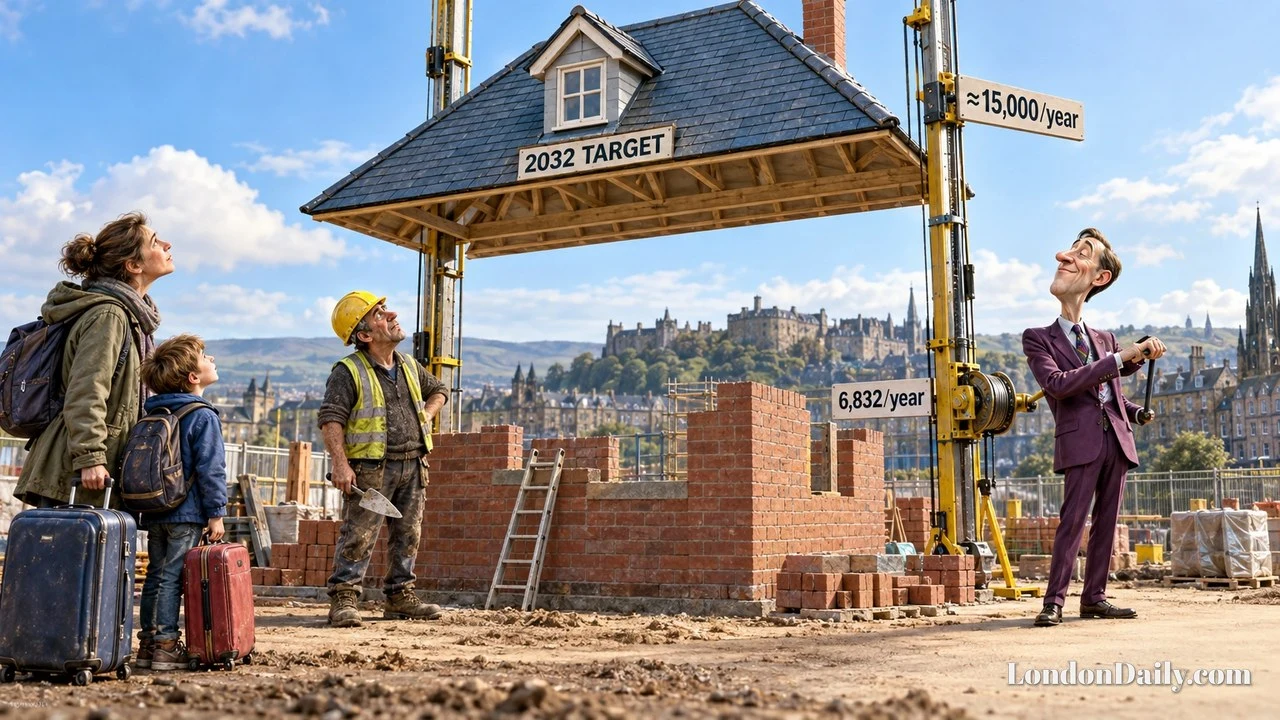
The government’s target is 110,000 affordable homes by 2032, at least 70% for social rent and 10% in rural and island communities. So far, 36,500 have been completed. Parliamentary researchers calculate that roughly 15,000 a year are now needed; delivery in 2025–26 was 6,832.
Ministers have committed £4.1bn over four years towards around 36,000 affordable homes. Builders welcome the funding certainty, but Fraser of Allander Institute modelling puts achievement of the target in late 2036. Somerville says longer-term public investment and support for private developers can close the gap. The unresolved challenge is turning those commitments into a sustained, record level of delivery.








Join the conversation