London Daily

Focus on the big picture.
Saturday, Jan 17, 2026

Scientists take ‘important step’ in stem cell therapy to treat Parkinson’s

Scientists take ‘important step’ in stem cell therapy to treat Parkinson’s

Chinese Academy of Sciences team discovered a new technique they say improved efficacy and safety in study on mice.

Chinese researchers have discovered a new technique they say improved the efficacy and safety of stem cell therapy in mice models of Parkinson’s disease.

The team from the Chinese Academy of Sciences (CAS) said their study findings paved the way for potentially developing a stem cell therapy to treat the disease.

The researchers identified two cell surface markers of dopamine neurons, which are damaged or destroyed in the midbrain of someone with Parkinson’s disease.

They then injected cells with these markers into the brains of mice, which they found could significantly improve the dopamine neurons in the midbrain – a key step in the treatment of the disease.

The finding “represents a revolutionary step on the road towards more effective and safer stem cell therapies”, according to the study, published in the Journal of Clinical Investigation on Tuesday.


Neurological disorders are the leading source of disability globally, and Parkinson’s disease is the second most common neurodegenerative disorder after Alzheimer’s. There is no cure for Parkinson’s disease, but the symptoms can be managed with medications and other therapies.

Worldwide, some 6.1 million people had Parkinson’s disease in 2016, according to the Lancet’s Global Burden of Disease Study in 2018. That number is expected to double to more than 12 million by 2040.

In China, it is estimated that the number of Parkinson’s disease patients could rise to about 5 million by 2030, accounting for half of the world’s cases.

Parkinson’s disease is a degenerative disorder affected by the impairment or death of cells in deep parts of the brain called the substantia nigra, which produces the neurotransmitter dopamine and controls body movement.

When 60 to 80 per cent of dopamine is lost, Parkinson’s symptoms such as tremor and balance problems occur.

Stem cell therapy is considered to be a promising treatment strategy because the disease is caused by the loss of one type of cell from a certain spot in the brain.

“Parkinson’s disease is the most suitable one [for stem cell therapy] because it is very clear which cells are lost and where should they be transplanted,” said Chen Yuejun, corresponding author of the study and a researcher with the CAS.

However, previous studies have generated both target and off-target neuronal cells during transplantation, resulting in low efficacy and uncertainty around safety.

“Our study wanted to answer two questions – why the previous studies generated more than a dozen off-target cells, and how we could enrich [certain] cells,” said Chen, who heads the Laboratory of Neural Differentiation and Regeneration at the CAS.
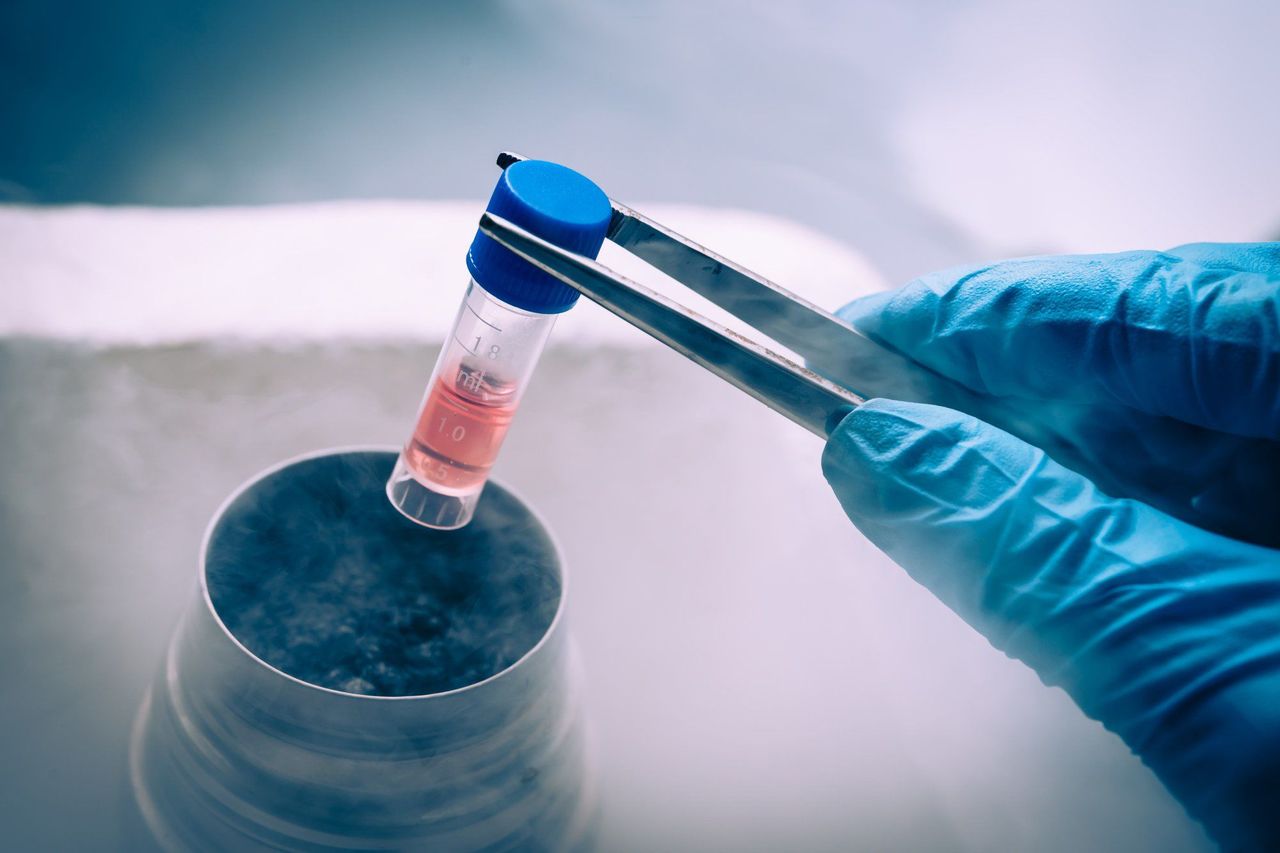
Stem cell therapy is seen as a promising strategy to treat Parkinson’s disease.


Chen and the team did a single-cell sequencing of dopaminergic neurons and found that the off-target cells were generated in areas near the midbrain.

They also found two markers that could facilitate highly enriched dopaminergic neurons after transplantation.

The percentage of neurons could be as high as 80 per cent in the transplant area, according to the paper. That compares to about 10 per cent in two recent preclinical studies.

“The study established a method for obtaining highly purified donor cells that can be transplanted with stable and predictable cell therapy results,” the authors said in a statement on the CAS website.

“It is an important step towards more effective and safer cell therapy for Parkinson’s disease.”

Newsletter

Related Articles

0:00
0:00
Close
Prince Harry Returns to UK High Court as Final Privacy Trial Against Daily Mail Publisher Begins
Britain Confronts a Billion-Pound Wind Energy Paradox Amid Grid Constraints
The graduate 'jobpocalypse': Entry-level jobs are not shrinking. They are disappearing.
Cybercrime, Inc.: When Crime Becomes an Economy. How the World Accidentally Built a Twenty-Trillion-Dollar Criminal Economy
The Return of the Hands: Why the AI Age Is Rewriting the Meaning of “Real Work”
UK PM Kier Scammer Ridicules Tories With "Kamasutra"
Strategic Restraint, Credible Force, and the Discipline of Power
United Kingdom and Norway Endorse NATO’s ‘Arctic Sentry’ Mission Including Greenland
Woman Claiming to Be Freddie Mercury’s Secret Daughter Dies at Forty-Eight After Rare Cancer Battle
UK Launches First-Ever ‘Town of Culture’ Competition to Celebrate Local Stories and Boost Communities
Planned Sale of Shell and Exxon’s UK Gas Assets to Viaro Energy Collapses Amid Regulatory and Market Hurdles
UK Intensifies Arctic Security Engagement as Trump’s Greenland Rhetoric Fuels Allied Concern
Meghan Markle Could Return to the UK for the First Time in Nearly Four Years If Security Is Secured
Meghan Markle Likely to Return to UK Only if Harry Secures Official Security Cover
UAE Restricts Funding for Emiratis to Study in UK Amid Fears Over Muslim Brotherhood Influence
EU Seeks ‘Farage Clause’ in Brexit Reset Talks to Safeguard Long-Term Agreement Stability
Starmer’s Push to Rally Support for Action Against Elon Musk’s X Faces Setback as Canada Shuns Ban
UK Free School Meals Expansion Faces Political and Budgetary Delays
EU Seeks ‘Farage Clause’ in Brexit Reset Talks With Britain
Germany Hit by Major Airport Strikes Disrupting European Travel
Prince Harry Seeks King Charles’ Support to Open Invictus Games on UK Return
Washington Holds Back as Britain and France Signal Willingness to Deploy Troops in Postwar Ukraine
Elon Musk Accuses UK Government of Suppressing Free Speech as X Faces Potential Ban Over AI-Generated Content
Russia Deploys Hypersonic Missile in Strike on Ukraine
OpenAI and SoftBank Commit One Billion Dollars to Energy and Data Centre Supplier
UK Prime Minister Starmer Reaffirms Support for Danish Sovereignty Over Greenland Amid U.S. Pressure
UK Support Bolsters U.S. Seizure of Russian-Flagged Tanker Marinera in Atlantic Strike on Sanctions Evasion
The Claim That Maduro’s Capture and Trial Violate International Law Is Either Legally Illiterate—or Deliberately Deceptive
UK Data Watchdog Probes Elon Musk’s X Over AI-Generated Grok Images Amid Surge in Non-Consensual Outputs
Prince Harry to Return to UK for Court Hearing Without Plans to Meet King Charles III
UK Confirms Support for US Seizure of Russian-Flagged Oil Tanker in North Atlantic
Béla Tarr, Visionary Hungarian Filmmaker, Dies at Seventy After Long Illness
UK and France Pledge Military Hubs Across Ukraine in Post-Ceasefire Security Plan
Prince Harry Poised to Regain UK Security Cover, Clearing Way for Family Visits
UK Junk Food Advertising Ban Faces Major Loophole Allowing Brand-Only Promotions
Maduro’s Arrest Without The Hague Tests International Law—and Trump’s Willingness to Break It
German Intelligence Secretly Intercepted Obama’s Air Force One Communications
The U.S. State Department’s account in Persian: “President Trump is a man of action. If you didn’t know it until now, now you do—do not play games with President Trump.”
Fake Mainstream Media Double Standard: Elon Musk Versus Mamdani
HSBC Leads 2026 Mortgage Rate Cuts as UK Lending Costs Ease
US Joint Chiefs Chairman Outlines How Operation Absolute Resolve Was Carried Out in Venezuela
Starmer Welcomes End of Maduro Era While Stressing International Law and UK Non-Involvement
Korean Beauty Turns Viral Skincare Into a Global Export Engine
UK Confirms Non-Involvement in U.S. Military Action Against Venezuela
UK Terror Watchdog Calls for Australian-Style Social Media Ban to Protect Teenagers
Iranian Protests Intensify as Another Revolutionary Guard Member Is Killed and Khamenei Blames the West
Delta Force Identified as Unit Behind U.S. Operation That Captured Venezuela’s President
Europe’s Luxury Sanctions Punish Russian Consumers While a Sanctions-Circumvention Industry Thrives
Berkshire’s Buffett-to-Abel Transition Tests Whether a One-Man Trust Model Can Survive as a System
Fraud in European Central Bank: Lagarde’s Hidden Pay Premium Exposes a Transparency Crisis at the European Central Bank
×