

Renewable energy projects worth billions stuck on hold
Some new solar and wind sites are waiting up to 10 to 15 years to be connected because of a lack of capacity in the system - known as the "grid".
Renewable energy companies worry it could threaten UK climate targets.
National Grid, which manages the system, acknowledges the problem but says fundamental reform is needed.
The UK currently has a 2035 target for 100% of its electricity to be produced without carbon emissions.
Last year nearly half of the country's electricity was net-zero.
But meeting the target will require a big increase in the number of renewable projects across the country. It is estimated as much as five times more solar and four times as much wind is needed.
The government and private investors have spent £198bn on renewable power infrastructure since 2010. But now energy companies are warning that significant delays to connect their green energy projects to the system will threaten their ability to bring more green power online.
A new wind farm or solar site can only start supplying energy to people's homes once it has been plugged into the grid.
Energy companies like Octopus Energy, one of Europe's largest investors in renewable energy, say they have been told by National Grid that they need to wait up to 15 years for some connections - far beyond the government's 2035 target.
'Longest grid queues in Europe'
There are currently more than £200bn worth of projects sitting in the connections queue, the BBC has calculated.
Around 40% of them face a connection wait of at least a year, according to National Grid's own figures. That represents delayed investments worth tens of billions of pounds.
"We currently have one of the longest grid queues in Europe," according to Zoisa North-Bond, CEO of Octopus Energy Generation.
The problem is so many new renewable projects are applying for connections, the grid cannot keep up.
The system was built when just a few fossil fuel power plants were requesting a connection each year, but now there are 1,100 projects in the queue.
Torbay Council has been hit by the delays. The diggers are already clearing the ground for a 6-hectare solar plant it is building in Torquay. It is due to be finished next year.
The council plans to use money raised from selling the energy to help fund local services, but it has been told the plant will not be connected for five years.
And even that date isn't certain. "Worryingly, there are some indications that that could slip into the mid 2030s", said Alan Denby from Torbay Council. "That's a real problem for the council in that we declared that we wanted to be carbon neutral by 2030."
With projects unable to get connections, construction is either being paused or projects are being completed but are unable to produce any power.
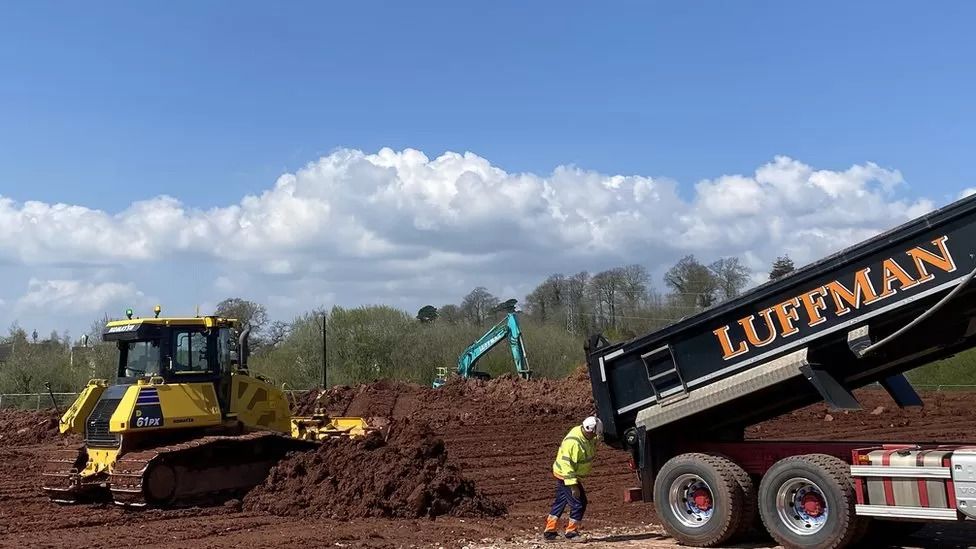 Torbay Council's solar site was due to finish in a year but will not be connected until 2028 at the earliest
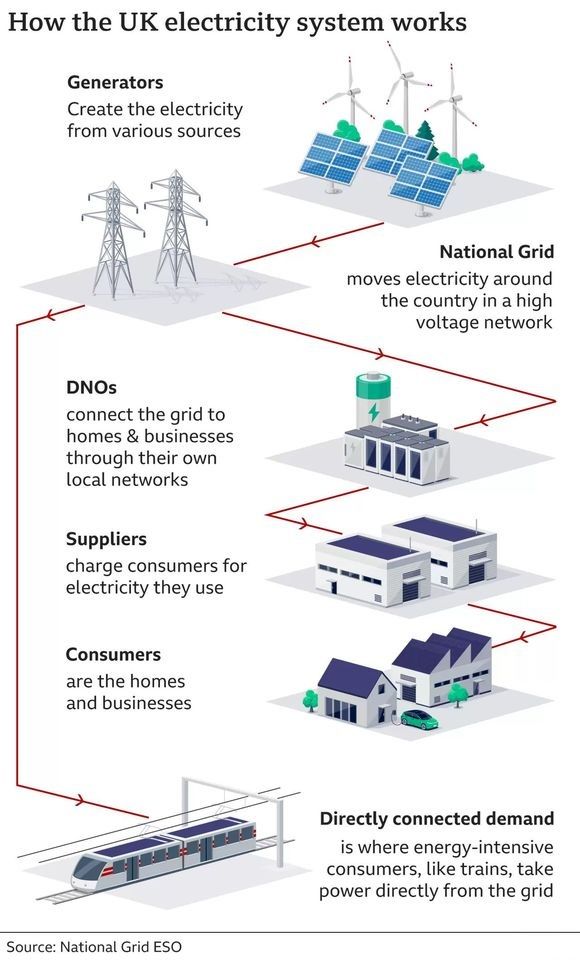
National Grid, which is responsible for moving electricity across England and Wales, says it is tightening up the criteria for projects to apply so only the really promising ones join the queue.
But a huge new investment is also required to restructure the grid so it can deal with more power sources, says Roisin Quinn, director of customer connections.
"Fundamental reform is needed", she told the BBC. "More infrastructure is needed. We are working very hard to design and build at a faster pace than we ever have done before."
The Energy Network Association represents the operators, known as DNOs, which connect people's homes to the main system owned by National Grid. It says that the government needs to speed up the planning process so electricity infrastructure can be built more quickly.
The government announced in March that it was looking into how to speed up planning decisions.
The energy regulator, Ofgem, which oversees the operators, said that all stakeholders were playing catch up with the government's targets.
Rebecca Barnett, direct of networks at Ofgem said: "The targets have been increasing in the last two or three years dramatically and there is a long lead in investment time that is needed to commit, develop, and deliver these really big assets.
"I think that has caused a real problem; we definitely need to catch up. The incremental approach of the past is not fit for purpose."
Ofgem says it has agreed to allow the National Grid to raise an additional £20bn over the next 40 years from customer bills to pay for the huge upgrades the grid needs.
Customers have seen household prices soar over the last year following the invasion of Ukraine by Russia and a run-on gas.
But Ms Barnett said this new investment will have a minimal impact on customers bills and will help shoulder the burden of some of the volatile energy prices.
"The future is for green, more secure and in fact cheaper energy. We know there is some investment cost needed to get us there, but in the long run it is going to be cheaper for us all," she said.

