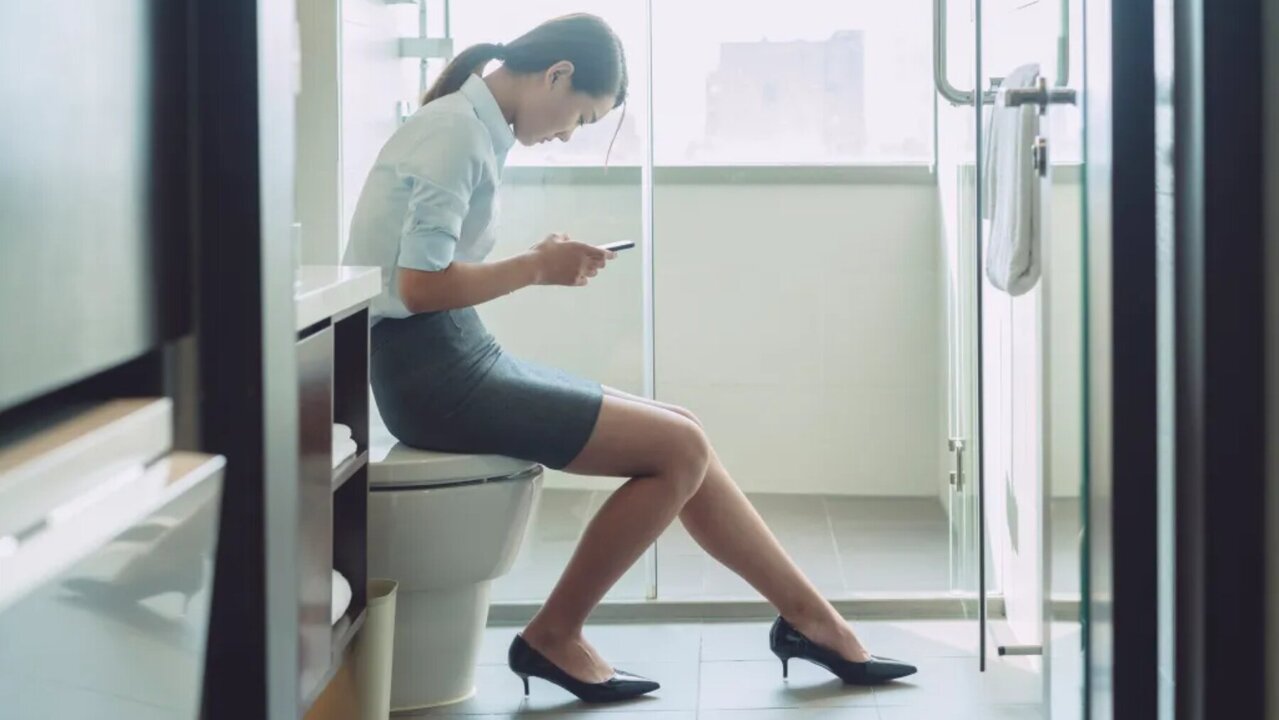
Reason for dismissal: The employee spent four hours in the restroom during working hours
An engineer dismissed for taking repeated extremely long restroom breaks sued his employer for wrongful termination, prompting a court-led settlement in his favor.
A Chinese engineer who was dismissed from his job after repeatedly taking extended bathroom breaks has taken legal action against his former employer, alleging that his termination was unlawful.
The case has sparked debate in China over workplace rights and medical accommodations.
The engineer, identified only by his surname Li, had worked for the technology company based in Jiangsu province for more than a decade before being dismissed.
Between April and May 2024, company records and surveillance footage showed that Li had taken fourteen bathroom breaks during working hours, with the longest single absence lasting nearly four hours.
The employer argued that such prolonged absences disrupted work and violated internal policies requiring employees to remain available during work hours.
After his termination, Li filed a lawsuit against the company in court, seeking compensation of 320,000 yuan (about forty-five thousand U.S. dollars) for what he described as wrongful dismissal.
Li claimed his frequent bathroom visits were driven by a medical condition, including haemorrhoids, and he presented hospital records and documentation of related medication purchases as evidence to support his claim.
The employer countered with surveillance footage and noted that Li had not informed supervisors about his health condition or formally applied for sick leave in accordance with company policy and his employment contract.
According to the terms of Li’s contract, unapproved absences totalling three working days within a period of one hundred and eighty days could justify termination.
In court proceedings, the judge did not issue a definitive ruling on the legality of the dismissal.
Instead, after two rounds of hearings, the parties reached a mediated settlement.
The company agreed to pay Li thirty thousand yuan (approximately four thousand two hundred U.S. dollars), taking into account his years of service and the financial difficulty caused by his sudden unemployment.
The amount was far below the compensation Li had sought.
The case has reignited discussion in China about how labour laws balance employees’ health needs with employers’ requirements for discipline and productivity.
Under Chinese labour regulations, employees are entitled to basic health protection, but employers also have the right to enforce discipline and safeguard operational efficiency.
Courts are often called upon to balance these competing interests on a case-by-case basis.
The case has sparked debate in China over workplace rights and medical accommodations.
The engineer, identified only by his surname Li, had worked for the technology company based in Jiangsu province for more than a decade before being dismissed.
Between April and May 2024, company records and surveillance footage showed that Li had taken fourteen bathroom breaks during working hours, with the longest single absence lasting nearly four hours.
The employer argued that such prolonged absences disrupted work and violated internal policies requiring employees to remain available during work hours.
After his termination, Li filed a lawsuit against the company in court, seeking compensation of 320,000 yuan (about forty-five thousand U.S. dollars) for what he described as wrongful dismissal.
Li claimed his frequent bathroom visits were driven by a medical condition, including haemorrhoids, and he presented hospital records and documentation of related medication purchases as evidence to support his claim.
The employer countered with surveillance footage and noted that Li had not informed supervisors about his health condition or formally applied for sick leave in accordance with company policy and his employment contract.
According to the terms of Li’s contract, unapproved absences totalling three working days within a period of one hundred and eighty days could justify termination.
In court proceedings, the judge did not issue a definitive ruling on the legality of the dismissal.
Instead, after two rounds of hearings, the parties reached a mediated settlement.
The company agreed to pay Li thirty thousand yuan (approximately four thousand two hundred U.S. dollars), taking into account his years of service and the financial difficulty caused by his sudden unemployment.
The amount was far below the compensation Li had sought.
The case has reignited discussion in China about how labour laws balance employees’ health needs with employers’ requirements for discipline and productivity.
Under Chinese labour regulations, employees are entitled to basic health protection, but employers also have the right to enforce discipline and safeguard operational efficiency.
Courts are often called upon to balance these competing interests on a case-by-case basis.