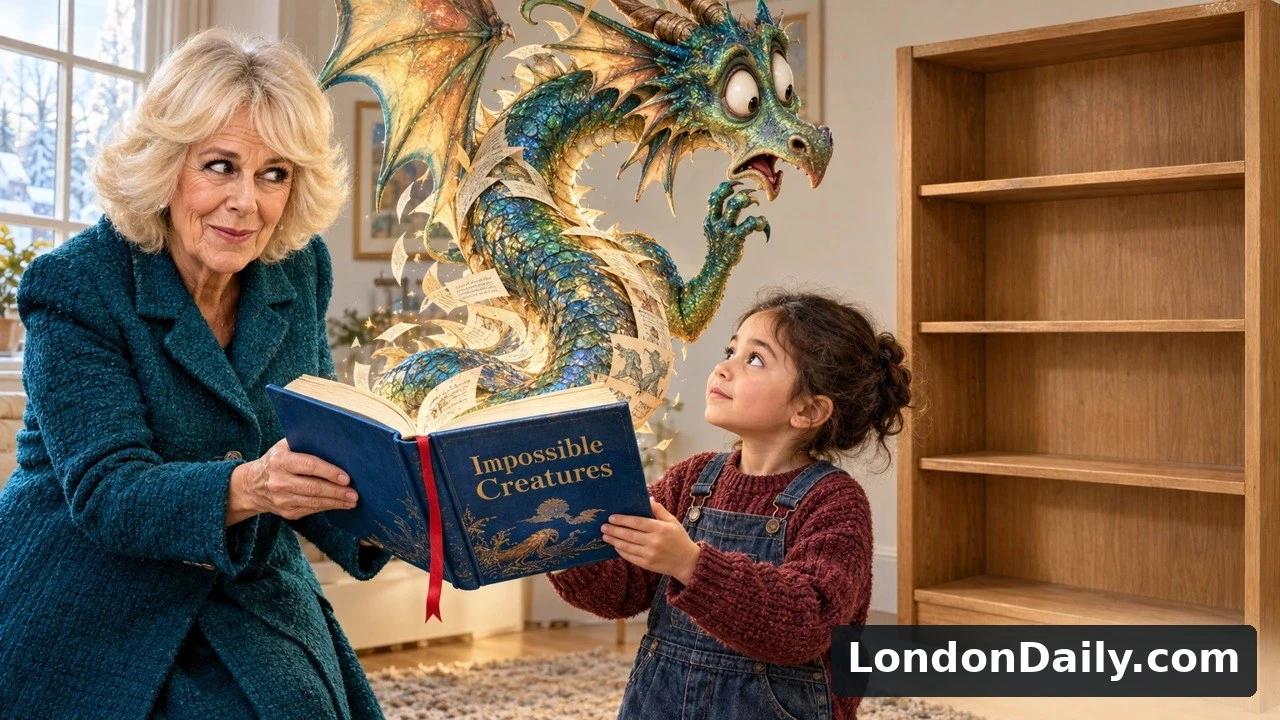
Queen Camilla has urged the public to help children without books discover reading, using her first festive open letter as Queen consort to warn that difficulties with literacy can limit opportunities throughout life.
National Literacy Trust research found that one in 11 children and young people does not own a book at home, rising to one in seven in disadvantaged areas. Camilla, the charity’s patron, said children were missing both the pleasure of stories and the possibilities that reading could open up.
“The consequences can last a lifetime. Across our country, too many adults still struggle with basic literacy, affecting everything from confidence and wellbeing to everyday opportunities,” she wrote.
Her 700-word letter, published on the monarchy’s official social media, accompanies The Queen’s Christmas Present initiative. This Christmas, some 800,000 year six pupils will receive a special edition of Katherine Rundell’s bestselling Impossible Creatures. The scheme covers children across the UK in their final primary-school year, including those educated at home.
The edition carries a royal stamp on its cover and a personal message from Camilla. The book has also been recorded as an audiobook and is available in braille.
Camilla called for people to volunteer, donate books or read a bedtime story to a young relative. “This is a story in which we can all play a part,” she wrote, expressing hope that the National Year of Reading’s momentum would continue into the New Year.
The appeal comes after Alan Milburn’s review called for sweeping changes to tackle youth unemployment. He described the almost one million 16- to 24-year-olds outside education, employment or training as a “moral crisis”.
Jonathan Douglas, the trust’s chief executive, said young people who struggle with literacy were twice as likely to fall into that category. He argued that supporting reading campaigns could therefore contribute to addressing the problem. That association does not, by itself, establish what effect this particular book-gifting scheme will have.
Douglas reported a modest improvement in daily leisure reading among eight- to 18-year-olds: 20.3% in 2026, against 18.7% in 2025. Book ownership remained a concern among five- to 18-year-olds, he said, with boys worse affected than girls and the North worse affected than the South.
Camilla is due to visit a primary school with Rundell in the coming week. Beyond the Christmas gift, the task is to sustain children’s interest: as Douglas put it, “The challenge is basically how we turn a moment into a movement”.








Join the conversation