London Daily

Focus on the big picture.
Saturday, Apr 25, 2026

Putin’s Hopes for Fast Recovery Threatened by Worker Deficit

Putin’s Hopes for Fast Recovery Threatened by Worker Deficit

Vladimir Putin’s hopes of getting his economy growing again quickly are likely to be dashed by Russia’s shrinking workforce.

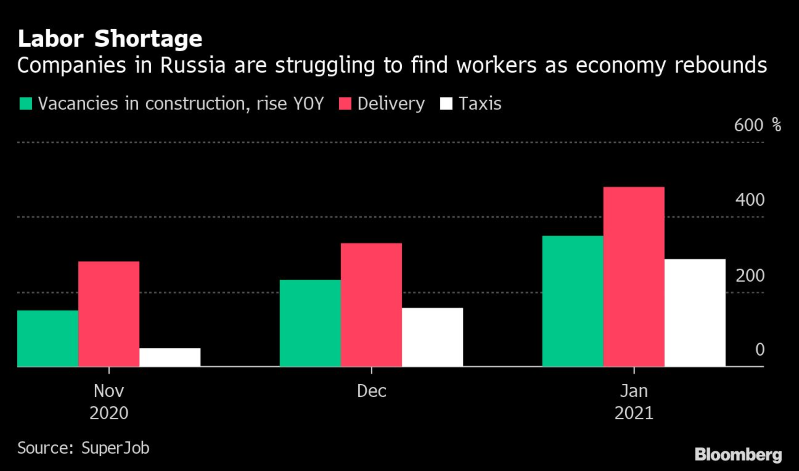
Employers, especially in construction, are struggling to find enough people to fill jobs because coronavirus restrictions have halved the number of immigrants. Companies ranging from gold miners to builders say they’ve been forced to push up wages to attract locals.

Almost half of construction companies surveyed by the national builders union said they have increased pay. MIC Group, a Moscow-based constructor, has hiked wages by as much as 15% on average and that’s helped bring in more staff, said Andrey Ryabinskiy, head of the board of directors.

“It was hard enough to find qualified workers before the pandemic, but now we’re feeling it much more,” he said.

The Kremlin is relying on a rapid recovery from the pandemic to quell growing discontent over falling incomes and rising consumer prices. Despite the success of its Sputnik vaccine, Russia is behind on its ambition to inoculate 60% of the population by the middle of the year.

Russia has already lifted most of its coronavirus restrictions and a recent rally in oil prices should help an economic rebound kick in as soon as the second quarter, but the pace of growth could be limited without an ample supply of workers. A shrinking labor force could shave about 25 basis points off potential growth every year for the next decade, according to Bloomberg Economics.

Russia usually relies on an army of laborers from other parts of the former Soviet Union to help meet the increased demand when the economy picks up, but most borders have been closed for almost a year.

“If the shortages are not solved by March, it will be a big problem,” said Madina Khrustaleva, an analyst at TS Lombard in London. “The need for labor in agriculture will also grow due to seasonality.”

Migrant workers usually make up about 7% of Russia’s workforce and contribute about 6% of gross domestic product, according to Evgeny Vinokurov, chief economist at the Eurasian Development Bank. Developer JSC Inteco, whose contractors use migrant labor for as much as 70% of their workforce, is experiencing slowdowns in “a substantial number of projects,” according to President Alexander Nikolaev. The company has had problems finding local replacements for migrant workers with the right skills even after it pushed up wages by 30%.

“Construction sites are still noticing the shortage of workers, despite the fact that they increased wages,” said Anton Glushkov, president of Nostroi, the national builders union. “This will ultimately result in an increased cost of construction.”

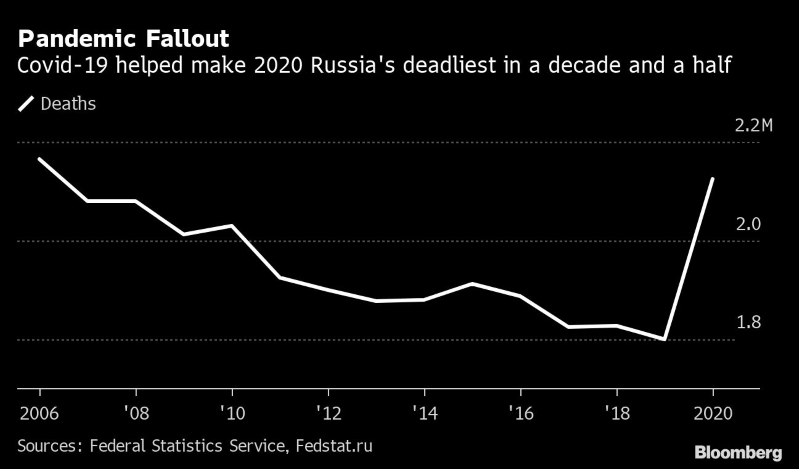
Russia’s already shrinking workforce has also taken a hit from the third-highest Covid-19 death toll in the world last year. The population shrank by almost 700,000 people in 2020, the biggest annual slump in 15 years.

What Our Economists Say:

“The pandemic has increased demand for workers in key sectors, even as restrictions limit the flow of people. In the long term, the workforce is shrinking, and that will be a more structural drag on growth once the economy recovers.”

Scott Johnson, Bloomberg Economics.

Migrants are in such high demand that they made more money on average than Russians in the fourth quarter of last year, according to research by Evgeni Varshaver at the Russian Presidential Academy of National Economy and Public Administration. They earned on average 47,000 rubles ($630) a month, compared to 34,000 rubles for Russians.

Mass vaccinations and border re-openings would help smooth out the bottleneck, but neither are expected in the coming months. Meanwhile, many Central Asian nations, which are a big source of migrant labor, don’t yet have access to any vaccine.

“One of the main outcomes of the pandemic for Russia’s labor market will be a continuing decline in supply, which will keep pressure on wages,” said Sofya Donets, an economist at Renaissance Capital in Moscow.

Newsletter

Related Articles

0:00
0:00
Close
Inside the Gates Foundation Turmoil: Layoffs, Scrutiny, and the Cost of Reputational Risk
UK Biobank Breach Exposes Health Data of 500,000, Listed for Sale on Chinese Platform
KPMG Cuts Around 10% of US Audit Partners After Failed Exit Push
French Police Probe Suspected Weather-Data Tampering After Unusual Polymarket Bets on Paris Temperatures
CATL Unveils Revolutionary EV Battery Tech: 1000 km Range and 7-Minute Charging Ahead of Beijing Auto Show
Crypto Scammers Capitalize on Maritime Chaos Near the Strait of Hormuz: A Rising Threat to Shipping Companies
Changi Airport: How Singapore Engineered the World’s Most Efficient Travel Experience
Power Dynamics: Apple’s Leadership Shakeup, Geopolitical Risks in the Strait of Hormuz, and Europe's Energy Strategy Amidst Global Challenges
Apple's Leadership Transition: Can New CEO John Ternus Navigate AI Challenges and Geopolitical Pressures?
Italy’s €100K Tax Gambit: Europe’s Soft Power Tax Haven
News Roundup
Microsoft lost 2.5 millions users (French government) to Linux
Privacy Problems in Microsoft Windows OS
News roundup
Péter András Magyar and the Strategic Reset of Hungary
Hungary After the Landslide — A Strategic Reset in Europe
Meghan Markle Plans Exclusive Women-Focused Retreat During Australia Visit
Starmer and Trump Hold Strategic Talks on Securing Strait of Hormuz Amid Rising Tensions
Unofficial Australia Visit by Prince Harry and Meghan Expected to Stir Tensions with Royal Circles
Pipeline Attack Cuts Significant Share of Saudi Arabia’s Oil Export Capacity
UK Stocks Rise on Ceasefire Momentum and Renewed Focus on Diplomacy
UK to Hold Further Strategic Talks on Strait of Hormuz Security
Starmer Voices Frustration as Global Tensions Drive Up UK Energy Costs
UK Students Voice Concern Over Proposal for Automatic Military Draft Registration
Rising Volatility Drives Uncertainty in UK Fuel and Petrol Prices
UK Moves to Deploy ‘Skyhammer’ Anti-Drone System to Strengthen Airspace Defense
New Analysis Explores UK Budget Mechanics in ‘Behind the Blue’ Feature
Man Arrested After Four Die in Channel Crossing Tragedy
UK Tightens Immigration Framework with New Sponsor Rules and Fee Increases
UK Foreign Secretary Highlights Impact of Intensified Strikes in Lebanon
UK Urges Inclusion of Lebanon in US-Iran Ceasefire Framework
UK Stocks Ease as Ceasefire Doubts in Middle East Weigh on Investor Confidence
UK Reassesses Cloud Strategy Amid Criticism Over Limited Support Measures
UK Calls for Full and Toll-Free Access Through Strait of Hormuz Amid Rising Tensions
Starmer Signals Strategic Shift for Britain Amid Escalating Iran-Linked Tensions
UK Issues Firm Warning to Russia Over Covert Underwater Military Activity
OpenAI Halts Stargate UK Project, Casting Uncertainty Over Britain’s AI Expansion Plans
Starmer Voices Frustration Over Global Pressures Driving UK Energy Costs Higher
UK Deploys Military Assets to Protect Undersea Cables From Suspected Russian Threat
Canada Aligns With US, UK and Australia as Europe Prepares Major Digital Border Overhaul
Meghan Markle’s Planned Australia Appearance Sparks Fresh Speculation
Starmer Warns Sustained Effort Needed to Ensure US–Iran Ceasefire Holds
UK to Partner with Shipping Industry to Rebuild Confidence in Strait of Hormuz, Cooper Says
UK Interest Rate Expectations Ease Following US–Iran Ceasefire Agreement
Starmer Signals Major Effort Needed to Fully Reopen Strait of Hormuz During Gulf Visit
UK Fuel Prices Face Ongoing Volatility Amid Global Pressures and Domestic Factors
Kanye West’s Planned Italy Festival Appearance Draws Debate After UK Entry Ban
Smuggling Routes Shift Toward Belgium as Migrant Crossings to UK Evolve
Ceasefire Offers Potential Relief for UK Fuel and Food Prices Amid Ongoing Uncertainty
Iran Conflict Raises Questions Over UK’s Global Influence and Military Preparedness
×