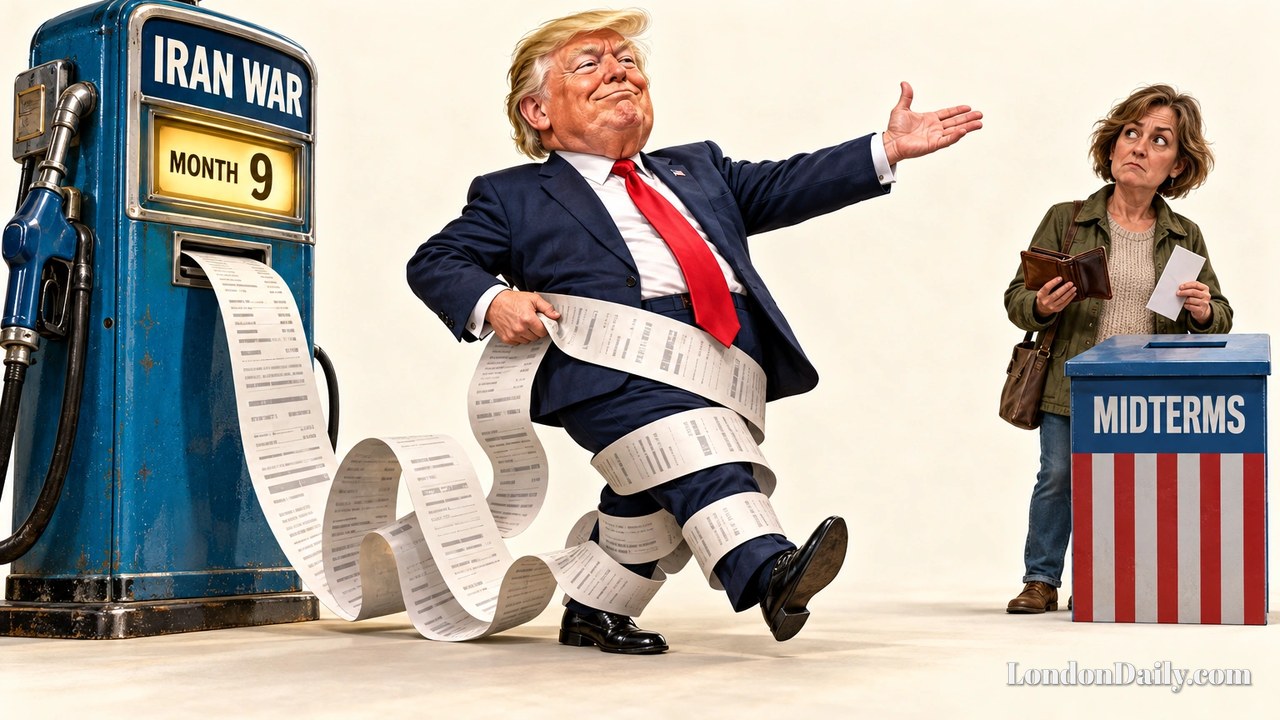
Donald Trump approaches the midterm elections with the Iran war in its ninth month, confronting his supporters with the kind of prolonged military involvement they expected him to avoid. Persistently high fuel prices are bringing the conflict’s costs into the domestic economy.
Oil, petrol and diesel prices have risen sharply and remained elevated, pushing up inflation. Meanwhile, low-intensity warfare in the Strait of Hormuz has restricted global supplies of vital commodities, including fertilisers and liquefied natural gas. The economic consequences extend beyond the immediate fighting.
The campaign marks a departure from earlier, short US operations: last year’s Midnight Hammer air strike against Iran’s nuclear sites and the operation that removed the Maduro government’s leadership in Venezuela last January. Those interventions were brief; the current war has become a sustained military commitment, with no end identified.
Iranian drones and missiles have delivered direct precision strikes against US bases across the Gulf and beyond. The contrast with the earlier operations is therefore about both duration and the continuing exposure of American military positions.
Ukraine adds another foreign-policy difficulty as its war continues into a fifth year. Trump’s perceived preference for Vladimir Putin at Ukraine’s expense has caused discontent among some Americans and bafflement and irritation among European allies. That criticism concerns his apparent alignment, distinct from the economic and military consequences of the Iran conflict.
The midterms could change the political circumstances in which Trump manages both wars if Republicans lose control of Congress. Whether that would produce a change of policy remains unresolved. His unpredictable approach makes it particularly difficult to infer a foreign-policy outcome from a possible electoral defeat.








Join the conversation