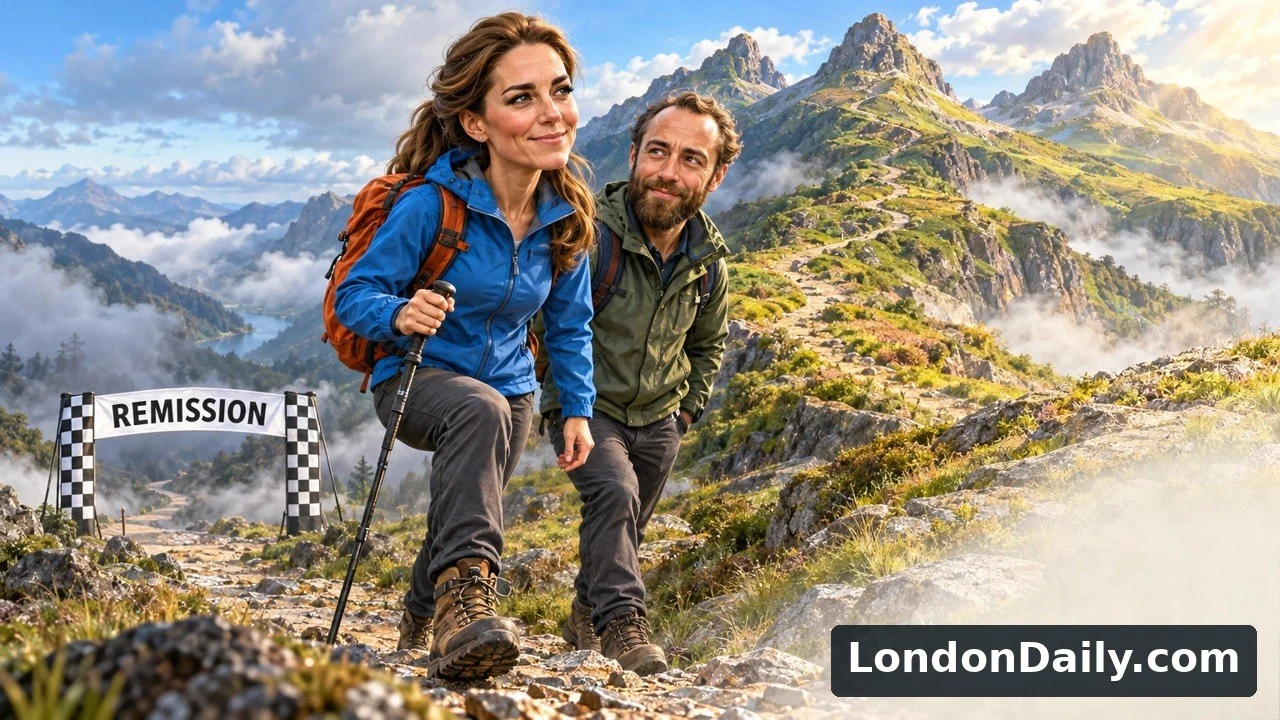
The Princess of Wales has undertaken the Three Peaks challenge for a new documentary, climbing three mountains within 24 hours while exploring the physical and emotional work of rebuilding her life after cancer treatment.
Heal, a 30-minute film premiering on the BBC from Sunday, follows Catherine up Ben Nevis, Scafell Pike and Yr Wyddfa, also known as Snowdon. The trek raises money for the Royal Marsden hospital in London, where she received treatment.
Catherine was diagnosed with an undisclosed type of cancer in March 2024, underwent chemotherapy and announced her remission in January 2025. Her account draws a distinction between that medical milestone and recovering a sense of herself.
“It’s very hard to go back to the person you were before,” she says. She describes how cancer can mean that people “in a way lose yourself”, and says she is “having to learn again to live life fully”.
The walk, through rain, hill fog and eventual June sunshine, becomes what she calls a “pilgrimage”: an exploration of healing beyond diagnosis and treatment, physically and spiritually. It also provides a personal marker after she missed the customary ringing of a bell at the end of hospital treatment because she had not realised it was an option.
Her brother, James Middleton, accompanies her for parts of the journey. At the top of Scafell Pike, he plays voice notes sent by Prince William and recorded by their children: Prince George, 13, Princess Charlotte, 11, and Prince Louis, eight.
“Hello, Mummy. I really love you and I hope you do well going up the mountain,” Louis says. Catherine wipes away tears. “They gave me the reason to get out of hospital. They’re going to give me the reason to finish this challenge,” she says.
Alongside encounters with fellow fundraisers, the film includes meetings with people undergoing treatment, pub support groups and art therapy. Catherine describes finding comfort in nature, even imagining outdoor spaces when confined to her hospital bed.
She also recalls someone holding her hand during a frightening, disorientating period in hospital. She does not identify the person; what mattered, she says, was their presence rather than an attempt to find words or fix anything.
At a private screening this week, Catherine said the journey through and beyond treatment “requires more than medicine alone”. What began as a solitary undertaking became, in her account, a shared experience. Her hope is to encourage compassion and demonstrate “the real value in standing alongside one another in the hardest of times”.








Join the conversation