

Pressure mounts on Boris Johnson to launch coronavirus inquiry
Senior doctors, government scientific advisers and a former head of the civil service have spoken out in favour of a public inquiry into the UK’s handling of Covid-19, raising pressure on Boris Johnson to finally launch the process as the UK’s coronavirus fatalities rose to almost 126,000.
Thousands of bereaved families, nurses and ethnic minority leaders also backed calls for an inquiry into everything from lockdown tactics to test and trace after the UK’s handling of the pandemic resulted in the worst death toll per capita of any of the world’s large economies.
Lord Kerslake, the head of the civil service under David Cameron, and Prof John Edmunds, a leading scientific adviser to the government on Covid, are among a dozen influential figures who have told the Guardian they support a public inquiry. Kerslake said a public inquiry could save lives and it would be “criminal not to learn the lessons”.
“We can’t rule out the possibility that we will hit this problem again,” he said, adding the inquiry should begin by summer.
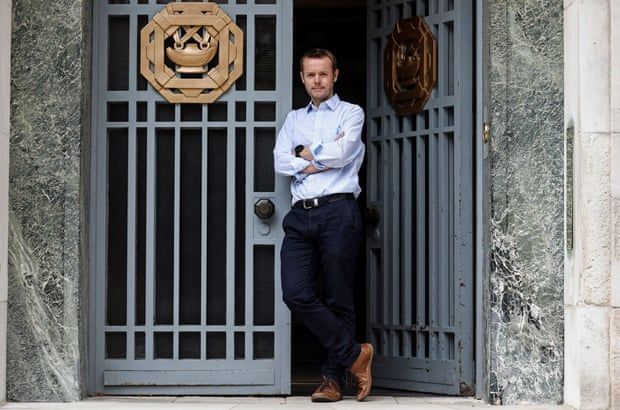 Prof John Edmunds, who supports a public inquiry.
Edmunds said: “An event of this magnitude needs to be looked at in detail, including – if necessary – compelling witnesses to attend.”
With infections now at their lowest rate since September and close to 25 million people vaccinated with a first dose, others calling for the inquiry to be triggered include Prof Dame Donna Kinnair, the general secretary of the Royal College of Nursing, Zara Mohammed, the secretary general of the Muslim Council of Britain, Chaand Nagpaul, the chair of the British Medical Association council and Diane Mayhew, a co-founder of the Rights for Residents group, which campaigns on behalf of care home residents, about 40,000 of whom died with Covid.
But despite a promise last July by the prime minister to set up an “independent inquiry”, Downing Street is refusing to start the process many consider essential to learn lessons for future pandemics.
“We are focused on protecting the NHS and saving lives and now is not the right time to devote huge amounts of official time to an inquiry,” a government spokesperson said. “There will be an appropriate time in the future to look back, analyse and reflect on all aspects of this global pandemic.”
Other leading scientists calling for an inquiry include Prof Sir Paul Nurse, the director of the Francis Crick Institute and a Nobel Laureate.
Prof Andrew Hayward, an expert in infectious disease epidemiology who also sits on the Scientific Advisory Group for Emergencies (Sage), said in a personal capacity: “Many would argue that much of this could have been avoided if different [or] earlier decisions had been made at various points in the pandemic. These decision-making processes therefore need to be scrutinised and I think they are only likely to become completely clear if people are compelled to give evidence.”
He said the stress should be on “learning for the future rather than culpability”.
The rising pressure on Johnson comes amid calls from more than 2,800 families bereaved by Covid for an “urgent” statutory inquiry with the power to demand witnesses give evidence and to uncover documents.
The Covid-19 Bereaved Families for Justice group is threatening legal action to force ministers to launch an inquiry, arguing an unprepared government “serially failed to take reasonable steps to minimise the effects of the pandemic, leading to massive, unnecessary loss of life”.
“It’s not just us bereaved families – there are millions of people around the country who want answers,” said Jo Goodman, a co-founder of the group. “Did the prime minister do everything he could to prevent it? Could his government have been better prepared or did it ignore warnings? Were decisions made which cost lives rather than saving them? An urgent statutory public inquiry is essential if we are to learn lessons and save lives now and in the future.”
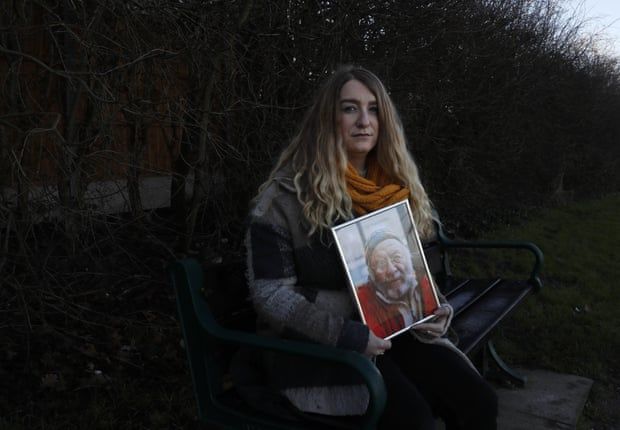 Jo Goodman holds a portrait of her father,
Stuart, who died after contracting coronavirus. She co-founded the
Covid-19 Bereaved Families for Justice group.
Jo Goodman holds a portrait of her father,
Stuart, who died after contracting coronavirus. She co-founded the
Covid-19 Bereaved Families for Justice group.
Some senior Conservatives have already indicated they want a public inquiry and the former prime minister David Cameron said earlier this month he expected an inquiry and that “more should have been learned from the experience with Sars and respiratory disease in terms of our own preparedness”. The Commons constitutional affairs select committee, chaired by the Tory backbencher William Wragg, called for an inquiry last summer.
Christinea McAnea, the general secretary of Unison, which represents 1.3 million health staff including porters, cleaners, care workers and nurses, said an independent, judge-led public inquiry should launch as soon as society opens up again – currently scheduled for 21 June.
“If the UK is to heal, people need to understand why things went so disastrously wrong,” she said. “There are key questions to answer about why care homes were left so vulnerable, frontline staff were without safety kit and testing was abandoned in the early stages.”
The two largest doctors’ and nurses’ membership groups – the British Medical Association (BMA) and the Royal College of Nursing – also backed the calls.
“We have seen suffering at levels people have not experienced,” said the BMA’s Nagpaul. “We have seen livelihoods lost and inequalities exacerbated to levels that have devastated communities. Putting all that together, of course it demands an inquiry.”
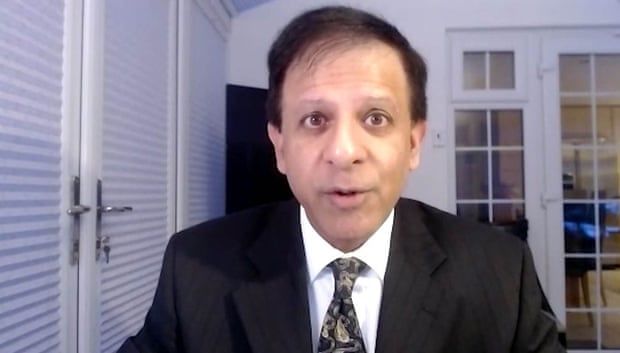 Dr Chaand Nagpaul, the chairman of the British Medical Association council.
Kinnair said nurses were still experiencing a lack of PPE and that “a full inquiry into the preparation and management of Covid-19 is the only way the government, its agencies and advisers will … truly reflect and learn”.
Prof Andrew Goddard, the president of the Royal College of Physicians, said he expected an inquiry and it should “identify and recommend changes so we can improve preparedness for and management of future crises … [It should] look at how prepared we were and the decisions we took in terms of very practical things, such as stocks of PPE, the size of the NHS workforce and how many critical care beds we have … [as well as] the greater impact of Covid-19 in the UK because of the state of public health.”
Lord Simon Woolley, who until last summer was the chair of the advisory group to the government’s race disparity unit, said he wanted a public inquiry to reach beyond scientific and medical factors to include housing, health, education and employment.
“For black, Asian and minority ethnic communities [Covid] has been utterly devastating,” he said, adding that if an inquiry followed the disease it would expose societal fault lines.
“This inquiry is a once-in-a-generation opportunity to dramatically change the infrastructure,” he said. “Are we going to put a plaster on a gaping wound or are we going to have an infrastructure change that builds to a fairer society?”