London Daily

Focus on the big picture.
Saturday, Jun 13, 2026

One year on, most voters say Brexit has gone badly

One year on, most voters say Brexit has gone badly

An Opinium poll on the anniversary of Britain quitting the EU also found that 42% of people who voted Leave in 2016 had a negative view of how it had turned out

More than six out of 10 voters believe Brexit has either gone badly or worse than they expected – a year after the UK left the EU, according to an anniversary poll for the Observer.

The Opinium survey – coming a week after the minister in charge of Brexit, Lord Frost, resigned from Boris Johnson’s government – also found that 42% of people who voted Leave in 2016 had a negative view of how Brexit had turned out so far.

26% of Leave supporters said it had gone worse than they expected, while 16% of those who voted for Brexit said they had expected it to go badly and had been proved right.

Among people who voted Remain, 86% said it had gone badly or worse than they expected. Overall, just 14% of all voters said Brexit had gone better than expected.

Adam Drummond, of Opinium, said the most striking finding was that Leavers were now more hesitant about the virtues of Brexit than previously.

“For most of the Brexit process any time you’d ask a question that could be boiled down to ‘is Brexit good or bad?’ you’d have all of the Remainers saying ‘bad’ and all of the Leavers saying ‘good’ and these would cancel each other out,” he said.

“Now what we’re seeing is a significant minority of Leavers saying that things are going badly or at least worse than they expected. While 59% of Remain voters said, ‘I expected it to go badly and think it has’, only 17% of Leave voters said, ‘I expected it to go well and think it has’.

“Only 7% of Remainers think Brexit has gone better than expected versus 26% of Leavers saying it has gone worse than expected. So instead of two uniformly opposing blocs, the Remain bloc are still mostly united on Brexit being bad while the Leave bloc are a bit more split.”

The poll comes ahead of the introduction on 1 January of full customs checks on goods being exported from the EU to the UK, which business leaders believe could deter some smaller operators – such as food exporters – from supplying UK retailers as their costs and paperwork increase. These will be followed by more checks on food imports from mid-summer.
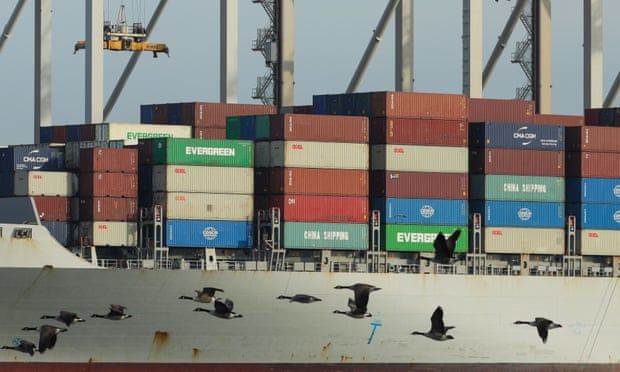
Full customs checks on goods being exported from the EU to the UK come in next year.


Shane Brennan, chief executive of the Cold Chain Federation, said he expected many of the problems faced over the past year by small UK businesses exporting to the EU, particularly the rising cost of sending small amounts because of new charges, would now confront those sending small specialist consignments the other way, from the EU to the UK.

He warned that this could lead to less availability of specialist food products from the continent arriving in UK shops. “Small traders have a choice, find a way to send more less often, or don’t send it at all,” Brennan said. “For lots of businesses you can’t justify sending a lorry load of fresh food a day or week and so you won’t do it. The net result is less variety, less fresh, quality specialist goods on the shelf, from outside the UK anyway.”

His fears were echoed by Dominic Goudie, head of international trade at the Food and Drink Federation, who said: “As new trade barriers are introduced, it is inevitable that businesses will experience issues at the border. In some cases, this could result in significant barriers that risk blocking deliveries from EU suppliers altogether, at least temporarily, while businesses adjust to the new requirements or restructure their supply chains.

“For just-in-time supply chains, this presents a real risk which could disrupt the operation of UK supply chains where a critically important ingredient is delayed or fails to arrive. Such delays could also lead to other ingredients already at factories being unusable.”

Newsletter

Related Articles

0:00
0:00
Close
UK Competition Watchdog Investigates Ryanair Family Seating Charges
Imperial College Study Links London Emissions Charges to Lower Hospital Admissions
Scottish First Minister Launches US Trade Initiative Ahead of World Cup Match in Boston
Fifteen Million Workers Gain Expanded Sick Pay Rights Under UK Reforms
British Retail Investors Secure Record Participation in SpaceX Share Offering
Keir Starmer and Micheál Martin Coordinate Response to Northern Ireland Violence
NHS Prepares for Major Disruption as Resident Doctors Announce Four-Day Strike
Bank of England Expected to Hold Rates as Energy Costs Complicate Inflation Outlook
Britain Moves to Ban Under-16s From High-Risk Social Media Platforms and AI Chatbots
UK Economy Contracts as Middle East Conflict Weighs on Growth
Defence Secretary John Healey Resigns Over Military Spending Dispute With Treasury
Prime Minister Keir Starmer Faces Leadership Crisis After Senior Cabinet Resignations
NHS Trust Secures Funding for AI Tool to Detect Heart Failure Earlier
Government Unveils £4.5 Billion Investment Plan for Walking and Cycling Infrastructure
Nationwide Reports UK House Prices Falling as Borrowing Costs Remain Elevated
Centre for Social Justice Says Two Million Britons Are Using Illegal Loan Sharks
UK Carmakers Warn EU Local Content Rules Could Damage British Manufacturing
UK Government Imposes Emergency Ban on Seven Potent Synthetic Opioids
Royal Navy Completes Major North Atlantic Anti-Submarine Exercise Off Norway
NHS Figures Show Nearly 3,000 Patients a Day Receiving Care in Hospital Corridors
CBI Cuts UK Growth Forecast as Middle East Tensions Drive Inflation Risks Higher
Dan Jarvis Appointed UK Defence Secretary Following Major Government Reshuffle
University College London Study Links Physical Punishment to Higher Risk of Bullying
East Midlands Railway Unveils First Refurbished Train in £60 Million Modernization Programme
RNLI Issues National Water Safety Appeal Ahead of Expected Heatwave
Climate Change Raises Subsidence Risks for Millions of Homes Across Southeast England
Manchester Advances Plans for Underground Piccadilly Station With £1 Million Funding Commitment
Anti-Immigration Violence Continues in Belfast Amid Heightened Security Concerns
UK Law Locks Great British Railways Into Public Ownership
Office for National Statistics Adopts Supermarket Checkout Data for Inflation Measurement
Applied Atomics Launches With $500 Million Space Infrastructure Order Book
BYD Plans Nationwide Rollout of Ultra-Fast EV Charging Network
UK House Prices Unexpectedly Fall in May
CBI Warns UK Growth Is Becoming Increasingly Dependent on Public Spending
Makerfield By-Election Fuels Speculation Over Labour’s Future Leadership
Britain Declines to Join EU SAFE Defence Fund
UK Unveils 2040 Emissions Target Despite Strong Political Opposition
Government Orders Full Review of Palantir’s NHS Data Contract
UK Borrowing Costs Climb as Markets Price in Further Bank of England Rate Rises
Resident Doctors Confirm Five-Day NHS Strike Across England
Violent Anti-Immigrant Riots in Belfast Spark Political and Diplomatic Tensions
United Kingdom Sees Recovery in Horizon Europe Research Funding Share to 9.3 Percent
UK Inflation Holds at 2.8 Percent as Office for Budget Responsibility Flags Persistent Price Pressures
United Kingdom Launches National Anti-Fraud Framework to Combat Rising Pension Scam Losses
United Kingdom Expands Sanctions on Israeli Groups While Funding Palestinian Authority Salaries and Gaza Mine Clearance
United Kingdom Issues Three-Month Ultimatum to Major Technology Firms Over Child Online Safety Controls
United Kingdom Government Moves Toward Blanket Social Media Ban for Children Under Sixteen
Widespread Anti-Immigration Rioting Erupts Across Belfast After Knife Attack Linked to Asylum Seeker
Farmers Warn of Crop Losses Following Months of Unseasonal Rainfall
Civil Aviation Authority Launches Review of Regional Airport Operations
×