London Daily

Focus on the big picture.
Tuesday, Jul 14, 2026

One in five UK adults have had depressive symptoms during pandemic

One in five UK adults have had depressive symptoms during pandemic

Experts say many people may not be getting care they need as GP diagnoses of depression fall

One in five adults in Britain have experienced symptoms of depression during the pandemic, with young people, disabled people and renters hit the hardest, according to official figures.

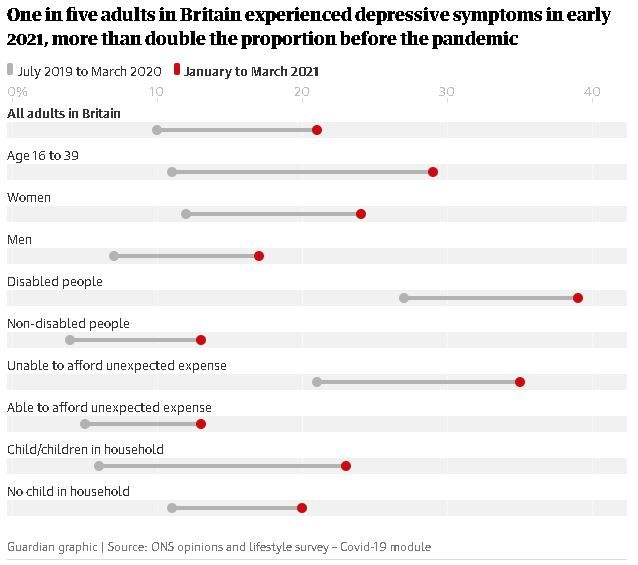
The figures, based on the ONS’s Opinions and Lifestyle survey, show that between January and March 2021, during the second lockdown, 21% of adults experienced some form of depression, an increase from 19% in November 2020 and more than double the figure observed before the pandemic.

Despite the increase, the number of GP depression diagnoses in England have fallen during the pandemic. Experts said the figures indicated that many people may not be accessing the medical care they need.

Younger adults and women were more likely to experience some form of depression, with more than four in 10 women aged between 16 and 29 experiencing depressive symptoms, compared with 26% of men the same age.

Disabled people, clinically vulnerable adults, those renting their home and those living in the most deprived areas of England were more likely than average to experience some form of depression.

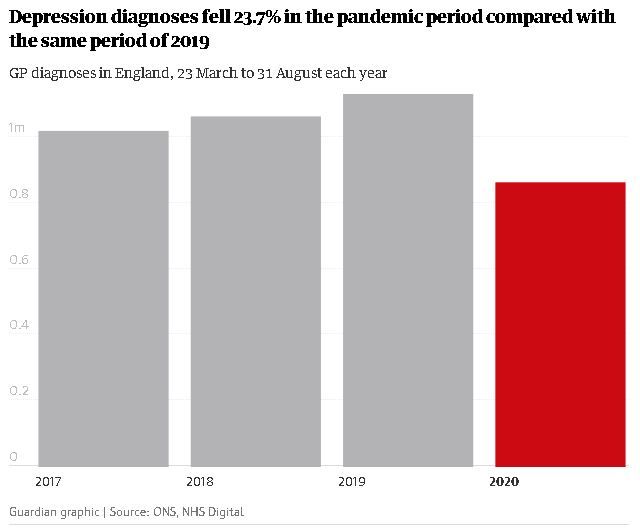
The number of depression diagnoses between 23 March and 31 August 2020 decreased by 23.7% in comparison with the same period of 2019. This was slightly lower than the 29.7% fall in all diagnoses by GPs in England over the same period. Depression diagnoses made up about 15.6% of all GP diagnoses, up 1.3 percentage points year on year.

The decrease in depression diagnoses was bigger in men (27.4%) than women (21.4%). It spanned all ethnicities, but the Chinese ethnic group saw the biggest change in depression diagnoses as a percentage of all diagnoses, up 4 points.

Theodore Joloza, a principal research officer at the ONS, said the statistics indicated a rising toll on mental health, with “many people not necessarily accessing medical help”.

Prof Martin Marshall, the chair of the Royal College of General Practitioners, said the figures showed the impact of the pandemic on patients’ mental health, both directly as a result of Covid-19 or long Covid and indirectly as a result of the social and economic impact of lockdown restrictions.

He said: “The increasing numbers of patients presenting mental health conditions is one example of the increasing complexity of GP work during the pandemic, and highlights the need for GPs to have more time with their patients.

“GPs and our teams are at the forefront of helping communities recover from the pandemic, including ensuring patients receive the mental healthcare they need. To do this, our profession needs the support of government and policymakers. We urgently need to see plans to address the intense workload and workforce pressures facing general practice so that we can continue delivering the care our patients need and deserve.”

Claire Murdoch, NHS England’s national mental health director, said: “We know at the peak of the pandemic last year some people may understandably have been more reluctant to seek help, but the number of appointments has now returned to pre-pandemic levels and we continue to encourage people to come forward if they’re concerned about their mental health.

“Access to talking therapies remained available throughout the pandemic, with the option to self-refer, along with support available via crisis phone lines and increased use of digital services and continued treatment for existing patients, with investment in mental health services continuing to grow.”

Newsletter

Related Articles

0:00
0:00
Close
UK Prime Minister Keir Starmer Offers Condolences Following Death of Qatar’s Father Amir
UK Regional Innovation Policy Focuses on Research Clusters Across Scotland, Wales, and Northern England
UK Corporate Transparency Rules Set to Become More Strict Under Modern Slavery Reform Plans
UK Civil Service Estate Strategy Shifts Government Activity Away From London
UK Strengthens National Security Powers Through New Threat Designations
Greater Manchester Police Conduct Drink and Drug Driving Operations After Football Events
UK Government Advances Darlington Economic Campus With Construction Milestone
UK Authorities Increase Football-Related Security Operations After Tournament Fixtures
UK Invests Fifty-One Million Pounds in National Cryogenics Facility and Regional Innovation Hubs
UK Moves Toward Tougher Modern Slavery Reporting Rules With Corporate Penalties
UK Government Reports Forty-Three Million Pounds in Savings From Office Estate Reform
UK Government Expands Civil Service Regional Strategy With Manchester and Darlington Campus Projects
UK Designates Iran’s Islamic Revolutionary Guard Corps as National Security Threat
United Kingdom Financial Markets Monitor Business Response to Economic Policy Changes
Scottish Renewable Energy Expansion Highlights Need for Faster Grid Development
Wales and Regions Strengthen Focus on Economic Development Through Tourism and Investment
Retail Industry Warns High Street Businesses Remain Under Pressure
Police Chiefs Highlight Growing Challenges Managing Protests and Public Order
Agriculture Leaders Seek Clarity on Post-Brexit Farming Support and Environmental Rules
Transport Unions Warn of Further Industrial Action Over Pay and Working Conditions
Welsh Tourism Sector Reports Strong Growth Driven by Domestic and International Visitors
National Infrastructure Review Gains Support as Leaders Seek Faster Project Delivery
Financial Markets Assess Impact of United Kingdom Corporate Tax Policy Changes
Northern Ireland Assembly Debates Cross-Border Trade and Infrastructure Cooperation Plans
Government Opens Consultations on Housing Reform and Planning System Changes
Scottish Government Faces Pressure to Accelerate Offshore Wind and Grid Expansion
National Energy System Operator Warns Grid Investment Is Needed for Future Electricity Demand Growth
United Kingdom Research Council Invests in Artificial Intelligence and Biotechnology Innovation Hubs
United Kingdom Expands Oversight of Skilled Worker Visa Sponsors Amid Migration Debate
Cross-Party MPs Call for National Infrastructure Strategy Review to Accelerate Economic Growth
Prime Minister Announces One Billion Pound NHS Funding Package Ahead of Winter Pressures
Bank of England Signals Cautious Approach to Interest Rates as Inflation Remains Above Forecasts
World Cup Visitors Turn American Big-Box Stores Into Souvenir Stops
Netflix Weighs Always-On Channels, Bundles and Short-Form Video
Passenger Is Pulled Partly Outside Ryanair Jet After Window Fails Mid-Flight
Innovation-led growth strategy
Public service reform pressure
Defence and industrial security
Labour leadership transition and economic reset
Northern England Pushes for Greater Influence in Britain’s Future Economic Model
UK Technology Strategy Focuses on Life Sciences, Digital Innovation and Research Investment
Britain and United States Maintain Focus on Pharmaceuticals Cooperation and Industrial Growth
UK Public Services Face Continued Pressure as Government Promises Visible Improvements
Regional Economic Power Becomes Key Theme in Britain’s Next Political Phase
Britain Expands Support for Small Businesses as Firms Seek Better Access to Finance
UK Economy Remains Central Political Challenge as Cost of Living and Growth Concerns Persist
National Health Service Introduces New Workplace Reviews to Improve Conditions for Healthcare Staff
UK Life Sciences Sector Secures More Than Three Billion Pounds in Investment to Support Innovation
Britain Strengthens Defence Strategy as Security Concerns Reshape Military and Industrial Policy
Andy Burnham Promises Stronger UK Defence Industry and Expanded Domestic Production
×