London Daily

Focus on the big picture.
Monday, Nov 02, 2026

No evidence Boris Johnson was serial Covid rule-breaker, Met Police chief says

No evidence Boris Johnson was serial Covid rule-breaker, Met Police chief says

There was "no clear evidence" that Prime Minister Boris Johnson had breached Covid-19 rules many times in Downing Street, the Metropolitan Police's acting chief has said.

Sir Stephen House said the decisions made by officers investigating lockdown parties at No 10 were correct.

The Met Police issued 126 fines to 83 people, including the prime minister.

But the force has faced calls to explain why Mr Johnson did not receive fines for other events he attended.

At one gathering on 13 November, 2020, Mr Johnson was pictured drinking with staff in Downing Street at a leaving do for the prime minister's former communications chief, Lee Cain.

The Met Police has handed out fines for Covid breaches inside No 10 on this date but not to the prime minister.

Mr Johnson, his wife Carrie, and Chancellor Rishi Sunak each received only one fine for attending a party thrown for the prime minister's birthday in June 2020.

More details about the 12 gatherings investigated by the Met Police and others were outlined in a long-awaited report by senior civil servant, Sue Gray.

On Thursday, appearing in front of the London Assembly's Police and Crime Committee, the Met Police's acting commissioner was asked about how the force handled the investigation and decided who should be fined.

One committee member, Labour's Unmesh Desai, asked why the prime minister had only received one fine "when there was clear evidence suggesting he had breached the law quite a few times".

In reply, Sir Stephen said: "I don't believe there is clear evidence that the prime minister breached many other times."

He said he was personally involved in the decision-making and was confident in the outcome of the force's investigation.

"I'm not particularly concerned about what the prime minister thinks, I do my job without fear or favour," Sir Stephen said, who is in post until a replacement is found for former boss Dame Cressida Dick.


'Impossible' expectations


Sir Stephen was then questioned about an officer on duty in Downing Street who, according to the Grey report, had seen "a large number of people" at a "crowded and noisy" party, where "some members of staff drank excessively".

The officer had responded to a panic alarm button that was accidentally triggered at the 18 December, 2020 party.

Asked why the officer had not challenged the partygoers over Covid breaches, Sir Stephen said Downing Street officers were there for security and not to "police what goes on inside the building".

"And I don't believe that the officer that we're talking about felt that they were seeing something that necessarily breached coronavirus regulations," Sir Stephen said.
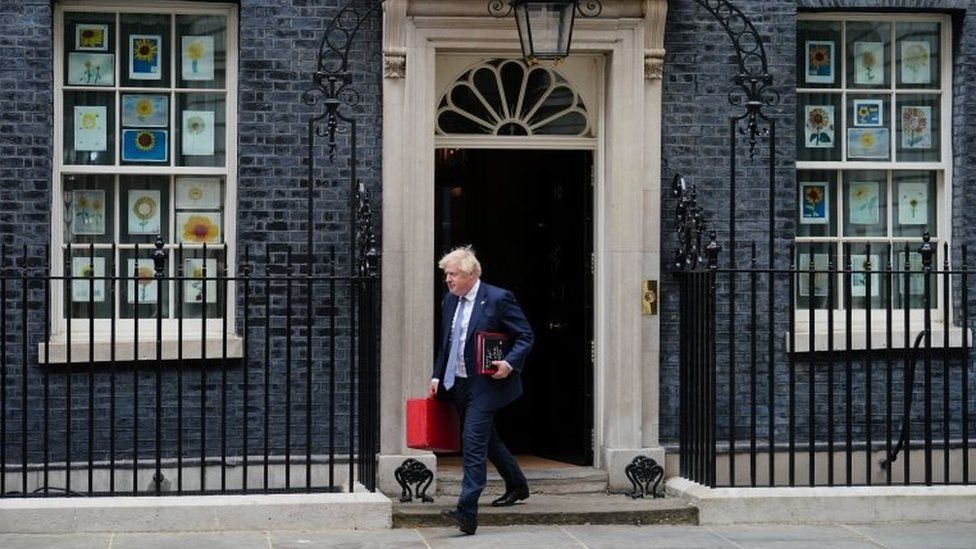

Later, he said one challenge officers faced was working out which gatherings were work-related, and which ones were not.

"I think it's impossible to expect an officer, walking through a room with a lot of people in it, to work out whether or not these people are breaching coronavirus regulations when it's taken a team of experienced detectives many many weeks to do the same thing," Sir Stephen said.

Setting out how the Met Police carried out its investigation, Sir Stephen said officers examined "every case", looking at "hundreds of documents, including emails, electronic door logs, diary entries, witness statements, photographs, CCTV images, and we sent questionnaires to people who we felt may have breached legislation".

Officers looked at "each individual's activity" at each event, how long it lasted and the amount of time an attendee spent there, Sir Stephen said.

As part of its investigation, the Met Police sent out questionnaires to suspected Covid rule-breakers but there were no interviews under caution.

Sir Stephen said said the "vast majority" of people returned their questionnaires, but did not say who did not and denied it had hampered the force's investigation of them.

He said the criteria for this decision-making process was included in a letter sent to the mayor of London, Sadiq Khan.

Earlier this week, Mr Khan has asked the Met Police for a "detailed explanation" of how it decided who to fine during its investigation into lockdown parties at No 10.

The mayor's spokesperson said Mr Khan was concerned a "lack of clarity" was eroding "trust" in the police.


Sir Stephen House: "I don't believe there is clear evidence that the PM breached (rules) many other times."

Downing Street insiders speak out on Partygate


Newsletter

Related Articles

0:00
0:00
Close
Home Office Implements Enhanced Digital Border Controls and Visa Processing Systems at Major Airports
Office for National Statistics Reports Stable Employment Participation Rates Across Regional Labor Markets
Department for Business and Trade Announces Strategic Partnership to Secure Critical Mineral Supply Chains
Scottish Government Unveils Regional Economic Development Strategy to Boost Advanced Manufacturing in Glasgow and Dundee
Treasury Officials Review Taxation Frameworks and Capital Gains Rules Ahead of Autumn Budget Disclosures
National Health Service Leaders Warn of Winter Capacity Pressures Across Acute Care Facilities
Bank of England Prepares for Key Interest Rate Decision Amid Sticky Inflation and Fiscal Policy Pressures
Home Office Expands Border Security Operations and Intelligence Sharing With European Partners
Office for National Statistics Reports Modest Retail Sales Growth Ahead of Crucial Christmas Trading Season
Welsh Government Unveils Strategic Plan to Boost Regional Technology Innovation and Digital Skills Training
Department for Environment Food and Rural Affairs Implements New Agricultural Subsidies Framework for English Farmers
Scottish First Minister John Swinney Announces Major Regional Infrastructure and Green Energy Investment Strategy
National Health Service Leaders Warn of Severe Winter Pressures and Mounting Accident and Emergency Backlogs
Bank of England Monetary Policy Committee Signals Cautious Interest Rate Path Amid Persistent Services Inflation
Chancellor of the Exchequer Rachel Reeves Finalizes Autumn Budget Framework Aiming to Close Public Sector Fiscal Gap
Department for Science, Innovation and Technology Prepares Enhanced Artificial Intelligence Safety and Cyber Defense Frameworks
United Kingdom Government Expands International Sanctions Framework Against Russian Shadow Fleet and Financial Enablers
Institute of Directors Reports Sharp Post-Budget Drop in Business Confidence Despite Long-Term Investment Intention Shifts
Chancellor John Healey Defends Sweeping Fiscal Adjustments and Household Support Packages Following Autumn Budget
Parliamentary Petitions Committee Schedules Major Legislative Debates on Special Educational Needs and Non-Stun Meat Labelling
Regional Devolution and Good Growth Fund Frameworks Reshape Local Government Funding Across English Regions
Loughborough University Economic Analysts Highlight Substantial Uncertainty Surrounding Public Sector Efficiency Savings
British Legal Sector Drives Sixty Billion Pounds in Annual Economic Output While Employing Over Half a Million Professionals
Law Society Welcomes New Better Regulation Executive While Pressing for Long-Term Legal Aid Funding Reform
Metropolitan Police and Security Services Heighten Operations Across London Ahead of Large-Scale Public Demonstrations
Bank of England Economists Scrutinize Corporate Tax Adjustments and Public Sector Borrowing Pressures
Chancellor John Healey Defends Autumn Budget Tax and Spending Allocations Following Intense Parliamentary Scrutiny
Department for Environment, Food and Rural Affairs Implements Strict Water Quality Monitoring Rules Following Severe Rainfall and Flooding
Welsh Government Unveils Comprehensive Regional Housing Strategy to Address Rural Affordability and Homelessness Pressures in Cardiff
Office for National Statistics Reports Slowing Consumer Price Inflation and Steady Retail Performance Across United Kingdom Markets
Northern Ireland First Minister Michelle O'Neill and Deputy First Minister Emma Little-Pengelly Advance Cross-Border Infrastructure Agreement in Belfast
Competition and Markets Authority Launches Formal Investigation Into Artificial Intelligence Partnerships Involving Major Technology Corporations
Scottish First Minister John Swinney Secures Cross-Party Support for Devolved Budget Framework and Renewable Energy Expansion
High Court Rules in Favor of Environmental Campaigners Over Department for Energy Security and Net Zero Licensing Procedures
National Health Service England Announces Major Digital Modernization and Artificial Intelligence Diagnostic Rollout Across Regional Trusts
Bank of England Monetary Policy Committee Signals Cautious Approach to Interest Rate Cuts Amid Persistent Wage Growth and Inflation Pressures
British Prime Minister Keir Starmer and Chancellor Rachel Reeves Outline Strategic Infrastructure Plans to Boost Regional Growth and Private Investment
Water pollution remains high despite £5bn investment
Regional Economic Divergence and Industrial Transformation
Technological Sovereignty and Regulatory Scrutiny
Fiscal Consolidation and Public Service Pressures
Automotive Industry Leadership Warns of Imminent Supply Chain Disruptions Following Recent European Trade Negotiations
High Court Delivers Landmark Ruling Affirming Strict Legal Protections for Corporate Data Privacy Against State Surveillance
Welsh First Minister Eluned Morgan Secures Additional Funding for Regional Transport Infrastructure and Rail Modernization
Scottish First Minister John Swinney Announces Major Green Energy Infrastructure Investment Package for Aberdeen
Department for Work and Pensions Proposes Sweeping Welfare Reforms to Incentivize Long-Term Unemployed Back into Work
Competition and Markets Authority Launches Formal Investigation into Artificial Intelligence Partnerships Involving Major Tech Giants
United Kingdom Foreign Secretary David Lammy Concludes High-Level Strategic Talks in Washington on Middle East Security
National Health Service England Unveils Emergency Winter Resilience Plan to Combat Projected Surge in Emergency Admissions
Bank of England Governor Andrew Bailey Signals Cautious Approach to Interest Rate Cuts Amid Persistent Inflation
×