London Daily

Focus on the big picture.
Thursday, Apr 23, 2026

No confidence vote in Boris Johnson: What happens next?

No confidence vote in Boris Johnson: What happens next?

Prime Minister Boris Johnson has won a vote of confidence in his leadership of the Conservative Party by 211 to 148.

The secret ballot was triggered after at least 54 Tory MPs wrote letters saying they no longer supported Mr Johnson.


What was the result of the confidence vote?


All 359 Conservative MPs took part in the vote.

Mr Johnson received the support of 211 Conservative MPs, with 148 voting against him.

The result means that Mr Johnson was supported by 59% of his own MPs. This is a lower than Theresa May who received the backing of 63% of Tory MPs in 2018, but ended up resigning six months later.

As the ballot was held in secret, Tory MPs won't have to say how they voted, but some will choose to do so.

Among those able to take part was a Tory MP who had been told to stay away from Parliament, after being accused of rape and sexual assault. As he was not suspended from the party, he would have been allowed a proxy vote.


What happens now Mr Johnson has won?


Having survived the vote, Mr Johnson can continue as Conservative Party leader and therefore prime minister.

Under current rules, Tory MPs will not be allowed to hold another confidence vote for a year.

However, there has been speculation some could try to change the rules, to hold another vote sooner. When asked about it, Sir Graham Brady MP - who oversees the process - said "technically, it's possible".

Despite having won the vote, Mr Johnson still faces challenges. On 23 June, by-elections to pick new MPs in Wakefield and Tiverton and Honiton will be held. Both seats were previously held by the Conservatives and if they were to be lost to opposition parties, Mr Johnson could find himself under renewed pressure.


What is a confidence vote and why was it held?


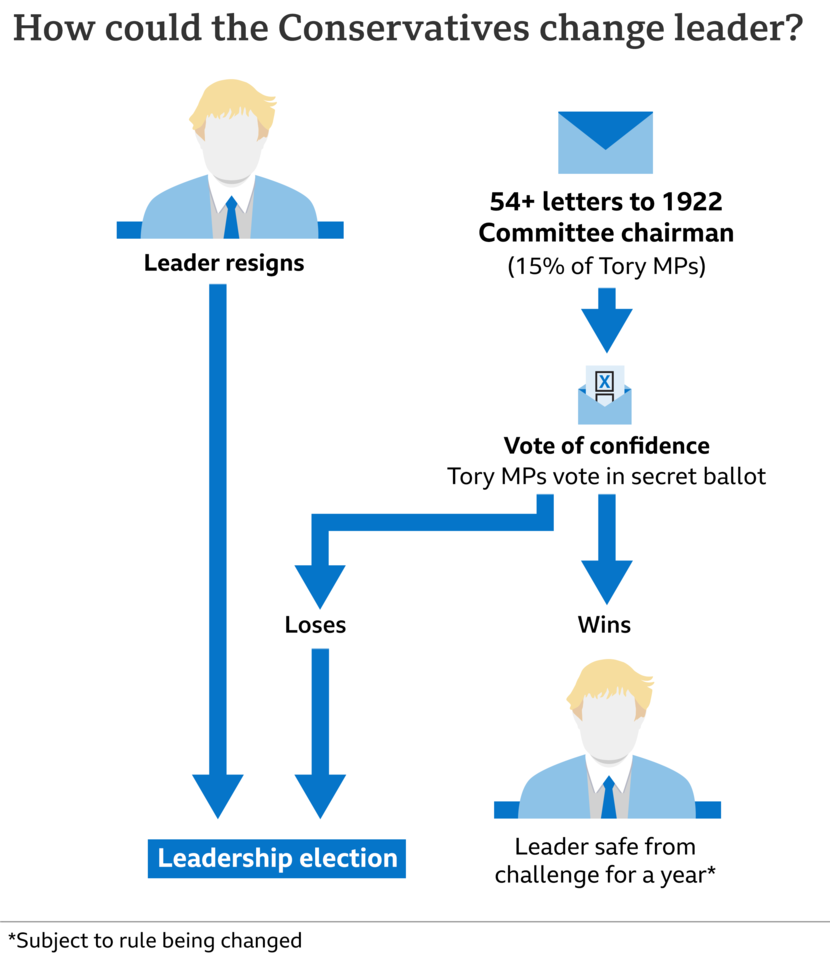
An attempt by Conservative MPs to remove their leader is known as a vote of confidence.

Pressure on the prime minister has grown following the publication of details of Downing Street parties which broke Covid rules.

A report, by senior civil servant Sue Gray, said many of the gatherings "should not have been allowed".

This prompted some Conservative MPs to hand in letters calling for Mr Johnson to resign.

Under the party's own rules, a confidence vote is triggered if at least 15% of Tory MPs write a letter to Sir Graham Brady - the chairman of a group called the 1922 Committee, which represents them.


Previous Tory leadership challenges


*  Theresa May: In a vote over her Brexit policy, Mrs May survived a confidence vote with a majority of 83 in December 2018. Despite winning, she resigned as PM six months later

*  Iain Duncan Smith: Following months of speculation the Tory leader narrowly lost a confidence vote in October 2003 and resigned

*  John Major: Triggered a contest in 1995 by resigning as leader of the Tory party (though not as prime minister) amid disagreements inside the party over Europe. Mr Major beat challenger John Redwood, but went on to lose the 1997 election

*  Margaret Thatcher: Resigned as PM in 1990 after failing to win outright victory for party leadership. She beat Michael Heseltine by 204 votes to 152, but was persuaded to stand down by her Cabinet

What would have happened if Mr Johnson had lost?


Had Mr Johnson lost the vote he would have been required to resign.

This would have triggered a Conservative leadership contest where the eventual winner would have become prime minister.


How would a leadership contest work?


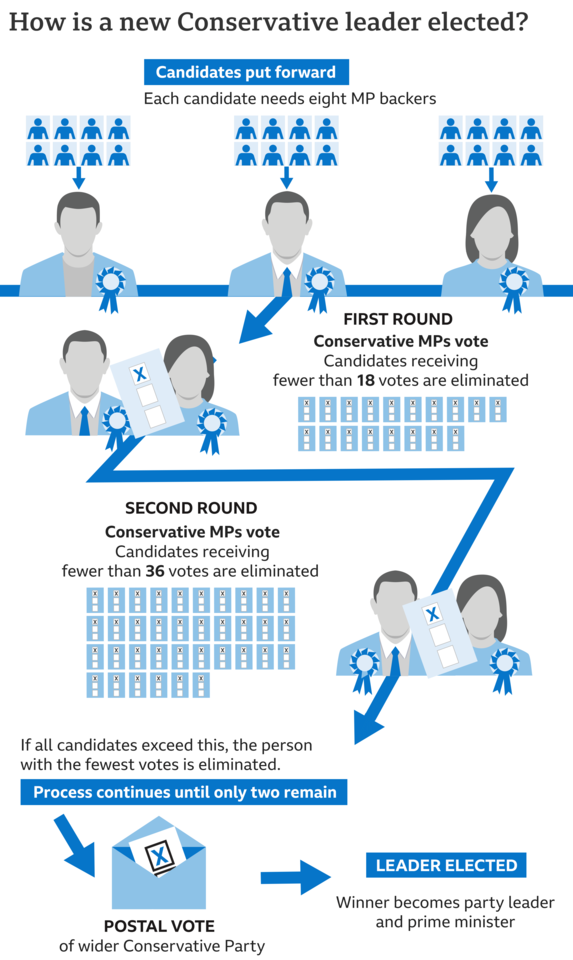
In order to stand in a leadership contest, candidates need the support of eight other Tory MPs.

If more than two candidates stand, Tory MPs will hold a series of votes until only two remain.

*  in the first round, candidates must get 5% of the votes to stay in the running (18 MPs)

*  in the second round, they must get 10% (36 MPs)

*  in the following rounds, the candidate with the least votes is eliminated

When two MPs are left, Conservative Party members around the country - not just MPs - will vote for the winner.

If all but one of the candidates withdraw (as happened when Theresa May became leader in 2016), the remaining candidate becomes Conservative Party leader.

Newsletter

Related Articles

0:00
0:00
Close
Crypto Scammers Capitalize on Maritime Chaos Near the Strait of Hormuz: A Rising Threat to Shipping Companies
Changi Airport: How Singapore Engineered the World’s Most Efficient Travel Experience
Power Dynamics: Apple’s Leadership Shakeup, Geopolitical Risks in the Strait of Hormuz, and Europe's Energy Strategy Amidst Global Challenges
Apple's Leadership Transition: Can New CEO John Ternus Navigate AI Challenges and Geopolitical Pressures?
Italy’s €100K Tax Gambit: Europe’s Soft Power Tax Haven
News Roundup
Microsoft lost 2.5 millions users (French government) to Linux
Privacy Problems in Microsoft Windows OS
News roundup
Péter András Magyar and the Strategic Reset of Hungary
Hungary After the Landslide — A Strategic Reset in Europe
Meghan Markle Plans Exclusive Women-Focused Retreat During Australia Visit
Starmer and Trump Hold Strategic Talks on Securing Strait of Hormuz Amid Rising Tensions
Unofficial Australia Visit by Prince Harry and Meghan Expected to Stir Tensions with Royal Circles
Pipeline Attack Cuts Significant Share of Saudi Arabia’s Oil Export Capacity
UK Stocks Rise on Ceasefire Momentum and Renewed Focus on Diplomacy
UK to Hold Further Strategic Talks on Strait of Hormuz Security
Starmer Voices Frustration as Global Tensions Drive Up UK Energy Costs
UK Students Voice Concern Over Proposal for Automatic Military Draft Registration
Rising Volatility Drives Uncertainty in UK Fuel and Petrol Prices
UK Moves to Deploy ‘Skyhammer’ Anti-Drone System to Strengthen Airspace Defense
New Analysis Explores UK Budget Mechanics in ‘Behind the Blue’ Feature
Man Arrested After Four Die in Channel Crossing Tragedy
UK Tightens Immigration Framework with New Sponsor Rules and Fee Increases
UK Foreign Secretary Highlights Impact of Intensified Strikes in Lebanon
UK Urges Inclusion of Lebanon in US-Iran Ceasefire Framework
UK Stocks Ease as Ceasefire Doubts in Middle East Weigh on Investor Confidence
UK Reassesses Cloud Strategy Amid Criticism Over Limited Support Measures
UK Calls for Full and Toll-Free Access Through Strait of Hormuz Amid Rising Tensions
Starmer Signals Strategic Shift for Britain Amid Escalating Iran-Linked Tensions
UK Issues Firm Warning to Russia Over Covert Underwater Military Activity
OpenAI Halts Stargate UK Project, Casting Uncertainty Over Britain’s AI Expansion Plans
Starmer Voices Frustration Over Global Pressures Driving UK Energy Costs Higher
UK Deploys Military Assets to Protect Undersea Cables From Suspected Russian Threat
Canada Aligns With US, UK and Australia as Europe Prepares Major Digital Border Overhaul
Meghan Markle’s Planned Australia Appearance Sparks Fresh Speculation
Starmer Warns Sustained Effort Needed to Ensure US–Iran Ceasefire Holds
UK to Partner with Shipping Industry to Rebuild Confidence in Strait of Hormuz, Cooper Says
UK Interest Rate Expectations Ease Following US–Iran Ceasefire Agreement
Starmer Signals Major Effort Needed to Fully Reopen Strait of Hormuz During Gulf Visit
UK Fuel Prices Face Ongoing Volatility Amid Global Pressures and Domestic Factors
Kanye West’s Planned Italy Festival Appearance Draws Debate After UK Entry Ban
Smuggling Routes Shift Toward Belgium as Migrant Crossings to UK Evolve
Ceasefire Offers Potential Relief for UK Fuel and Food Prices Amid Ongoing Uncertainty
Iran Conflict Raises Questions Over UK’s Global Influence and Military Preparedness
Senator McConnell Visits Kentucky to Highlight Federal Investment in Local Projects
Kanye West Barred from Entering UK as Legal Grounds Come into Focus
UK Denies Visa to Kanye West After Sponsors Withdraw from Wireless Festival
Trump-Era Forest Service Restructuring Leads to Closure of UK Lab Focused on Kentucky Woodland Health
Foreign Students in the UK Describe Harsh Living Conditions and Financial Pressures
×