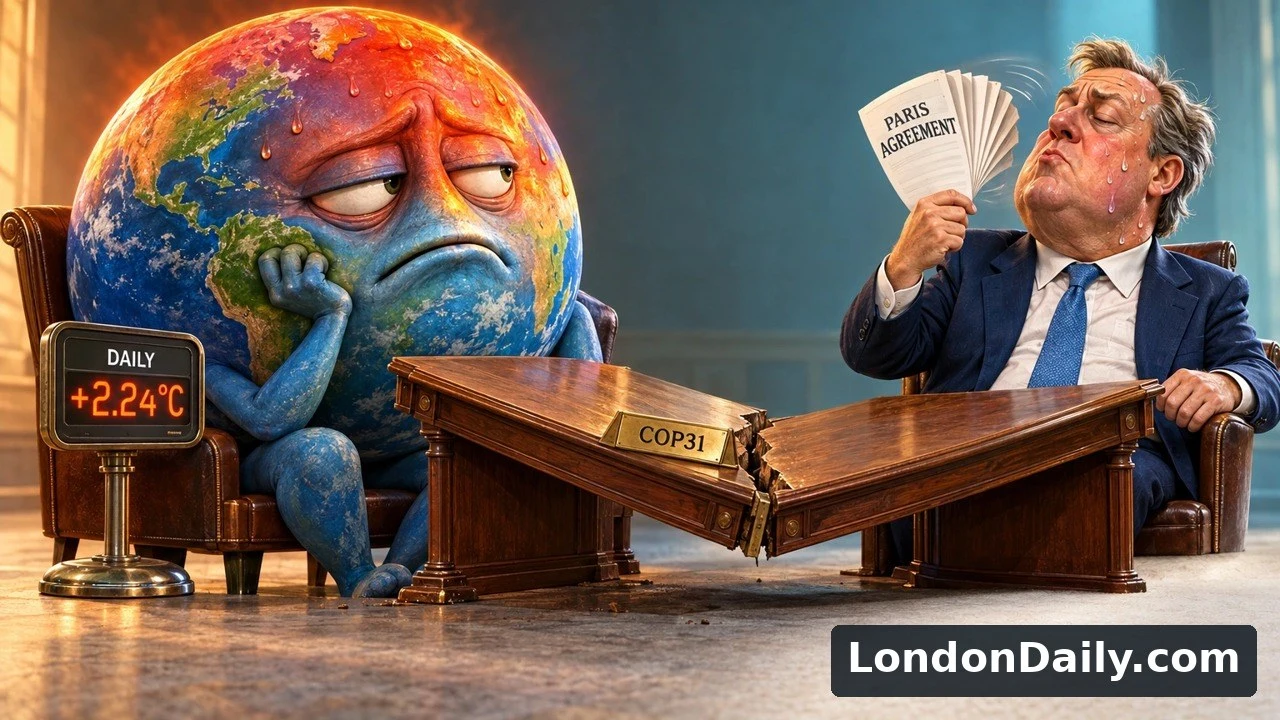
Global temperatures have exceeded the pre-industrial average by 2°C for six consecutive days for the first time on record, with Monday’s reading reaching an unprecedented 2.24°C above the 1850–1900 baseline.
Similar readings were forecast for several more days. Monday’s departure surpassed the 2.12°C recorded on 20 November, which preliminary Copernicus data had identified as the previous record.
The distinction between daily extremes and sustained warming matters. The 2015 Paris Agreement commits almost 200 nations to keeping warming well below 2°C and pursuing efforts to limit it to 1.5°C. Those thresholds concern averages over many years: six days above 2°C do not constitute a formal breach.
The EU’s Copernicus Climate Change Service estimates long-term warming at 1.44°C. A simple extrapolation of the recent trend places 1.5°C around 2029, rather than the 2042 projection associated with the agreement, although the service cautions against treating that calculation as a firm forecast.
“This is an exceptional global temperature anomaly. We have seen record global temperatures persist for several months now,” said Samantha Burgess, Copernicus’s strategic lead for climate.
Copernicus identifies rising concentrations of greenhouse gases from human activity as the principal driver. An El Niño that began in 2026, forecast to be historically strong, is adding heat. This natural warming of the tropical Pacific releases additional heat into the atmosphere; central Pacific temperatures have been at record levels since May, substantially exceeding readings during the strongest previous El Niño years.
More days above 2°C are considered likely as El Niño approaches its peak over roughly the next month. Its delayed effect on global temperatures also underpins expectations that 2027 will be the hottest year on record.
Zachary Labe, a scientist at the US climate research non-profit Climate Central, expects further daily exceedances over the coming months, possibly through March 2027. Crucially, he still expects them to remain a rarity rather than the daily norm.
An October report from the UN Environment Programme considers a temporary 1.5°C breach unavoidable in the coming years. Its lowest possible overshoot scenario reaches 1.7–1.8°C above pre-industrial levels by mid-century.
The temperature streak follows Sunday’s collapse of the Cop31 climate talks in Antalya, Turkey, without a deal. It was the first summit since the potential 1.5°C breach became official.
Afterwards, outgoing UN secretary-general António Guterres warned that delay would make the task harder and more costly. “The window to keep that overshoot as short and shallow as possible is rapidly closing.”








Join the conversation