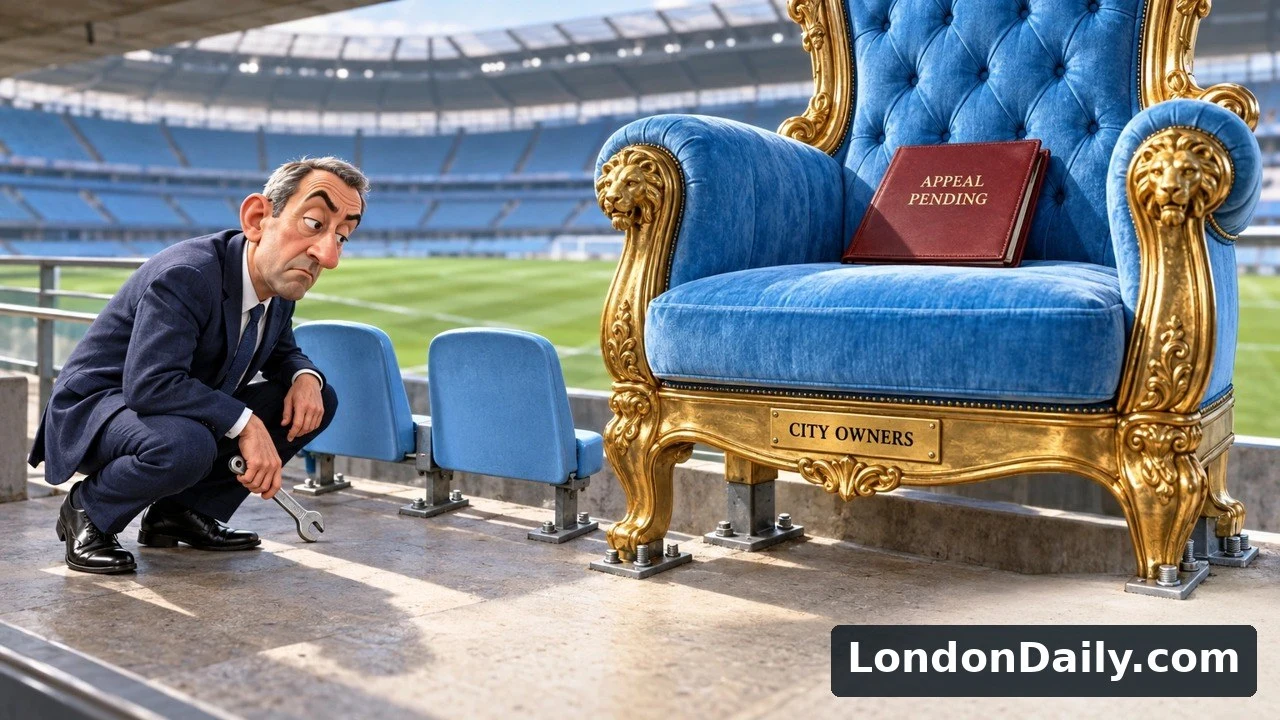
Manchester City’s Abu Dhabi owners could be ordered to relinquish control if findings that the club breached Premier League financial rules survive appeal, with the Independent Football Regulator prepared to use its statutory powers regardless of City’s status.
The potential ownership intervention is separate from the sporting and financial penalties City could face. The regulator’s chair, David Kogan, told parliament’s Digital, Culture, Media and Sport select committee that the club’s scale could not excuse inaction.
“We cannot simply ignore our statutory duties in relation to a club because it happens to be of a certain size.”
A three-person Premier League commission found City guilty of nearly every charge in a verdict published in September. It concluded that the club systematically inflated revenues and disguised losses by a combined £900m through “sham” deals between 2009 and 2018, helping their rise to the top of the game.
City strongly deny wrongdoing. Their most recent statement, issued on 2 October, said they lodged an appeal at 7pm on 1 October 2026. The club described the commission’s opinion as unsafe, alleging material errors of law, principle and fact, and said it possessed irrefutable evidence supporting its innocence. City said ongoing proceedings restricted further comment.
The ownership structure makes the commission’s findings particularly consequential. City Football Group owns the club and is controlled by Sheikh Mansour through his Abu Dhabi United Group investment vehicle. The commission found that money from that vehicle artificially inflated City’s revenues, which the club disputes.
Established last year following the European Super League fallout, the regulator can investigate and sanction clubs and individuals, grant or withdraw operating licences, and require owners deemed unsuitable to take reasonable steps to cease ownership within a specified period. A failed appeal would not itself amount to an automatic sale order: regulatory action would depend on the evidence, appeal outcome and suitability assessment.
The case also tests regulatory independence against Abu Dhabi’s political and economic relationship with Britain. Some senior football figures were concerned that prime minister Andy Burnham’s initial comments appeared to minimise the verdict. Downing Street subsequently said his position was that nobody was above the rules.
Kogan acknowledged that the case had arrived unusually early for an organisation operating for less than a year, but said it must fulfil Parliament’s mandate if the relevant circumstances arose.
The appeal has no fixed timetable, although it is expected to conclude early in the new year. If any findings are upheld, a sanctions hearing is expected to follow, potentially bringing severe sporting and financial penalties alongside the separate question of ownership.








Join the conversation