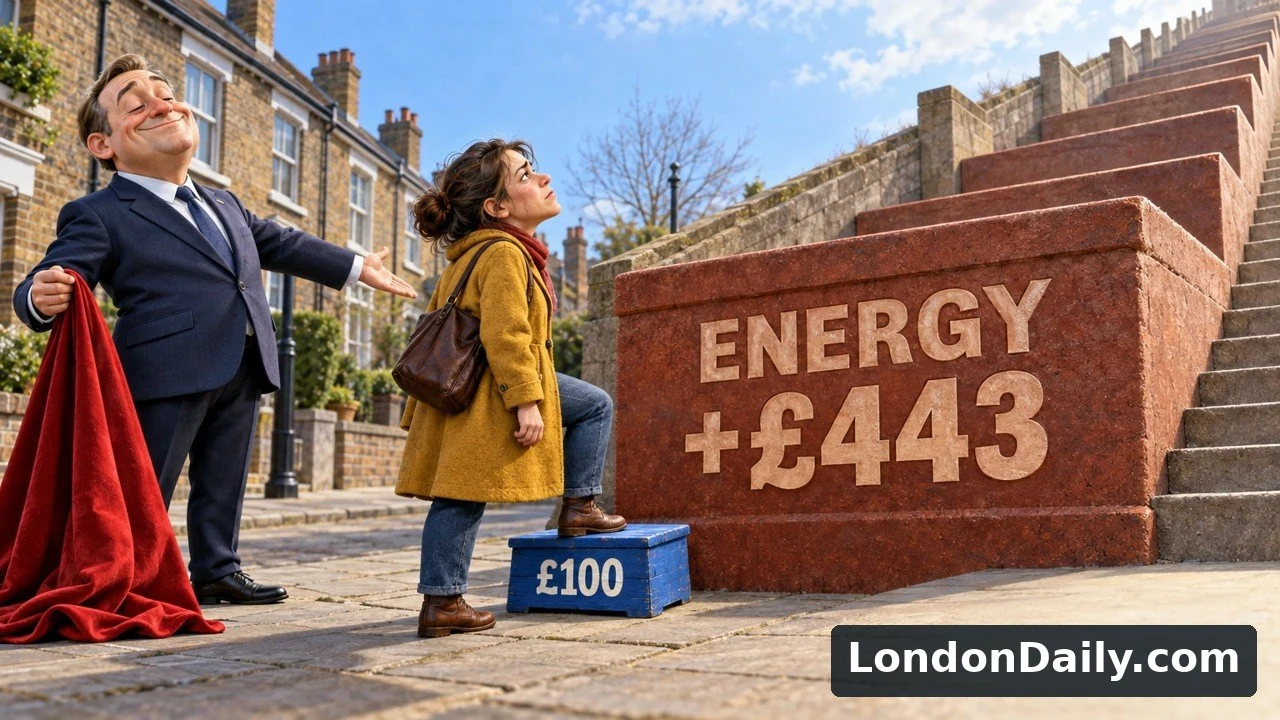
Londoners face a 26% increase in the energy price cap from 1 January, adding to pressure from higher transport fares and expected council tax rises. Further increases stretch into 2031: this is a succession of costs, rather than one simultaneous jump.
Ofgem’s quarterly cap will rise by £443 to an annualised £2,166 for a typical household using gas and electricity, equivalent to £36.91 more a month if maintained for a year. It is the highest cap since the second quarter of 2023, following rising oil and gas prices amid escalating Middle East conflict and concerns about European gas supplies. Government support of £100 from January for up to 20 million English households will only partly offset the increase.
From April 2027, benchmark Band D council tax bills are expected to exceed £2,000 in every London borough except Tower Hamlets. Hammersmith and Fulham, Wandsworth, Westminster, and Kensington and Chelsea have permission to exceed the usual 5% limit following government funding cuts. Some increases could exceed £1,000, with rises ranging from 5% to 150%; exact bills await confirmation.
Bus fares rose by 10p from 1 November, including the Hopper fare allowing unlimited bus and tram journeys within an hour. Eligible concessionary fares increased by 5p, while the daily bus and tram cap rose 30p to £5.55. Funding for the rail fares freeze does not extend beyond spring 2027. A subsequent 4.2% rise is a possibility, not an announcement: it assumes July’s 3.2% Retail Price Index inflation plus one percentage point.
Thames Water expects typical combined water and wastewater bills to rise about 1% in 2027/28 and 7% in 2028/29. Higher charges would fund network upgrades for new housing and data centres, alongside work to tackle forever chemicals in drinking water.
Fuel offers a less uniform picture. Petrol rose 5.2p a litre between September and October, but petrol and diesel eased in November as oil prices fell after the US midterm elections.
Frozen income tax thresholds, extended by Rachel Reeves until 2031, mean more earnings can become taxable as pay rises. London’s annual income tax bill has reached nearly £80 billion, £19 billion above 2021/22, when Rishi Sunak introduced the freeze.
From April 2028, a property surcharge starts at £2,500 for homes worth £2 million, reaching £7,500 at £5 million. A potential £15,000 charge is also cited, but its relationship to that top rate remains unclear. The government expects revenue above £400 million by 2031 from fewer than 1% of properties. London faces disproportionate exposure: two-thirds of qualifying transactions occurred there last year.








Join the conversation