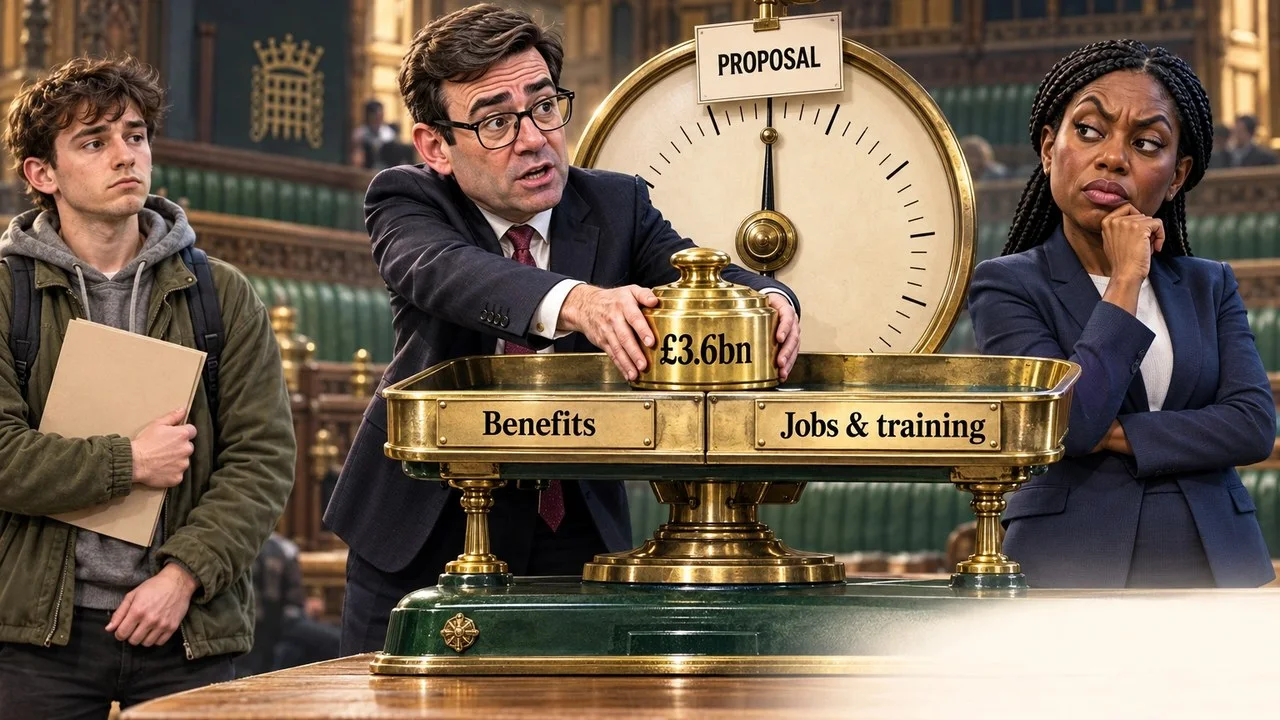
Kemi Badenoch accused Andy Burnham of promising welfare reform without substantive change as he pledged to reduce the benefits bill following a review proposing a new system for young people.
At Prime Minister’s Questions, the Conservative leader challenged whether he would cut welfare during this Parliament. Burnham promised to do everything he could as quickly as possible, but rejected a cuts-only approach and said the Government would respond fully to Alan Milburn’s review next month.
The Government-commissioned review proposes replacing both the health element of universal credit and personal independence payment for 16 to 24-year-olds with a youth allowance. The former Labour minister’s ten-year plan aims to reduce the proportion of that age group outside education, employment or training from around 13%, approximately a million people, to 5%.
Milburn proposes saving £3.6 billion annually and redirecting funding towards measures to help young people into work or training. Savings on benefits intended for reinvestment would not necessarily amount to an equivalent reduction in overall spending.
Burnham said he had asked the Cabinet to reprioritise spending plans for 2027–28 to begin funding a youth opportunity service, initially providing 25,000 quality work placements for 16 and 17-year-olds.
Badenoch argued that the proposals offered “false hope” and said Burnham and Milburn appeared to disagree over whether some young people would receive less in benefits. She described the youth guarantee scheme as a failure and accused the Government of damaging businesses and jobs before offering employers money for placements.
Burnham said the reforms were intended to help young people into employment and improve their lives. He argued that a cuts-only approach would not help a generation progress.
The disagreement extended to a proposed youth mobility agreement with the EU, expected to be agreed on Friday. Badenoch warned that European youngsters could compete for entry-level jobs in Britain. Burnham countered that the agreement would generate economic growth, accusing the Conservatives of presiding over a decade of low growth. Badenoch argued that businesses create jobs and that growth follows.
Burnham ultimately accused her of asking “self-serving questions” in a “patronising tone”. The substantive decisions remain ahead: which recommendations ministers will accept, how the replacement allowance would operate and whether some young claimants would receive less.








Join the conversation