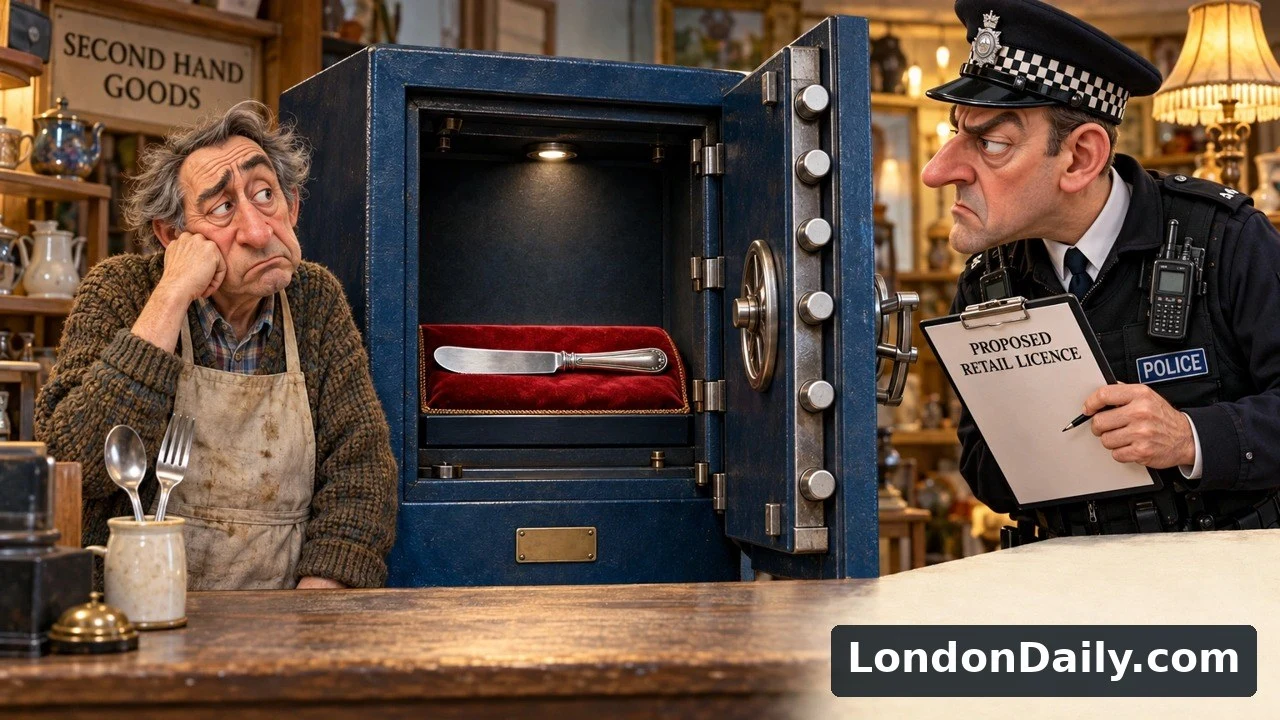
Retailers would need a police licence to sell even butter knives under government plans extending knife-sale controls to cutlery and household blades, with prosecution for those trading without permission.
The proposals, expected to be announced on Wednesday, would cover high street shops, online sellers and second-hand markets. The scheme is expected to resemble firearms registration: retailers breaching licence conditions could lose permission to sell knives and face prosecution. Police could conduct background checks and inspect premises for safe, appropriate storage; criminal records could bar shopkeepers from selling.
Ministers are still considering police chiefs’ recommendation that retailers retain knife buyers’ personal details. Chiefs also recommended tougher penalties for unregistered sales than for possession, which carries a maximum of four years’ imprisonment, an unlimited fine or both.
Licensing was a central recommendation of a review by Commander Stephen Clayman, head of Britain’s new National Knife Crime Centre. His case is that regulating sellers would close “significant legislative loopholes” allowing under-18s to acquire weapons and give technology companies a clearer basis for removing unlawful sales.
Speaking in September, Clayman said: “This means anyone selling knives on social media is automatically committing an offence.” He acknowledged that licensing would not necessarily end the dangerous weapons trade, but would “diminish it”.
The distinction matters: the proposal would make the absence of a seller’s licence an offence in itself, rather than relying solely on restrictions concerning particular weapons or buyers.
An accompanying import licensing system is expected because overseas sellers are not bound by the same requirements as UK businesses and individuals. The Home Office’s consultation warned that domestic regulation could push buyers towards foreign suppliers, making import controls important to prevent circumvention. Criminals have obtained banned zombie-style knives, machetes and ninja swords from foreign sellers advertising online.
The measures form part of Labour’s manifesto commitment to halve knife crime within a decade through bans and tighter online sales restrictions. The government has also invested £26m in hotspot policing across more than 230 areas within 27 forces, funding extra patrols, CCTV, lighting and youth programmes.
Police recorded 48,615 offences involving a knife or sharp instrument in England and Wales in the year to June 2026, down 6 per cent on the previous 12 months.
Selling knives to under-18s, and manufacturing, selling, owning or importing banned weapons, is already illegal in the UK. Tougher delivery age and identity checks, alongside mandatory reporting of bulk orders, have passed into law and are being implemented. Universal retailer licensing remains a proposal; retaining buyers’ details remains under consideration.








Join the conversation