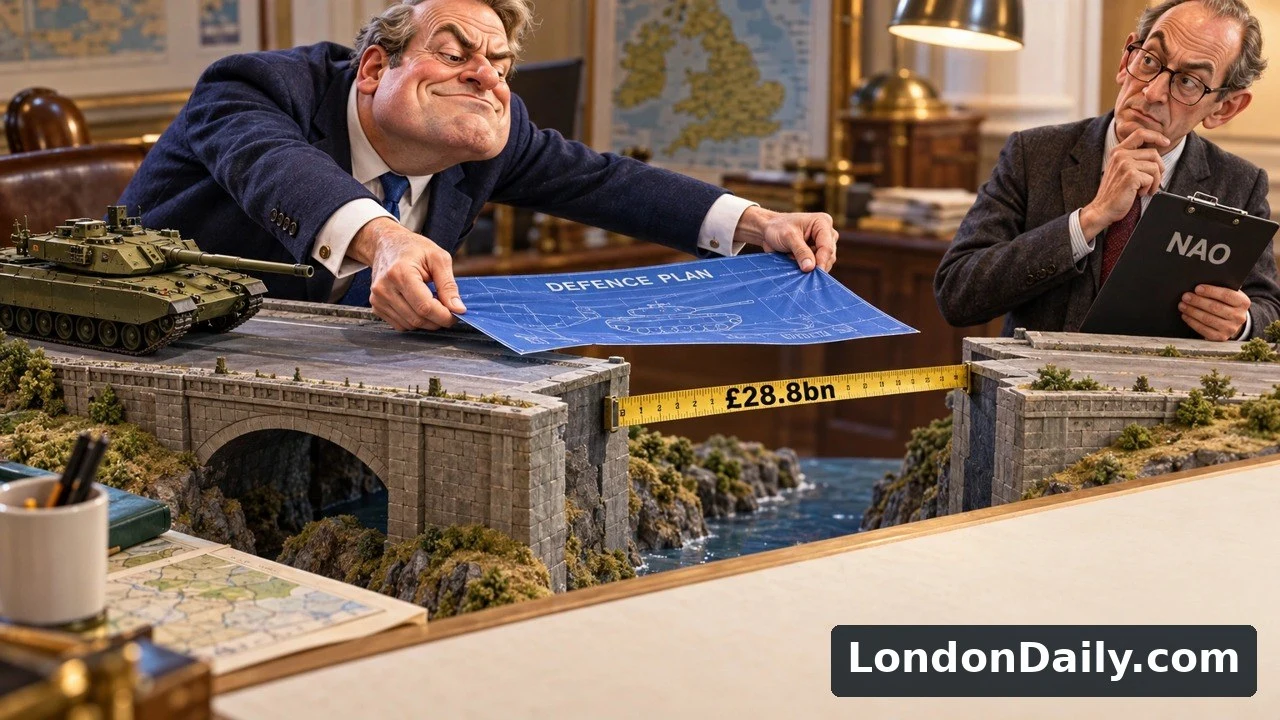
Officials’ significant underestimation of costs created a £28.8bn funding gap that delayed Britain’s ten-year defence investment plan, the National Audit Office has found, warning that the Ministry of Defence still has “limited assurance” it can deliver the programme.
The watchdog’s report, published on Wednesday, identifies weaknesses extending beyond the original costing error: an unsettled funding path, procurement capacity under strain and £10.7bn of planned efficiency savings without mature delivery plans.
Published in July after repeated delays, the defence investment plan aims to rebuild the Armed Forces’ war-fighting readiness. The government has committed to Nato to spend 3.5 per cent of GDP on defence by 2035, but the department lacks a detailed plan to fund that commitment.
John Healey, now Chancellor, pledged in his maiden Budget to reach 3 per cent by 2030, leaving the route to 3.5 per cent for next year’s spending review. He resigned as defence secretary in June amid concerns that the plan was underfunded and would leave Britain less safe.
The NAO warned that an excessively steep spending increase in 2035-36 would be difficult to deliver. Separately, the MoD recognised that its plans would probably be unaffordable under a scenario reaching only 3 per cent by 2035-36.
Even nearer-term affordability is under pressure. Although the department considered the first four years affordable, conflict in the Middle East has already added £1bn to costs in 2026-27 and could affect subsequent years.
Sir Geoffrey Clifton-Brown, the Conservative chairman of the Commons public accounts committee, called the £28.8bn gap “no small funding error”, saying it required resolution at the highest level of government. He urged more reliable cost forecasts.
Forecasting is also complicated by rapidly changing military technology. The transition to a “hybrid navy” could require extending the lives of Type 45 destroyers, which were due to begin retiring from 2035 as the Common Combat Vessel replaces them, working with crewed and uncrewed platforms.
The NAO said procurement was already operating “unsustainably”, risking a backlog of undelivered projects after 2030 and further budget pressure. It also questioned £10.7bn of efficiency savings expected over four years.
The MoD said nearly £300bn of investment would transform the Armed Forces, with modernisation improving value for taxpayers and providing advanced equipment. It cited more than 400 contracts worth over £4bn signed in the four months since publication.
Those contracts demonstrate activity, but do not settle the watchdog’s central concern: whether funding, savings and delivery capacity can support the full programme.








Join the conversation