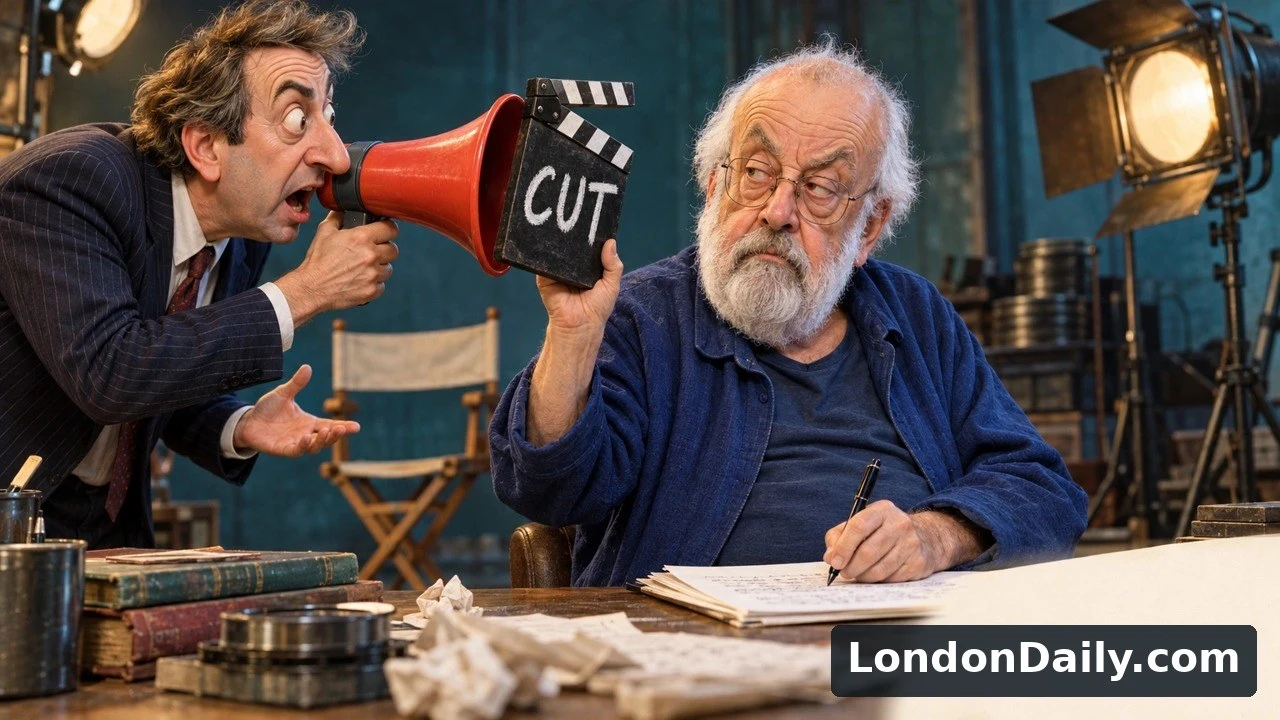
Mike Leigh says worsening myositis has made the physical demands of directing too much, leaving Tender Loving Care very likely his final film after a 55-year career. He does not, however, consider himself retired: “I’m going to sit down and write something.”
Leigh turned 83 while making the film, his 17th feature. He had not approached it as a farewell. Although colleagues helped him move around during production, his mobility has deteriorated since the shoot as the inflammatory condition has progressively weakened his muscles.
Suggestions that he could continue through a proxy or from a wheelchair receive a firm rejection. Describing the repeated advice he receives about carrying on, he says: “And my answer to that begins with an ‘F’ and ends with an ‘off’.”
Tender Loving Care follows Amy and Rosie, London social workers played by Kate O’Flynn and Alice Bailey Johnson, as they manage heavy caseloads. Paul Jesson and Marion Bailey, Leigh’s partner and Johnson’s mother, play Amy’s elderly parents. Its focus on friendship, family and the limits of helping others continues concerns that run through his work.
Since making Bleak Moments at 28, Leigh has maintained an unusually demanding process: months of improvisation and character development precede filming. “We start with improvisation, distil it down to a precise piece of action and then shoot,” he says.
That approach has brought a Palme d’Or, three Baftas and the Venice Golden Lion, but presents financing difficulties. Investors cannot assess a conventional advance script and, Leigh says, want stars whose names will sell tickets. He argues that such casting risks making the film serve an actor’s image, while requiring a lengthy commitment to research and rehearsal. Tender Loving Care was assembled quickly on a tiny budget.
A larger contemporary film remains his principal unfulfilled ambition. One proposed project would have followed friends from different ethnic and racial backgrounds, with flashbacks showing their ancestors arriving in Britain. Leigh says it attracted no backing as a feature; a subsequent television proposal was rejected by the BBC because commissioners did not know what they would get.
He nevertheless describes a career without imposed casting, rewritten endings or other interference. “Every film that I’ve made has been made without interference,” he says. “And I have the privilege of not hating any of them.”








Join the conversation