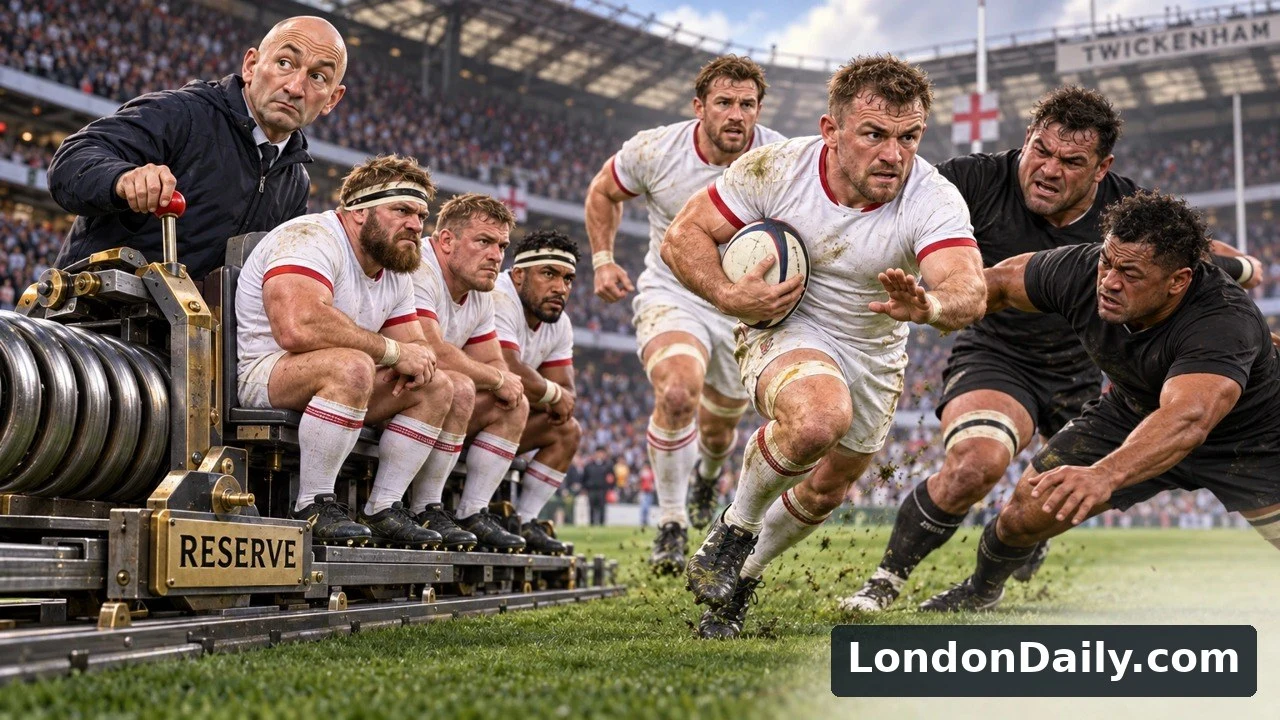
England achieved their record winning margin against New Zealand at Twickenham after Steve Borthwick held some of his strongest forwards in reserve, only for his starting side to deliver considerably more than the holding operation the strategy required.
The five-tries-to-two victory at the Allianz Stadium offered evidence of England’s growing depth. They controlled New Zealand for much of the first half and struck shortly after the interval, rather than simply waiting for fresh forwards to impose themselves late on.
England player Charlie Ewels explained the reasoning behind the selection: preserve power for the final 20 minutes, when fatigue makes opponents more vulnerable. The starters’ task was to remain within reach into the third quarter, not necessarily to establish a lead.
There is an obvious risk. Holding back leading players can leave a side chasing the game. The counterargument is that an unsettled, error-prone opening can consume a substantial part of a starting forward’s time on the pitch before the match finds its rhythm. Borthwick’s approach placed greater value on the damage fresh strength could inflict later.
New Zealand’s condition matters when assessing the result. They appeared jaded after a bruising, lucrative four-Test series against South Africa. That provides context for England’s territorial control, without diminishing the fact that they decisively outplayed the opposition before them.
Earl’s man-of-the-match performance supplied the clearest individual explanation. Smaller than many fellow No 8s and used sparingly at the line-out, he nevertheless remains central to England’s back row, with the versatility to move to flanker.
His value lies particularly in the metres he gains after contact. Those extra strides delay defenders’ attempts to reorganise and give the next England ball-carrier an advantage. Strength, footwork and a hitch-kick in contact all helped him keep New Zealand retreating.
“I put a lot of pressure on myself in this game,” Earl said afterwards. He described wanting to test himself against discussions about the world’s best back rows.
The performance strengthens England’s case as credible World Cup challengers. Turning that promise into a sustained challenge still requires Borthwick to refine his combinations and established players such as Earl to maintain the competitive drive evident here.








Join the conversation