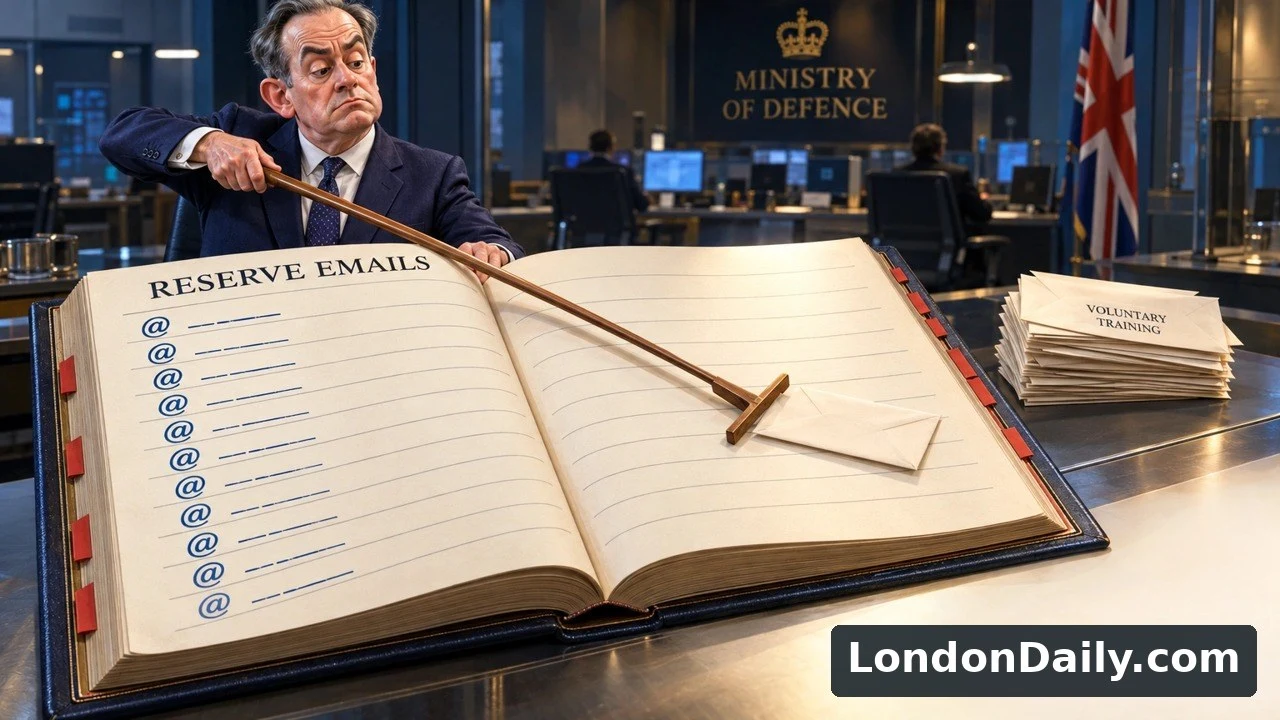
The Ministry of Defence has admitted it lacks email details for roughly half its strategic reserve force, exposing a gap in its records as the armed forces seek to establish which veterans could be available in exceptional circumstances.
Letters have been sent to 50,000 of an estimated 95,000 strategic reservists. The Army, Navy and RAF are asking recipients to update their contact details and outline skills acquired since leaving military service, while offering opportunities to volunteer for training and exercises.
Defence Secretary Wes Streeting said this was the first communication of its kind since the Cold War. The exercise is intended to improve the Government’s understanding of both the experience former personnel retain and the expertise they have developed in civilian life.
‘This should be information that I think the Government ought to hold as standard, whatever the threat environment,’ he said.
Streeting described the heightened threat environment, which he said counterparts across Nato had also discussed, as making readiness a ‘sensible, necessary precaution’. People should find the initiative ‘reassuring rather than alarming’, he added.
The distinction matters: the letters offer voluntary training and seek better records; they are not themselves a call-up. Strategic reservists are former military personnel who can be called upon in exceptional circumstances.
Lord Robertson, a former Nato secretary-general and defence secretary, warned at an event in Salisbury that the ministry did not know where most former military personnel were. He said it needed to identify those available, fit and willing to serve.
Help for Heroes said readiness also depended on meeting obligations to veterans. Alison Kerry, its head of communications and public affairs, warned that the transition to civilian life could affect health, finances and family life, with too many veterans still struggling to obtain support.
The charity recognised the value of veterans’ skills to national security, but argued that asking more of strategic reserves required greater support in return.
Separately, Prince Harry said he would rejoin the armed forces to fight Russia if necessary, although it is thought he would have to repeat basic training. Streeting said he was willing to discuss it, welcoming the ‘patriotic spirit we need’.
For Kerry, the obligation was reciprocal: ‘Our readiness for future conflicts relies on us keeping our promises to those who serve.’








Join the conversation