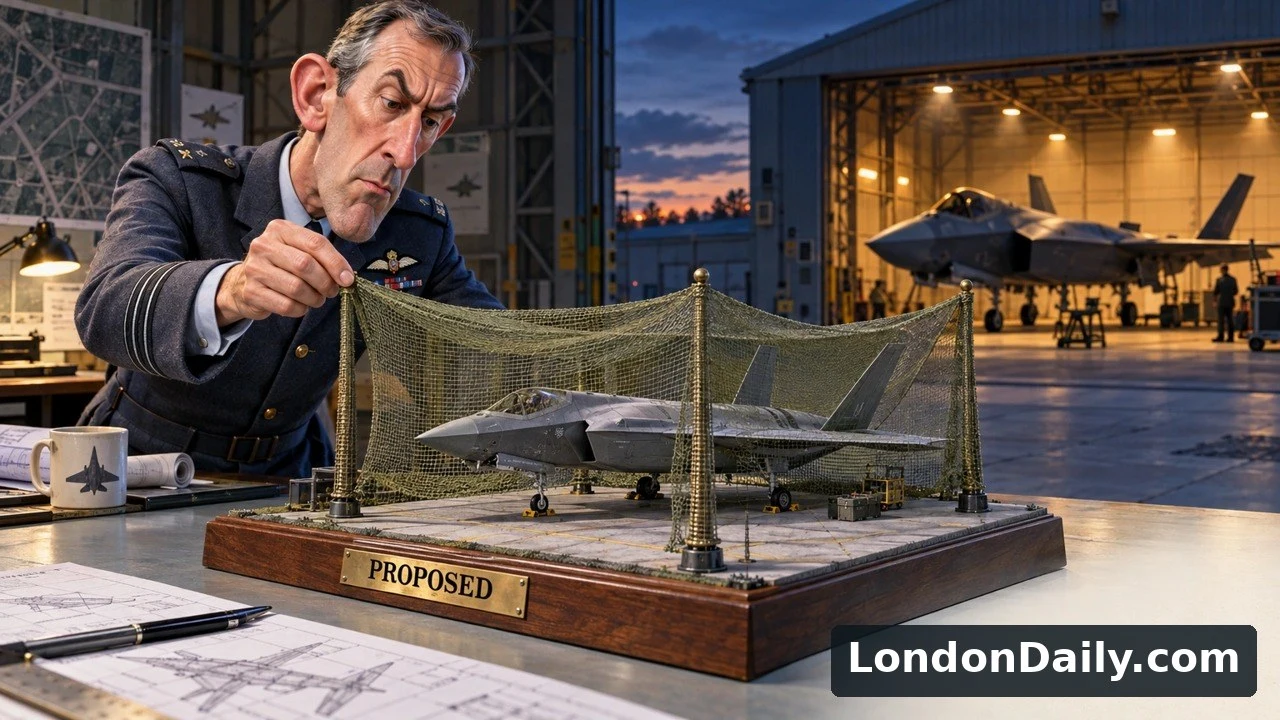
The RAF plans to install anti-drone nets at British air bases that lack sufficient protection, adopting a measure used in Ukraine against Russian drones as it strengthens safeguards for aircraft on the ground.
Aircraft are also being moved into shelters and hangars overnight because of drone threats. The distinction matters: the nets remain a proposal, while changes to where aircraft are kept are already taking place.
The plans follow several security incidents in recent months, including a suspected Iran-backed plot against RAF Fairford and a trespass incident at RAF Molesworth. Reports of unauthorised drone activity prompted an alert at RAF Lakenheath in Suffolk on 13 November. Lakenheath houses the US Air Force’s 48th Fighter Wing.
Last month, the US withdrew its bomber jets from Fairford after commanders received new reports of the suspected plot. Counter-terrorism police are investigating whether Iran was behind a suspected plan to target the base on 27 September; Iranian involvement has not been established.
Downing Street has previously insisted that British air bases are safe and that their security is a “top priority”. The additional precautions do not themselves establish that an attack is imminent, but show how threats are affecting the handling of aircraft.
Air Chief Marshal Smyth, the RAF’s head, told the Freeman Air and Space Institute on Tuesday that the force needed to be “as ready as we can” to protect its aircraft. He said aircraft had been dispersed around the UK during construction of a new runway at Prestwick in Scotland, allowing operations to continue, and argued that the force should do more of this.
A separate warning on Tuesday extended the security concern to industry. MI5 urged British defence companies to “act now” against arson and other threats, saying Russia had “increased attempts” to sabotage defence-related facilities, particularly those supporting Ukraine.
Smyth’s assessment reaches beyond base protection. Writing on Sunday, he said Britain’s next-generation fighter would be the RAF’s last manned combat aircraft as drones became increasingly dominant. That is his judgement about the future; the immediate task is protecting the aircraft already in service. As he put it: “We must continue to learn from today’s wars, not prepare for yesterday’s.”








Join the conversation