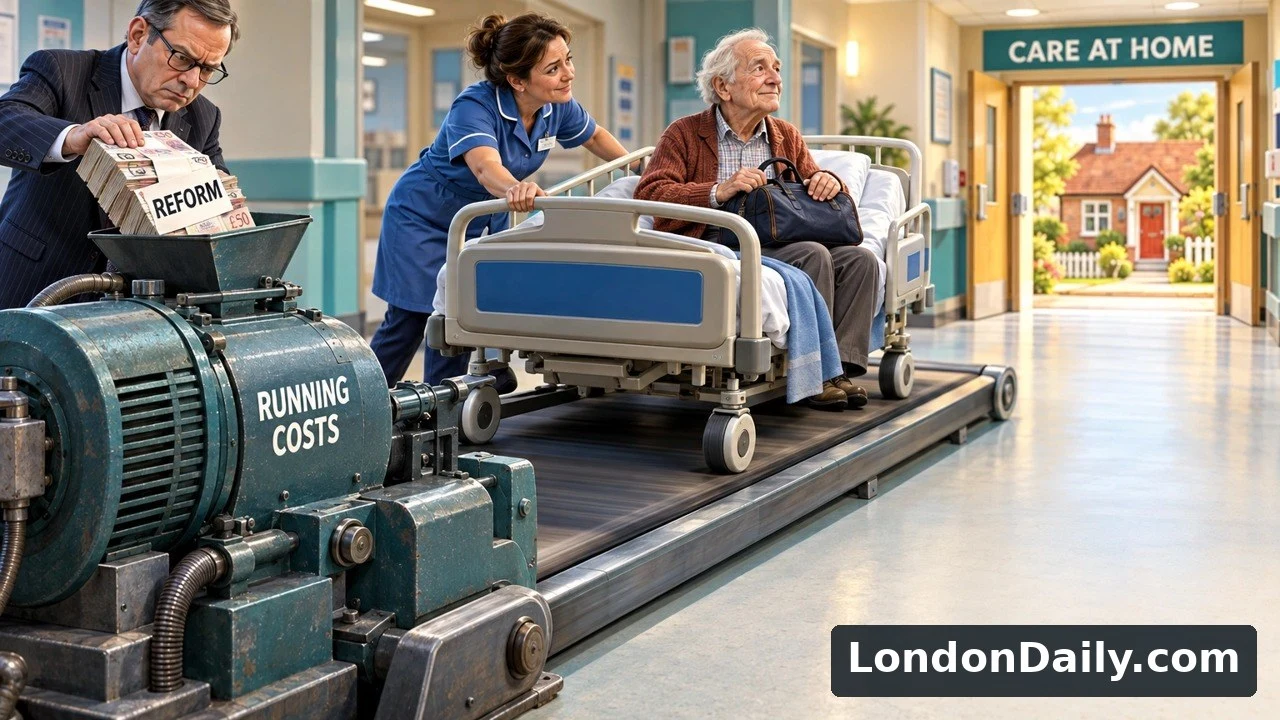
Rising costs are consuming funding intended to reshape the NHS, health chiefs warn, leaving emergency departments exposed as patients struggle to obtain GP appointments and others remain in hospital without care elsewhere.
Labour’s 10-year plan, published last year, promised more treatment at home and in neighbourhood centres. Ministers have pledged health spending £29bn higher in real terms by 2028–29 than before the general election. Leaders say pay settlements, doctors’ strikes and medicine and energy bills are absorbing reform funds. The NHS Alliance estimates zero-hours contract reforms will add £880m in costs.
Its chairman, Sir Ciarán Devane, warned of a widening gap between expectations and resources. NHS England chairman Dr Penny Dash has separately warned that a “staggering increase” in spending accompanied “a significant reduction in productivity”. More funding and greater capacity are not necessarily advancing together.
An NHS Alliance survey of 184 health leaders found only 41 per cent reported progress moving care outside hospitals. Almost four in five doubted existing funding could deliver both waiting-time targets and Labour’s reforms; 58 per cent lacked capacity for expected winter demand.
October brought more than 2.5 million A&E attendances in England, the highest monthly total recorded, while ambulance demand rose almost 8 per cent year on year. One hospital chief reported more than 1,000 patients and 200 ambulances in a day, citing poor GP access and deprivation.
The same chief described a two-and-a-half-year-old child who had never left hospital and remained there despite being medically fit for discharge for weeks, because a care package had not been agreed. Another said four in 10 community hospital beds at her trust held patients with no medical need to remain, largely because elderly people lacked social care.
Leaders say district nurse numbers have halved in a decade. They also warn that prioritising hospital waiting lists risks depriving community services of investment, particularly children’s services outside national targets, with long assessment and therapy waits damaging development.
The Government has set ambitions to save £1bn and release 4.3 million hospital bed days through better support for patients most likely to need admission. The Department of Health and Social Care cited an extra £140m for urgent care capacity and £40m reinvested to help GPs proactively support up to 300,000 frail and vulnerable patients this winter. It also pointed to expanded flu vaccination access and planned Neighbourhood Support Teams for almost two million people in England.
The unresolved issue is timing: whether those alternatives can become available quickly enough to relieve hospitals. One NHS chief warned: “I fear that A&Es will become overwhelmed before we put in the alternatives that would keep people sensibly out of hospital when they don’t need to be there.”








Join the conversation