Glitter and rich colours are returning to Christmas decorating after several years of pared-back interiors, designers say, with nostalgia helping to revive the sparkling finishes of the 1990s and 2000s.
The change gives festive maximalism a more personal purpose: rooms that feel lived-in rather than meticulously co-ordinated. Samantha-Jane Agbontaen, interior designer and founder of House Designer, believes there is an appetite for something less restrained.
“People have lived with quiet, plain rooms for years and I think they’re bored,” she says. “Christmas is also the one time of year you can go further than you normally would.”
One possible influence is ‘whimsymaxxing’, the online trend for bringing more fun and frivolity into everyday life. Whinnie Williams, interior designer and trends forecaster for Balsam Hill, also points to nostalgia for glitter and iridescent finishes, with films such as The Holiday and Home Alone providing inspiration.
“Ultimately, I think we’re moving away from interiors that feel catalogue-like, towards homes that feel lived-in, loved, and full of personality,” Williams says.
For anyone adopting the look, the practical distinction is between adding sparkle and letting every decoration compete. Agbontaen recommends warm metallic tones, including aged gold, bronze and champagne, against burgundy, chocolate brown or bottle green. These deeper backgrounds, she says, make the shimmer glow.
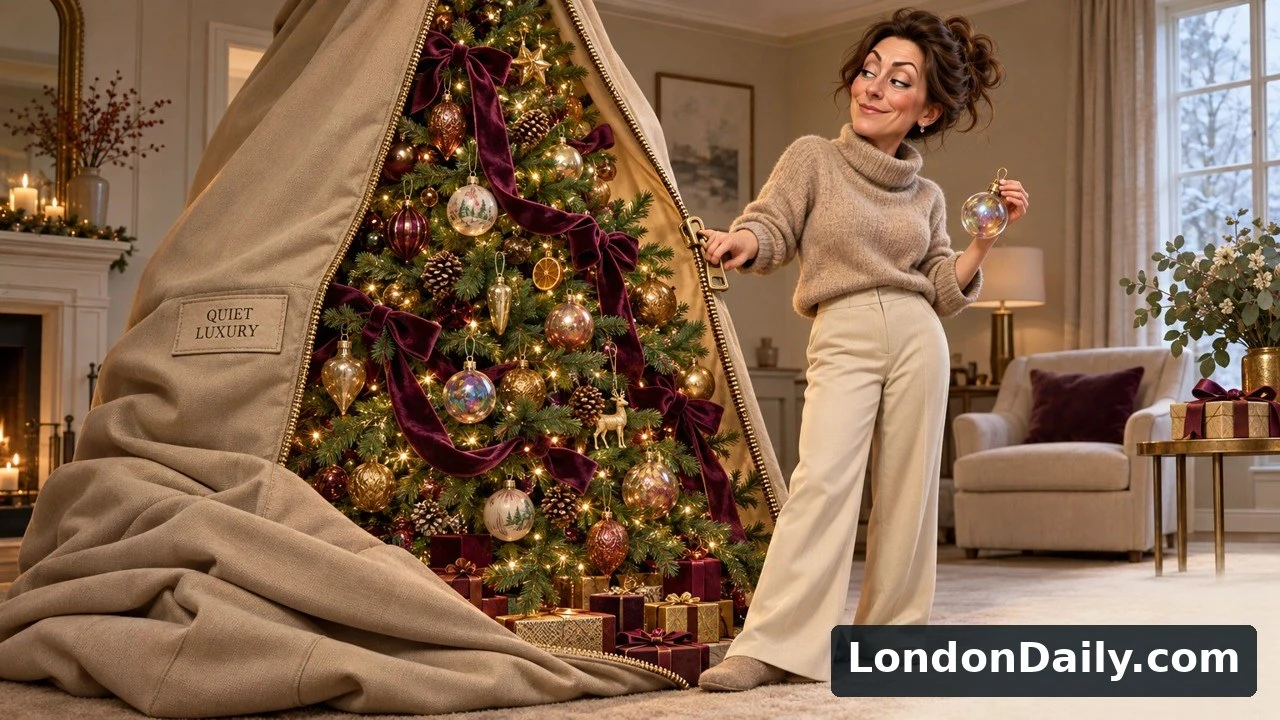
Williams predicts purple will be particularly popular this Christmas. Rich aubergine and plum shades can be introduced through velvet ribbons, glass baubles and metallic accessories for a more opulent effect.
Her advice is to carry one colour through the decorations, from the tree to the dining table. “It creates a lovely sense of rhythm without everything having to be identical,” she explains. The restraint lies in the palette, rather than necessarily in the amount of sparkle.








Join the conversation