A former Citroën garage in Brussels has been converted into an arts complex where buying bread, studying or taking children to play need not involve visiting an exhibition. Opening on 28 November, the €230m Kanal-Center Pompidou makes everyday public use central to Brussels’ first dedicated museum of modern and contemporary art.
The decade-long transformation of the 1934 building beside the Charleroi canal has created 40,000 square metres of space, half freely accessible. Alongside galleries for art, music, film and performance are a library, restaurants, an indoor playground and a free rooftop terrace with a bar. The bakery stands at the crossing of two internal streets once used to move cars between workshops.
Director-general Yves Goldstein calls it “a true city within a city”. His ambition is to dissolve the division between the street and the institution: reading rooms, informal stages and gathering spaces offer reasons to enter without buying an exhibition ticket. Public spaces will have neither screens nor QR codes, he says. How freely visitors can appropriate those spaces remains to be tested.
Atelier Kanal, formed by London’s Sergison Bates, Belgium’s noAarchitecten and Switzerland’s EM2N, won the architectural competition in 2017. Its approach combines repair with substantial additions. Thermally efficient vacuum glass replaces the 470-metre curtain wall’s glazing within the original steel frames; three new glass-clad blocks contain the five-storey museum, Kanal Architecture, an auditorium and offices. A seven-metre-high underground gallery, however, required a new concrete basement and carbon-intensive excavation rather than reuse.
Participation extends to Assemble’s indoor adventure playground, developed with local school groups, and Kanal Architecture’s opening exhibition, Right to the City – Right to the Future. The latter examines Brussels’ architectural activism, housing campaigns and experiences of destructive modernisation.
The Paris partnership remains contentious. Local critics regard it as costly and colonial: Kanal pays the Pompidou Centre €2m annually under a five-year agreement, funded, like construction, by the Brussels capital region. Goldstein points out that only one of the 10 opening exhibitions draws on the French collection. Its 350 loans sit alongside Kanal’s growing Brussels-focused holdings.
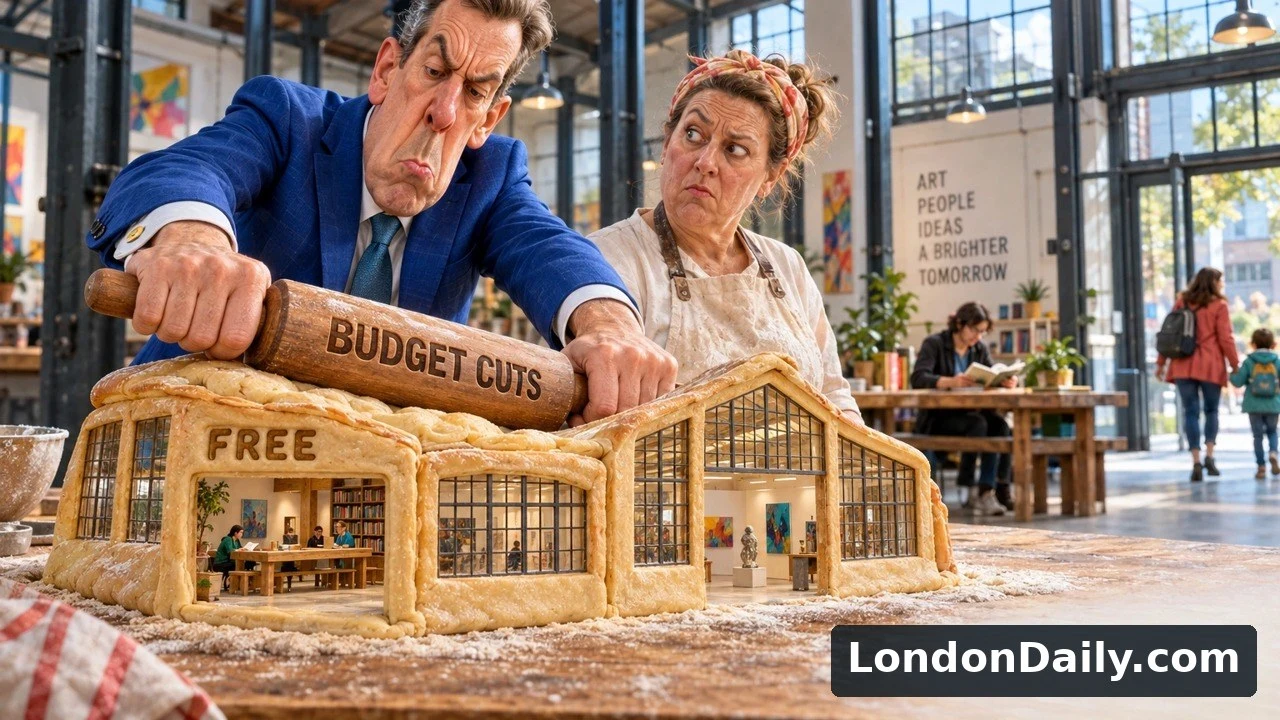
The larger uncertainty is how to sustain this much public space. Goldstein announced his resignation in May after a decade leading the project, following cuts to its promised annual budget. A government spokesperson said Kanal must seek private donors from 2028 and eventually become financially self-sustaining. Its architecture makes room for visitors who spend nothing; its future funding must accommodate them too.








Join the conversation