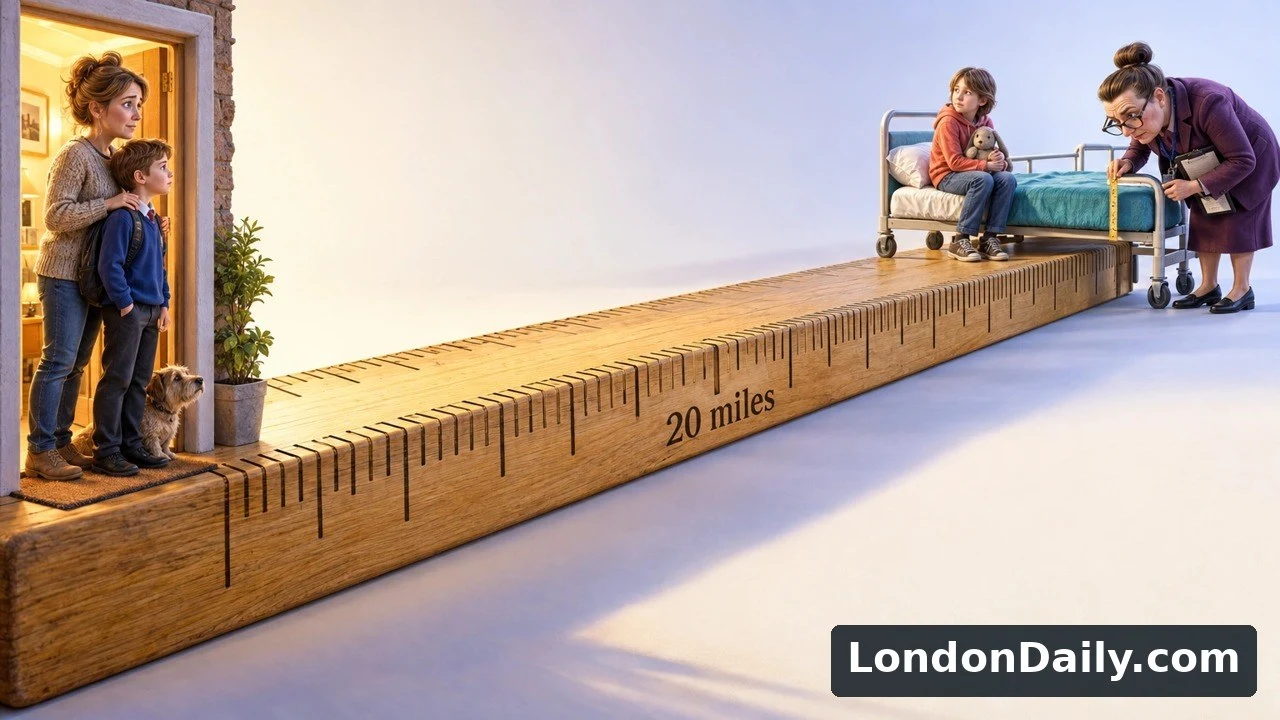
Just over one in five children in care in England are living more than 20 miles from home, with the charity Become warning that distant placements can leave them isolated from family, friends and school.
Department for Education figures show that 18,600 of the 82,910 children in care on 31 March were placed beyond that distance, compared with 18,130 a year earlier and 17,030 in 2022. The total number in care rose by 1,190 over the year.
The 20-mile benchmark measures how well councils keep children close to home; it is not a legal limit. Guidance requires placements near a child’s home so far as reasonably practicable. Previous analysis put the median distance at seven miles on 31 March 2024.
For Chloe, 18, from Essex, distance made family contact unaffordable. Taken into care at 14, she moved repeatedly before being placed more than 30 miles away in an unregistered children’s home in Kent. She said Essex County Council refused help with her family’s travel costs: “We actually begged for that and they refused to give any funding,” she said.
Chloe has ADHD and complex post-traumatic stress disorder and is awaiting an autism assessment. She stopped attending school because the right staff were not available to support her needs. She says missing GCSEs now prevent her from entering college. Living independently back in Essex, she is still rebuilding her confidence after separation from family and friends.
“The effects of prolonged isolation don't just disappear,” she said. She wants more good-quality local placements, with moves away reserved for when they are essential for safety.
Essex County Council said a national placement shortage could make finding suitable accommodation “extremely challenging”. It could not comment on individual cases, but said it sought good-quality, Ofsted-registered placements and provided ongoing monitoring and support.
Become’s policy director, Clare Bracey, acknowledged that some distant moves protect children, but argued that others increase risk by weakening relationships with schools, friends and siblings. The charity wants a government target to reduce moves that are not in children’s best interests, alongside more homes where they are needed.
The government says it is creating 10,000 additional foster care places and investing £560 million to expand and improve children’s homes, prioritising areas of greatest need. It says keeping children nearby wherever safe and appropriate protects vital connections. The practical test is whether additional capacity provides suitable homes in the communities children would otherwise have to leave.








Join the conversation