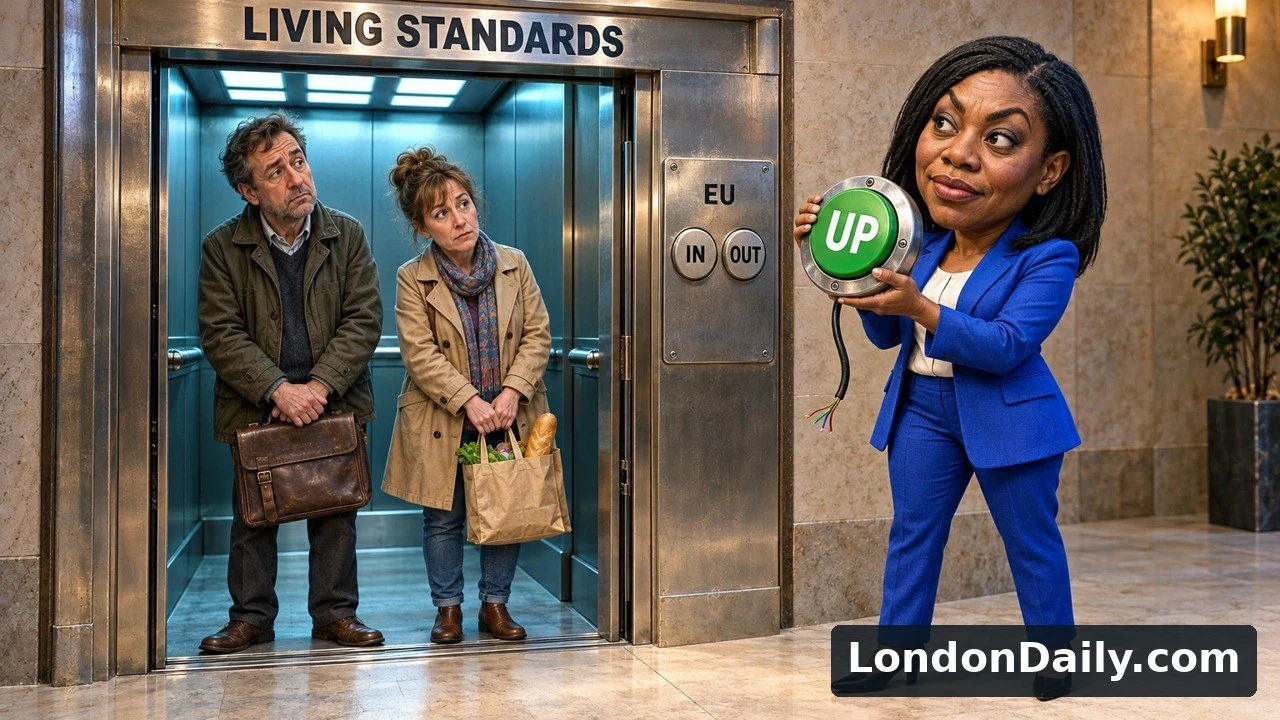
Kemi Badenoch has called for an “economic revolution” rather than reopening the Brexit debate, warning that Britain risks French-style unrest unless living standards improve.
Addressing the Confederation of British Industry’s annual conference, the Conservative leader argued that lower taxes, less regulation and cheaper energy were needed to revive growth and repair the public finances. She accused Andy Burnham of restarting an argument that had created uncertainty, frozen investment and distracted politicians from economic growth.
Her case included a qualification for supporters of Brexit: leaving the European Union was not, in itself, an answer to Britain’s economic difficulties.
“Something bad is happening in our economy and rejoining the EU is not going to fix it. Nor will staying outside the EU automatically fix it either,” she said.
Badenoch pointed to unrest in Paris as a warning about societies becoming poorer and feeling powerless to change their circumstances. She argued that Britain was burdened by an unaffordable welfare state and exposed to global energy shocks, but could build on its universities, innovators, legal system, language and culture.
She also warned that tying Britain to what she described as a stagnating Europe risked leaving it behind as the United States and China raced to develop artificial intelligence. Her proposed route to prosperity was therefore domestic reform, rather than a change in Britain’s relationship with Brussels.
Labour disputed that diagnosis. A party spokesman accused Badenoch of defending a failed status quo and refusing to acknowledge that the Conservatives’ Brexit agreement had held Britain back. The spokesman said growing numbers of businesses supported Labour’s new deal with the EU.
Reform UK leader Nigel Farage criticised Burnham’s “romantic” view of Europe, arguing that it did not reflect present-day realities. He warned that reopening the issue could encourage demands within Labour to rejoin, creating difficulties for its leadership.
The Liberal Democrats and Greens advocated different degrees of integration. Sir Ed Davey called for Britain to rejoin the single market and customs union, arguing that the benefits of Europe needed explaining more clearly and that misunderstanding had contributed to the referendum defeat.
Green leader Zack Polanski backed full EU membership, citing business, cultural and national security benefits.
The disagreement is not simply between rejoining and staying out. It concerns how far closer European ties could address weak growth, and how much depends on changes to taxes, regulation and energy costs at home.








Join the conversation