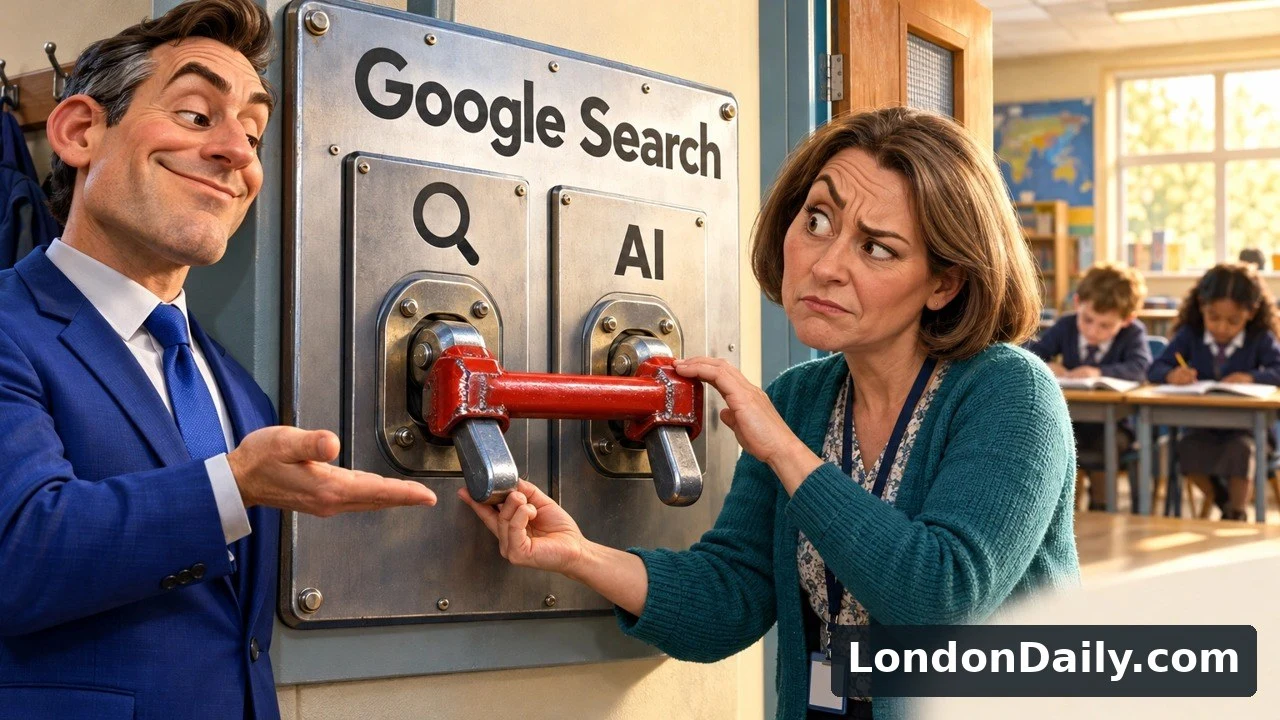
New York, Los Angeles and Chicago are considering replacing Google Search after the company refused to offer schools a version without artificial intelligence features, forcing a choice between its search engine and restrictions on pupils’ AI use.
From early 2027, search and Google’s AI services will be disabled by default on pupil accounts until administrators enable them. Schools will have no option to activate search without automated summaries and the conversational AI Mode, although other Google services can remain.
New York schools chief Kamar Samuels said alternatives would be considered unless Google reconsidered, rejecting the choice offered. In September, America’s largest school system announced a year-long generative AI freeze from kindergarten to eighth grade, affecting about 600,000 pupils.
Los Angeles has suspended pupil use of generative AI for the school year and locally blocked Google’s AI summaries. Chicago, the country’s fourth-largest public school system, has also warned it could switch.
Microsoft’s Bing and privacy-focused DuckDuckGo are among the alternatives. DuckDuckGo offers an AI-free version schools can make the default on managed computers. Changing search engines need not mean abandoning Chromebooks, Gmail, Google Docs or Classroom, but managing thousands of devices and accounts makes the transition more demanding for IT staff than for pupils.
Teachers describe children copying answers above search results rather than reading sources, comparing accounts or solving problems. They fear confident inaccuracies and fewer opportunities to practise fact-checking. Other educators warn that blanket avoidance could leave pupils unprepared for tools they will encounter in further study and employment.
Parents and teachers have protested outside Google offices in Boston, Chicago, New York and elsewhere. At least 11 recently elected Chicago education board members pledged support for a three-year generative AI moratorium.
Separately, parents of a 13-year-old North Carolina girl filed a lawsuit this month alleging Gemini helped her plan suicide during months of conversations about psychological distress on a school-issued Chromebook. They allege she reached it through Search’s AI Mode despite a school block on standalone Gemini. Google says it is examining the allegations and has safeguards directing distressed young people towards help.
Google says administrators will gain greater control over services and age-group access. It acknowledges concerns about learning shortcuts and is developing guided learning to prompt pupils through problems rather than supply answers, but still refuses AI-free search.
Existing workarounds have limits. New York parents found AI Mode accessible from home through school accounts despite filters. A rural Missouri district serving about 2,000 pupils uses external blocking software. Its technology director, Chris Worden, said schools should set their own pace of AI adoption rather than have Google determine it.








Join the conversation