
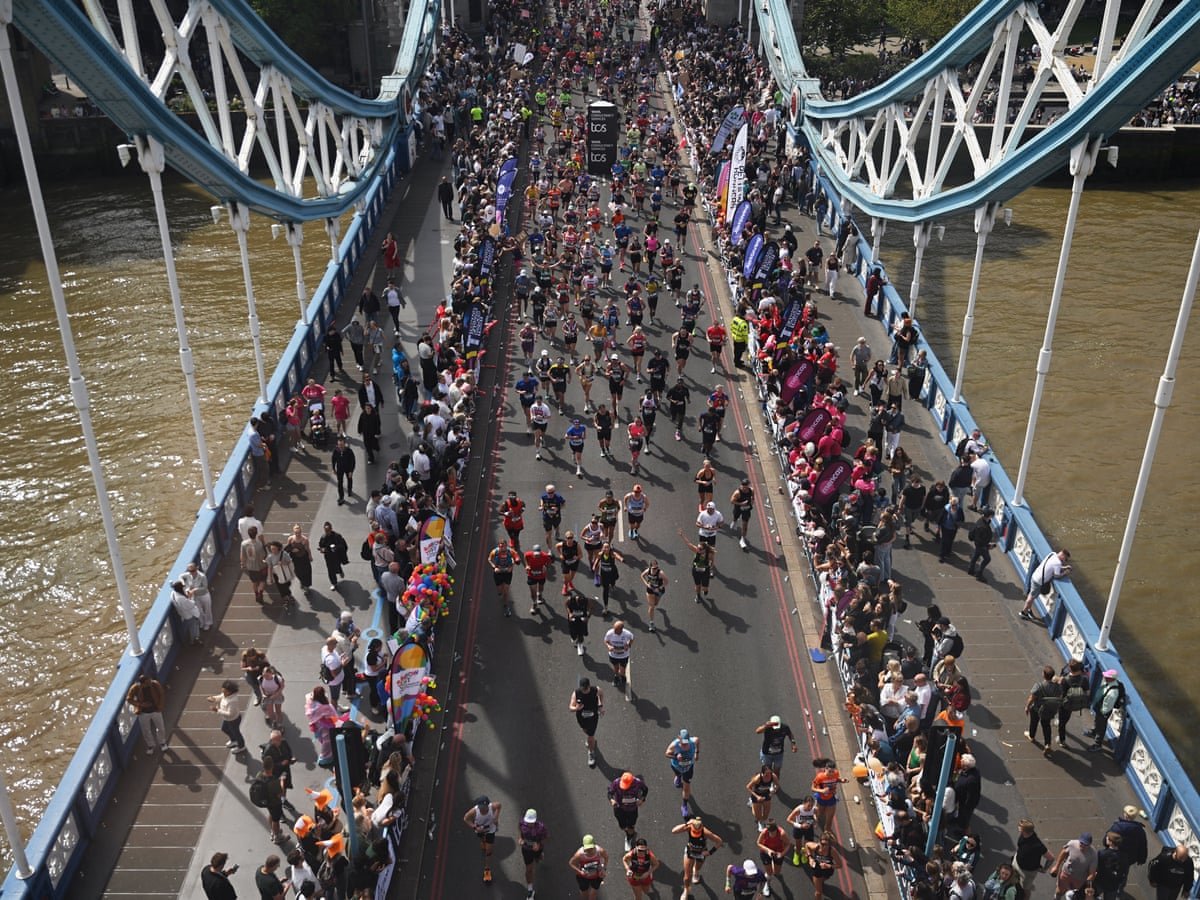
London Marathon demand hits record as millions apply for 2027 race entry
A surge in applications equivalent to 1.8 percent of UK adults highlights the race’s global appeal and growing pressure on entry allocation systems
A record surge in applications for the London Marathon has pushed demand to unprecedented levels for the 2027 edition, with organisers reporting that entries have reached a scale equivalent to roughly 1.8 percent of the UK adult population.
The development underscores the race’s transformation from a national sporting event into one of the most oversubscribed mass-participation endurance events in the world.
The London Marathon is one of the six World Marathon Majors and attracts both elite athletes and large numbers of recreational runners.
Entry is typically allocated through a combination of public ballot places, charity fundraising slots, and qualifying times for elite amateur runners.
The ballot system is designed to manage excess demand, but the latest figures indicate that demand is continuing to grow faster than available capacity.
What is confirmed is that applications for the 2027 race have reached record levels, reflecting sustained post-pandemic growth in mass participation running.
The London Marathon has seen rising interest over multiple editions as participation running has expanded globally, driven by fitness culture, social media visibility, and increased charity fundraising engagement.
The key mechanism shaping access is the ballot system, which randomly selects a limited number of applicants from the pool of entries.
Most applicants are not successful and either reapply in subsequent years or seek entry through affiliated charities, which often require significant fundraising commitments.
This structure creates a persistent imbalance between supply and demand, particularly as global interest increases.
The scale of applications also reflects the marathon’s symbolic and economic role in London.
The event generates substantial charitable donations, tourism spending, and international visibility.
Tens of thousands of runners from outside the UK typically participate each year, making it both a domestic sporting fixture and a global mass-participation event.
At the same time, the surge in applications raises logistical and operational considerations for organisers.
While the route capacity and safety infrastructure remain fixed within strict limits, growing demand places pressure on allocation fairness, charity place distribution, and the transparency of selection mechanisms.
These constraints are structural rather than temporary, meaning they cannot easily be resolved without fundamentally changing the nature of the event.
The broader implication is that major endurance events are increasingly operating at saturation point, where popularity consistently exceeds physical and regulatory capacity.
The London Marathon has become a case study in how global sporting brands manage scarcity through lottery systems and charitable allocation models rather than open access.
The 2027 edition is now set to continue this trajectory, with organisers preparing for another heavily oversubscribed ballot cycle that will leave the vast majority of applicants without a place despite record-breaking interest.
The development underscores the race’s transformation from a national sporting event into one of the most oversubscribed mass-participation endurance events in the world.
The London Marathon is one of the six World Marathon Majors and attracts both elite athletes and large numbers of recreational runners.
Entry is typically allocated through a combination of public ballot places, charity fundraising slots, and qualifying times for elite amateur runners.
The ballot system is designed to manage excess demand, but the latest figures indicate that demand is continuing to grow faster than available capacity.
What is confirmed is that applications for the 2027 race have reached record levels, reflecting sustained post-pandemic growth in mass participation running.
The London Marathon has seen rising interest over multiple editions as participation running has expanded globally, driven by fitness culture, social media visibility, and increased charity fundraising engagement.
The key mechanism shaping access is the ballot system, which randomly selects a limited number of applicants from the pool of entries.
Most applicants are not successful and either reapply in subsequent years or seek entry through affiliated charities, which often require significant fundraising commitments.
This structure creates a persistent imbalance between supply and demand, particularly as global interest increases.
The scale of applications also reflects the marathon’s symbolic and economic role in London.
The event generates substantial charitable donations, tourism spending, and international visibility.
Tens of thousands of runners from outside the UK typically participate each year, making it both a domestic sporting fixture and a global mass-participation event.
At the same time, the surge in applications raises logistical and operational considerations for organisers.
While the route capacity and safety infrastructure remain fixed within strict limits, growing demand places pressure on allocation fairness, charity place distribution, and the transparency of selection mechanisms.
These constraints are structural rather than temporary, meaning they cannot easily be resolved without fundamentally changing the nature of the event.
The broader implication is that major endurance events are increasingly operating at saturation point, where popularity consistently exceeds physical and regulatory capacity.
The London Marathon has become a case study in how global sporting brands manage scarcity through lottery systems and charitable allocation models rather than open access.
The 2027 edition is now set to continue this trajectory, with organisers preparing for another heavily oversubscribed ballot cycle that will leave the vast majority of applicants without a place despite record-breaking interest.