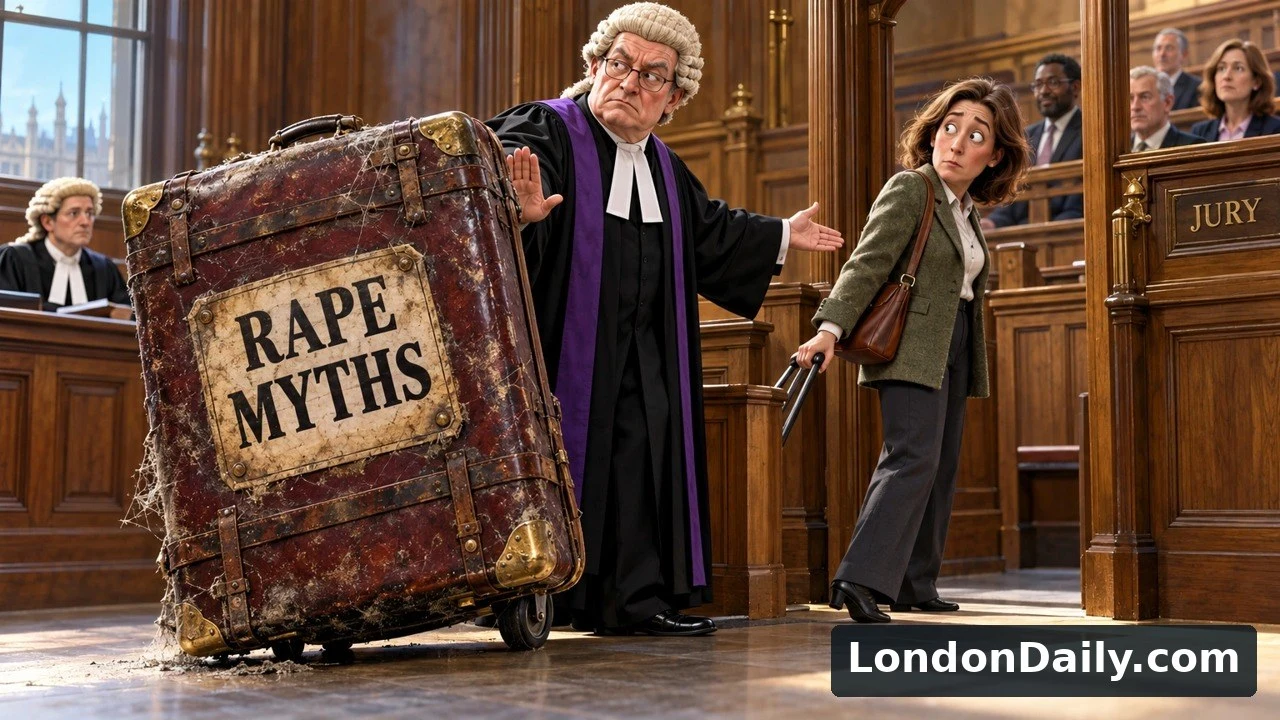
Judges should always direct juries against rape myths in sexual offences trials, updated guidance says, following criticism of arguments used by Russell Brand’s defence about how complainants reacted.
The Crown Court Compendium, which guides judges on directing juries, was amended on Tuesday. Its previous wording said judges “may give appropriate directions” to counter stereotypes and assumptions about sexual behaviour and responses to non-consensual conduct.
The revised guidance calls such warnings “important and necessary” and says they “should always be given”, even where an advocate does not openly advance a misconception. The change therefore addresses assumptions jurors may bring into court, rather than simply arguments made before them.
Brand was jailed for 10-and-a-half years for one count of rape and three of sexual assault, having been convicted at Southwark Crown Court. During the trial, his barrister, Ian Winter KC, faced strong criticism for perpetuating myths after telling jurors that none of the complainants had “resisted or screamed or even tried to leave”.
The directions available to judges explain that people react differently to the trauma of serious sexual assault. Some complain immediately; others experience shame and shock and do not report it for some time. A late complaint does not automatically mean it is false.
The compendium says assistance to juries on these issues has led to a “marked reduction” in advocates seeking to introduce myths and misconceptions during cross-examination or closing remarks. It also recognises that, in some cases, directions addressing rape myths may benefit a defendant.
On Friday, Siobhan Blake, the Crown Prosecution Service’s national lead for rape and serious sexual offences, said the Brand case demonstrated that victims responded in “wholly different ways”. She said social media questions about convictions for offences almost two decades old had included criticism of the women’s delay in reporting.
“There is no right way to respond to sexual abuse,” she said.
The Government is also establishing an expert working group to discuss false myths concerning third-party consent, the age of consent and wider abuses of power.
Separately, official figures show that 4.7% of police-recorded sexual offences resulted in a charge or summons in the year to the end of March 2026; for rape, the figure was 3.4%. Those proportions could rise by a few percentage points as more investigations conclude. They describe charging outcomes, not the proportion of cases ending in conviction.








Join the conversation