London Daily

Focus on the big picture.
Thursday, Jun 18, 2026

Inflation sticking around in 2022

Inflation sticking around in 2022

American consumers are grappling with the fastest price increase in decades, with the cost of everything from cars to gasoline to food soaring nationwide.

And the problem may get worse before it starts to improve.

In a recent analyst note to clients, Goldman Sachs economists warned that pandemic-induced disruptions in the global supply chain – which have caused congestion in ports and warehouses nationwide – could last longer than expected as surging demand struggles to keep up, meaning that inflation metrics will remain "quite high for much of next year."

"It is now clear that this process will take longer than initially expected, and the inflation overshoot will likely get worse before it gets better," they wrote.

Inflation, as measured by the Federal Reserve's preferred gauge, has climbed to the highest level since February 1982. In November, the personal consumption expenditures price index jumped to 5.7%, well above the Fed's preferred target of 2%. The data is further evidence of a spike in prices illustrated by a separate measure – the Consumer Price Index – which showed inflation rose by 6.8% in November from the previous year.

Customers wait in line to check out during a Black Friday sale at Macy's, Nov. 26, 2021, in Indianapolis.


The hotter-than-expected inflation report will likely reinforce the Federal Reserve's decision in December to accelerate the withdrawal of its monetary support for the U.S. economy and could create additional pressure on the central bank to further tighten policy in 2022 by hiking interest rates.

Although policymakers voted to hold rates near zero, where they have sat since March 2020, new economic projections show that every Fed official has penciled in at least one rate hike next year – a considerable shift from September, when half of the central bankers believed interest rate increases were not warranted until at least 2023.

Officials now project rates to stand at 0.9% at the end of 2022, 1.6% at the end of 2023 and 2.1% at the end of 2024.

At the conclusion of its most recent policy-setting meeting, the Federal Open Market Committee said that it would double the reduction of its asset-purchase program to $30 billion a month, a timeline that could phase out the purchases entirely by March rather than the original June trajectory laid out last month.
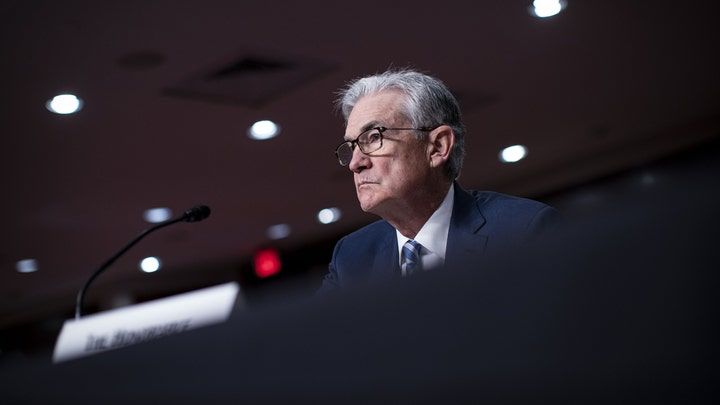
Jerome Powell, chairman of the U.S. Federal Reserve, during a Senate Banking, Housing and Urban Affairs Committee hearing in Washington, D.C.


Fed Chairman Jerome Powell said that he still believes consumer prices will fall next year as bottlenecks at supply chains clear up, but he also warned of a growing risk of persistently high prices. The decision to speed up its withdrawal of support, Powell said, stems from a spate of October indicators, including rising wages, half a million new jobs and a 0.9% monthly increase in consumer prices.

"There’s a real risk now," Powell said at a press conference to explain the Fed's decision. "I believe that inflation may be more persistent…the risk of higher inflation becoming entrenched has increased."

The Goldman Sachs economists – who projected that core PCE inflation will rise from 3.6% to 4.4% by the end of 2021 – seconded that opinion. They have forecast that inflation will cool slightly to 2.3% at the end of 2022 and fall to 2.1% by the end of 2023.

"We do not think that aggregate demand is on an unsustainable trajectory or that inflation expectations have become unanchored, and the overshoot should therefore ultimately prove transitory," the economists wrote.


Newsletter

Related Articles

0:00
0:00
Close
Health Authorities Warn of Rising Cases of Seasonal Respiratory Illnesses
BAE Systems and Rolls-Royce Advance Multi-Nation Fighter Aircraft Programme
National Archives Publish Declassified Documents on Cold War Energy Security Planning
British Retail Spending Rises Despite Continuing Cost-of-Living Pressures
Wales Launches Social Housing Pilot to Address Affordability Pressures
British Energy Companies Commit £5 Billion to Geothermal and Hydrogen Projects
Northern Ireland Debates Cross-Border Healthcare Partnership With the Republic of Ireland
UK Establishes National Artificial Intelligence Safety Centre With Leading Universities
UK Reports Decline in Small Boat Crossings After Expanding Intelligence Cooperation With France
Scottish Parliament Launches Inquiry Into Delays to Renewable Energy Projects
National Crime Agency Dismantles Alleged Multi-Million-Pound Money Laundering Network in London
Transport Strikes Disrupt Rail and Bus Services Across Northern England
United Kingdom and European Union Open New Security Dialogue on Defense and Border Cooperation
Bank of England Holds Interest Rates at 5% as Services Inflation Remains Elevated
UK Government Unveils Major National Health Service Reform Focused on Decentralization and Performance Funding
Government Advances New Airport Slot Rules to Ease Airline Operating Constraints
BBC Opens Flagship Science-Fiction Franchise to Competitive Production Bids
Chancellor Meets City Leaders Amid Concerns Over Gilt Market Liquidity
Rathbones Shares Fall Seventeen Percent After Regulatory Review Reveals Compliance Failings
United Kingdom Joins Group of Seven Initiative Using Artificial Intelligence and Quantum Computing for Cancer Research
Parliament Debates Doubling Tax Allowance for Pensioners After Major Public Petition
Measles Cases Exceed Seven Hundred in London and the West Midlands
British Military Leadership Faces Parliamentary Scrutiny After Defence Secretary's Sudden Resignation
House of Lords Begins Debate on Steel Industry Nationalisation Legislation
Parliament Advances Bill to Abolish NHS England and Create Single Patient Records
Parliament Fast-Tracks National Security Bill to Expand Powers Against Foreign Threats
United Kingdom and European Union Set July Summit to Deepen Post-Brexit Cooperation
United Kingdom Imposes Seventy New Sanctions on Russia and Expands Support for Ukraine's Nuclear Sector
United Kingdom Announces Social Media Ban for Children Under Sixteen
0British Government Investigates Reports of Russian Warship Firing Warning Shots Near Isle of Wight
UK Supreme Court Revises Legal Definition of Deprivation of Liberty
King’s Birthday Honours Recognise Contributions Across Science, Culture and Public Service
UK Ministry of Defence Reports Interdiction of Russian Shadow Fleet Vessel
UK and US Launch Joint Regulatory Programme for Medicines and Healthcare Products
Solicitor General Refers Murder Sentence to Court of Appeal Under Unduly Lenient Scheme
UK Launches £1.6 Million Mobile Museum Initiative to Expand Cultural Access
Judicial Pay Structure Undergoes Government Review Following Senior Recommendations
Government Confirms Nearly 180 New Youth Hubs Across the United Kingdom
UK Government Expands Careers Support Through Partnership with LinkedIn
Digital News Report Highlights Growing Global Concern Over AI and Information Overload
UK Chancellor Reaffirms Fiscal Discipline and Borrowing Reduction Strategy
UK Government Invests £219 Million in Sustainable Aviation Fuel Development
Rolls-Royce Small Modular Reactors Secures Major Swedish Export Contract
Government Confirms Locations for Nearly 180 Youth Hubs Across Great Britain
UK Government Partners with LinkedIn to Expand Employment Support Services
Reuters Institute Report Flags Rising Public Anxiety Over News and Information Overload
UK Government Commits £219 Million to Expand Sustainable Aviation Fuel Industry
Chancellor Convenes Market Engagement Group to Assess UK Economic Outlook and Productivity Risks
Rolls-Royce Wins Multibillion-Pound Swedish Contract for Small Modular Nuclear Reactors
Government to Ban Social Media Access for Under-Sixteens Across the United Kingdom
×