

Hundreds arrested at anti-lockdown protests in Brussels, Budapest and Vienna
Police have dispersed or detained hundreds of protesters against Covid-19 lockdowns in Hungary, Austria and Belgium as continuing quarantine regimes across Europe chafed against the economic and social toll of nearly a year of restrictions on business, travel and community life.
Police in Brussels said on Sunday they had arrested scores of people in an attempt to prevent two banned demonstrations against measures to curb the spread of the coronavirus. “We are above 200 arrested at the moment,” mainly around the rail stations in the Belgian capital, a police spokesman said around midday.
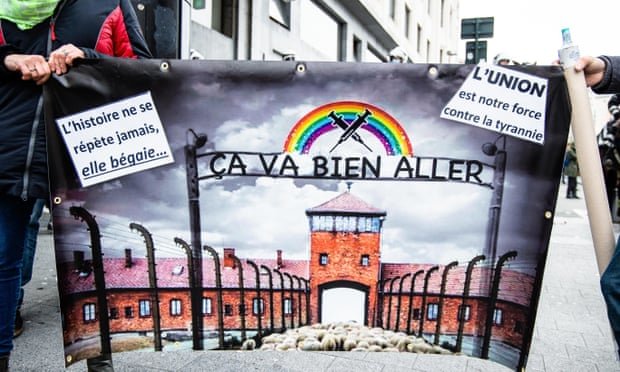
Police evacuated one square in front of the main railway station, where some of the protesters were football supporters from Belgian clubs. Dozens of people, responding to calls on social media, also began gathering at the Atomium landmark in Brussels.
“We remind you that there is no authorisation to come and demonstrate this Sunday,” Brussels police said in a tweet. “Those people who still intend to demonstrate in Brussels today will be approached, dissuaded from staying and if necessary [detained],” it said.
Belgium has registered one of the highest death rates in the world during the coronavirus pandemic, but restrictions closing bars and restaurants since October along with a night-time curfew have brought infection and hospital cases down in the past two months.
The country last week banned nonessential trips in and out of the country until 1 March.
Belgium’s neighbour the Netherlands was rocked by anti-curfew riots last week. But protesters took a different tack on Sunday in Apeldoorn under the rallying call of “drinking coffee together”.
Around 400 people dispersed peacefully in the central Dutch city after gathering for an authorised demonstration at a community centre.
In Amsterdam, a heavy police presence thwarted a mainly peaceful but unauthorised demonstration.
Around 5,000 people defied a ban to march in Vienna in protest against a curfew and lockdown aimed at curbing the spread of new Covid-19 variants.
The march was organised by the far-right FPOe party, and many participants ignored government regulations on mask wearing and the need to keep minimum distances from each other.
Neo-Nazi militants and thugs were reportedly among the crowd, which refused to disband and blocked traffic as it began to march towards the national parliament. Police intervened and detained some protesters.
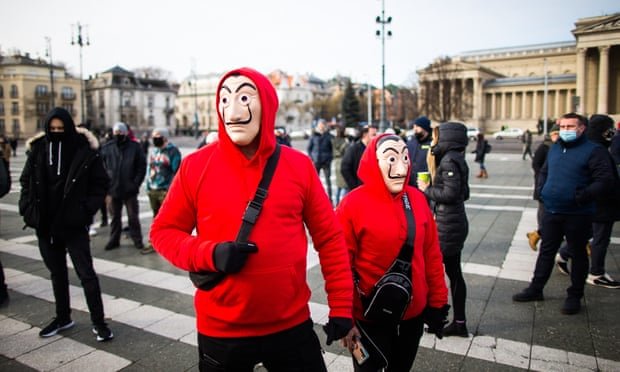
Police also dispersed protesters at a Sunday demonstration in Budapest where workers in the country’s struggling hospitality sector demanded civil disobedience and a rethinking of lockdown restrictions.
Organisers of the demonstration at a central square in Hungary’s capital called for restaurateurs to break pandemic rules by opening their businesses to customers on Monday, in defiance of strict pandemic measures limiting restaurants and cafes to takeout service.
“Every tool that we have used until now has been depleted so, beginning now, every business should open in the spirit of civil disobedience,” protest organiser Aron Ecsenyi said.
The demonstration came alongside increasing calls for government action from Hungary’s hospitality sector as the country’s lockdown, which began on 11 November, approaches the three-month mark. Hungary’s government has insisted that only mass vaccination of the population can bring an end to the lockdown.
Pandemic restrictions were extended on Thursday until 1 March, and many business owners complain that they have received little to none of the government’s promised financial assistance while other businesses such as shopping malls and retail stores have been permitted to remain open.
Polish police said they raided discos in the cities of Wrocław and Rybnik that had opened in breach of coronavirus restrictions on Saturday, using stun grenades and teargas to clear the dancefloor.
Almost 150 officers were deployed at the Face 2 Face club in Rybnik, local police said on Sunday. Two officers were injured, and police arrested three men and checked the ID papers of 213 others.
Similar operations requiring less force were held in the south-western city of Wrocław, police said.
As is the case elsewhere, restrictions on dance and sport clubs, hotels, restaurants and ski areas have run into opposition in Poland, and some venues have decided to open despite the risk of heavy fines.
Poland has recorded more than 37,000 Covid-19 deaths from more than 1.5 million cases among a population of 38 million people.