London Daily

Focus on the big picture.
Friday, Oct 30, 2026

Hospitality: London's recruitment crisis causing mental health issues

Hospitality: London's recruitment crisis causing mental health issues

The mental health of those working in the hospitality industry is worse than at height of the pandemic, according to a new survey by Censuswide and hospitality marketing firm Flipdish.

Almost a third of the 200 "decision-making" respondents said their mental health was worse than in 2020.

A key reason for this is the high number of vacancies within the industry, with 45% of respondents nationwide having to ask staff to work longer hours, the report added.

One in five hospitality staff suffered from work-related "severe mental health issues", according to a 2019 Royal Society for Public Health report


Some restaurants in London are still having to close due to staff shortages despite strong customer demand following the easing of coronavirus restrictions.

A £1m scheme, funded by Westminster City Council, has been set up to fill vacancies in London's West End, an area which has been significantly affected by the recruitment crisis.

'Traumatised'


There are various options of support for those struggling in the industry, including Me, Myself In Mind, a business providing mental health workshops and therapy for hospitality workers.
The company was founded by Merly Kammerling, a former London-based chef and now therapist who works with firms and individuals in the hospitality industry.

Me, Myself In Mind was founded by Merly Kammerling in 2018


"There's a lot of high anxiety, people are feeling traumatised," she said.

"There's not much time to think, coming out of a pandemic and straight into a staff shortage; it is exacerbating their ability to cope.

"People are being pushed through with not much training and they are feeling like impostors."

Miss Kammerling also believes hospitality closures during lockdown caused workers to rethink their career choices.

"Since the pandemic, people are questioning whether they want to do it," she said.

"They have had time off with loved ones, it is hard for them to go back to the demands of the hospitality sector.

"The industry is archaic, but is certainly moving forward towards being more aware, proactive and supporting of mental health."

'Severe resource crisis'


A 2021 survey by hospitality mental health organisation The Burnt Chef showed that one in five hospitality workers was planning on leaving.

A report by the group in 2020 found that 80% of staff had experienced mental health issues as a result of their work, with antisocial hours and performance pressure cited as the cause.

According to the Office for National Statistics (ONS), the hospitality industry faces the most difficulty filling vacancies


"High levels of stress and mental illness have been affecting our industry long before Covid-19," said Burnt Chef founder Kris Hall, "but this research demonstrates how brutal these past two years have been for hospitality owners.

"We find our sector in the middle of a severe resource crisis, with mass shortages worldwide as visitor numbers peak, yet staffing numbers continue to drop.

"Our own studies have shown that work-life balance ranks highest as to why people do not want to return to what once was the third largest sector in the world."

'Sleepless nights'


Despite restaurants in London performing well after the UK's lockdowns, the mental health of business owners has slumped.

Staff shortages are not the only issue that needs to be managed, says Fionn Hart, UK manager at London-based Flipdish.

"The talent crisis, inflation, VAT rises, inconsistent restrictions and low cash reserves have given restaurant owners sleepless nights," he said.

"As restrictions were completely lifted earlier in the year, office parties and social gatherings are on the rise, causing a spike in the number of customers coming through the door."
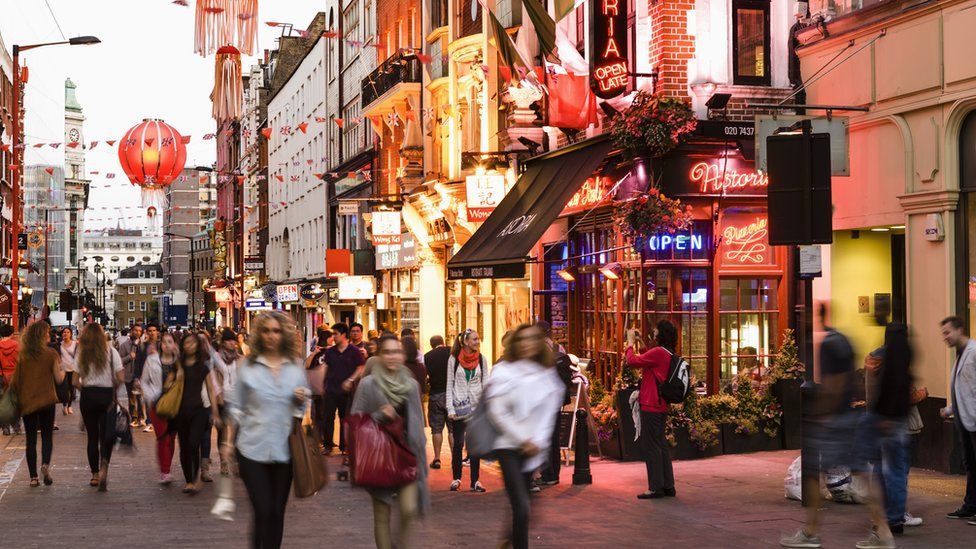
Londoners have been keen to return to restaurants after the easing of restrictions


According to Flipdish's survey, 32% of restaurant owners want the government to do more to look after their staff's wellbeing.

"Restaurant, pub, and bar operators now have a difficult balancing act to perform," added Mr Hart.

"Fulfilling these bookings and offering promotions to get new customers through the door, while simultaneously managing the reduced staff numbers on the ground to serve them.

"It's time the government opens its eyes to the pressures on the hospitality workforce, who are battling to protect their mental wellbeing whilst also keeping their businesses afloat.

"It's become clear that financial aid for the sector simply isn't enough."

The Department for Work and Pensions said it was investing heavily in mental health services following the pandemic.

A government spokesperson said: "We are making every effort to ensure everyone can access the mental health support they need.

"We're investing to expand and transform mental health services under the NHS Long Term Plan, which will see an additional £2.3bn going to services by 2023-24, on top of the £500m we made available in 2021-22 to address the specific impacts of the pandemic."

Newsletter

Related Articles

0:00
0:00
Close
Department for Environment, Food and Rural Affairs Implements Strict Water Quality Monitoring Rules Following Severe Rainfall and Flooding
Welsh Government Unveils Comprehensive Regional Housing Strategy to Address Rural Affordability and Homelessness Pressures in Cardiff
Office for National Statistics Reports Slowing Consumer Price Inflation and Steady Retail Performance Across United Kingdom Markets
Northern Ireland First Minister Michelle O'Neill and Deputy First Minister Emma Little-Pengelly Advance Cross-Border Infrastructure Agreement in Belfast
Competition and Markets Authority Launches Formal Investigation Into Artificial Intelligence Partnerships Involving Major Technology Corporations
Scottish First Minister John Swinney Secures Cross-Party Support for Devolved Budget Framework and Renewable Energy Expansion
High Court Rules in Favor of Environmental Campaigners Over Department for Energy Security and Net Zero Licensing Procedures
National Health Service England Announces Major Digital Modernization and Artificial Intelligence Diagnostic Rollout Across Regional Trusts
Bank of England Monetary Policy Committee Signals Cautious Approach to Interest Rate Cuts Amid Persistent Wage Growth and Inflation Pressures
British Prime Minister Keir Starmer and Chancellor Rachel Reeves Outline Strategic Infrastructure Plans to Boost Regional Growth and Private Investment
Water pollution remains high despite £5bn investment
Regional Economic Divergence and Industrial Transformation
Technological Sovereignty and Regulatory Scrutiny
Fiscal Consolidation and Public Service Pressures
Automotive Industry Leadership Warns of Imminent Supply Chain Disruptions Following Recent European Trade Negotiations
High Court Delivers Landmark Ruling Affirming Strict Legal Protections for Corporate Data Privacy Against State Surveillance
Welsh First Minister Eluned Morgan Secures Additional Funding for Regional Transport Infrastructure and Rail Modernization
Scottish First Minister John Swinney Announces Major Green Energy Infrastructure Investment Package for Aberdeen
Department for Work and Pensions Proposes Sweeping Welfare Reforms to Incentivize Long-Term Unemployed Back into Work
Competition and Markets Authority Launches Formal Investigation into Artificial Intelligence Partnerships Involving Major Tech Giants
United Kingdom Foreign Secretary David Lammy Concludes High-Level Strategic Talks in Washington on Middle East Security
National Health Service England Unveils Emergency Winter Resilience Plan to Combat Projected Surge in Emergency Admissions
Bank of England Governor Andrew Bailey Signals Cautious Approach to Interest Rate Cuts Amid Persistent Inflation
British Chancellor Rachel Reeves Finalizes Corporate Tax Overhaul Ahead of Autumn Budget to Fund Public Services
Automotive Manufacturers Urge Government Action as High Energy Costs and Global Supply Chain Disruptions Threaten Production
Metropolitan Police Issue Formal Apology Following Inadvertent Release of Confidential Information During High-Profile Investigation
Scottish Finance Secretary Shona Robison Unveils Devolved Budget Highlighting Housing and Public Service Adjustments
Energy Regulator Office of Gas and Electricity Markets Prepares to Remove Household Gas Standing Charges Following Treasury Mandate
Treasury Confirms Reversal of Planned Cash Individual Savings Account Allowance Reduction Protecting Twenty Thousand Pound Limit
Office for Budget Responsibility Revisions Predict Moderate United Kingdom Economic Growth with Elevated Inflation Pressures
Chancellor John Healey Delivers First Autumn Budget in Parliament Highlighting Temporary Bank Surcharge and Cost-of-Living Support
Met Office Issues Extended Forecast Highlighting Stable High Pressure Weather Patterns Across the United Kingdom
Scottish Finance Secretary Shona Robison Outlines Changes to Tax Thresholds and Residential Property Levies in Edinburgh
Financial Markets and Government Bond Yields Remain Stable Following Muted Reaction to Autumn Budget Measures
Defence Committee Chair Tan Dhesi Criticizes Budget for Delaying Critical Defence Spending Decisions to Next Year
International Monetary Fund Forecasts United Kingdom Economic Growth at One Point Three Percent for Year
Office for Budget Responsibility Assesses Fiscal Headroom Reduced to Fifteen Billion Pounds Following Global Energy Shocks
Chancellor John Healey Delivers First Autumn Budget Introducing Household Energy Support and Bank Tax Hikes
Aberdeen City Council Co-Leader Faces Binding Vote Challenge as Local Councillors Launch High Court Legal Battle
Housebuilding Across Scotland Falls to Eleven-Year Low Despite Government Declarations of a Housing Emergency
Former Prime Minister Gordon Brown Organizes National Innovation Summit in Manchester to Boost Regional Competitiveness
UK Government Faces Mounting Criticism Over Lack of Environmental Consultation During Artificial Intelligence Datacentre Expansion Talks
Greggs Announces Closure of Four Major Manufacturing Facilities Across Britain Resulting in Seven Hundred Forty Job Losses
British Retail Consortium Warns That Cumulative Employment and Regulatory Costs Threaten High Street Price Stability
Lloyds Banking Group Chief Executive Charlie Nunn Warns That Increased Bank Taxes Could Deter Long-Term Economic Investment
Ipsos Polling Reveals Seven in Ten Britons Expect Personal Tax Increases Amid Deep Public Economic Pessimism
Chancellor John Healey Delivers First Autumn Budget in Parliament Amid Tight Fiscal Constraints and Slower Growth Forecasts
United Kingdom Finance Monthly Review Highlights Rising Long-Term Borrowing Costs and Persistent Energy Price Pressures Across British Markets
Royal Marines Pioneer Rapid Autonomous Drone Operations During Major High North Exercise Involving NATO Allies
House of Commons Justice Committee Urges Chancellor to Align Prison and Courts Reform Ambitions With Concrete Budgetary Resources
×