London Daily

Focus on the big picture.
Saturday, Jul 18, 2026

Historic England relists nine sites to mark 70th anniversary of Festival of Britain

Historic England relists nine sites to mark 70th anniversary of Festival of Britain

Newbury Park bus station in Ilford and Royal Festival Hall in London relisted

Not many people get wildly excited by a concrete bus shelter but Elain Harwood is, proudly and unapologetically, one of them. “It is grand, I love it … it is a simple curve and absolutely as minimal as could be.”

Harwood, an architectural historian with Historic England, is enthusing about Newbury Park bus station in Ilford, one of nine sites being recognised by Historic England to mark the 70th anniversary of the Festival of Britain.

On Thursday it announced that two sites were having their listing upgraded and a further seven are being relisted because of their festival links.

The relistings include the Royal Festival Hall, Barbara Hepworth’s sculpture Contrapuntal Forms and the bus station. Harwood, senior architectural investigator at Historic England, said the curved concrete structure, with its copper panelled roof, was a truly beautiful thing.
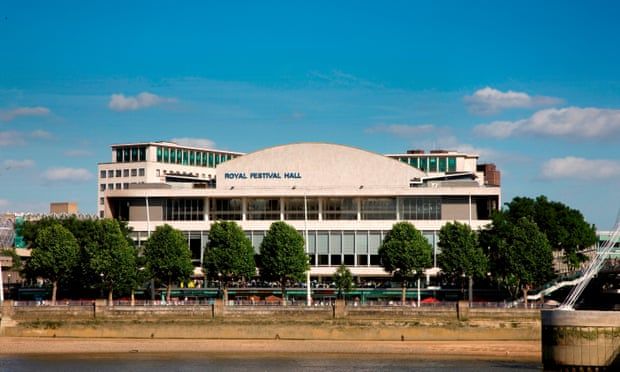
View of the Royal Festival Hall from across the river


“It looks like an Indian dosa, it looks so thin you could just snap it with your finger, it is so light.”

It was designed in 1937 by Oliver Hill. The war meant construction was delayed until the late 1940s and when it finally arrived it went down a storm, described by one critic as “an extraordinary bit of bravura”. In 1951 it gained the most votes in architectural awards handed out by the festival to reward the nation’s best postwar civic design.

The new listings are being announced to remember a festival which this week, 70 years ago, would have been at its busiest.

Running from May until September it was intended as a spirit-raising national exhibition celebrating design, science, technology, architecture, industry, and the arts. It was about optimism and recovery after the worst of times.

Events took place across Britain and more than 8 million people visited London in the summer of 1951. “The festival was the last great national event before the advent of mass television, so people had to go and see it for themselves,” said Harwood.

The upgraded listings include Calvary Charismatic Baptist Church, originally Trinity Congregational Church, in Poplar. It was built in the early 1950s as part of the festival’s live architectural exhibition which showcased postwar redevelopment in real time.

The church, Historic England says, is “one of the first buildings in Britain to adopt a consciously modern Scandinavian style” and has a strikingly high tower because it shows off a bell that was all that survived a direct German hit on the previous church.

Nearby on the Lansbury estate was a new school, shops and show homes. “You could get the boat from the Royal Festival Hall to docklands and go and tour this site,” said Harwood. “The show homes were a way of showing off British manufacturing but also seeing how you might furnish your own council house in a modern way.”

Relisting of sites essentially involves updating and adding to listing descriptions, some of which were written 30 years ago. Upgrading from Grade II to Grade II* means places are eligible for more grant money.

The second upgraded site is Christ Church in Coventry, built between 1956 and 1958 and directly inspired by the festival. Its lavish interior was described by the Architects Journal as “Pleasure Gardens pastiche”.

The Hepworth relisting celebrates the joy of putting great public art in accessible spaces.

The 10ft high sculpture was one of many artworks commissioned for the festival by the Arts Council and stood outside the “Dome of Discovery” on the South Bank.

After the festival, anything that could be easily detached and shifted was offered to local authorities. Harlow was first to put its hand up and the sculpture takes pride of place on a housing estate.

“That’s the extra glory of it,” said Harwood. “It just sits outside a block of flats, very happily … it is appreciated and has become part of the community.”


Newsletter

Related Articles

0:00
0:00
Close
Ukrainian Drone Barrage Kills Eight and Strikes Russian Logistics Network
Key Trends to Watch
Financial Conduct Authority Warns Cloud and Digital Risks Are Becoming a Financial Priority
Jeffrey Donaldson Appeals Sexual Abuse Conviction as Democratic Unionist Party Opens Review
Welsh Health Authorities Launch Emergency Meningitis Vaccination Programme for Students
Scottish Business Activity Falls for Third Month as Companies Face Rising Costs
Bank of England Regulators Demand Better Access to Digital Banking Services
United Kingdom Cuts Bilateral Aid to Several African Countries by Up to Ninety Per Cent
United Kingdom Introduces Tougher Deportation Rules After Rochdale Exploitation Scandal
NHS England Launches Wearable Technology Plan to Reduce Sepsis Deaths
Amazon Web Services Billing Error Sends Trillion-Dollar Invoices to British Companies
Bank of England Takes Direct Regulatory Role Over Major Global Cloud Providers
Extreme Summer Heat Drives Record Fire Risk and Rising Deaths Across Britain
United Kingdom Nationalisation of British Steel Sparks Diplomatic Dispute With China
United Kingdom Economy Shows Weak Growth Ahead of Major Autumn Budget
Andy Burnham Set to Become United Kingdom Prime Minister After Labour Leadership Victory
The Ten World Cup Finals That Defined Football History
Smartphones Are Getting More Expensive, Sales Are Collapsing, and Even Apple Admits: "Prices Will Rise"
The Monaco Bombing Has Become a Test of Ukraine’s Intelligence Accountability
Leadership Change and Strategic Rivalry Redraw the Political Map
Energy Risk, Uneven Growth and the New Geography of Global Capital
The AI Race Enters Its Infrastructure Era
Security and resilience remain long-term national priorities
Britain balances growth ambitions with public finance pressures
Regional devolution becomes a defining theme of the next Labour era
Industrial strategy returns to the centre of British economic policy
Political Instability Remains a Challenge for UK Investment Confidence
Brexit Economic Debate Continues as Public Concerns Over Long-Term Impact Remain
UK Climate Risks Rise as Met Office Warns Extreme Weather Is Becoming More Common
Housing Shortages and Regional Inequality Become Key Priorities Under Incoming Labour Leadership
National Health Service Reform Remains One of Britain’s Biggest Political Challenges
Bank of England Remains at Centre of UK Economic Debate Over Inflation and Growth
UK Economy Shows Recovery Signs but Households and Businesses Remain Under Pressure
Britain Deepens European Defence Cooperation as NATO Allies Seek Stronger Security Capabilities
United Kingdom Expands Sanctions Against Russian Cyber Networks Over Security Threats
UK Industrial Strategy Faces Test After Government Takes Control of British Steel
British Businesses Seek Policy Clarity as Andy Burnham Prepares to Lead Labour Government
Andy Burnham’s Labour Leadership Signals Major Shift Toward Regional Power and Devolution
British Steel Nationalisation Creates New UK-China Tensions Over Control of Strategic Industry
For 36 Years, He Scammed About 300 Luxury Hotels — Until He Was Caught
England's World Cup Exit Expected to Cost Hospitality and Retail £334 Million
Former ICC Prosecutor Aide Speaks Publicly About Allegations Against Karim Khan
Opposition Raises Questions Over June Heatwave Power Grid Pressures
Mastercard Explores Sale of Majority Stake in UK Payments Operator Vocalink
Boeing Forecasts Global Commercial Aircraft Fleet Will Double by 2045
London GP Surgeries Receive £18 Million to Expand Primary Care Capacity
Health Advisers Recommend Nationwide Meningitis B Vaccination for Teenagers
OECD Warns UK Economy Faces Slower Growth and Weak Productivity
Treasury Places Major Global Cloud Providers Under Direct Financial Oversight
Financial Markets Rally as Shabana Mahmood Emerges as Leading Treasury Candidate
×